



A scientific indicator of how easily distracted you are has been designed by a University College London psychologist. It could be used as another assessment tool during the recruitment process and would have particular benefits in fields where employee distraction could lead to fatal errors.

All anxiety is not created equal, and a research team at the University of Illinois now has the data to prove it. The team has found compelling evidence that differing patterns of brain activity are associated with each of two types of anxiety: anxious apprehension (verbal rumination, worry) and anxious arousal (intense fear, panic, or both).

Sharks are known to have a keen sense of smell, which in many species is critical for finding food. However, according to new research from Boston University marine biologists, sharks can not use just their noses to locate prey; they also need their skin – specifically a location called the lateral line.

Inhaling oxygen is only the first step in a long journey through the nooks and crannies of the body. The oxygen is then transported via the blood to all cells in the body. The same goes for nourishment from food we eat. Inside the cell, the oxygen and nourishment are transformed into energy and carbon dioxide, which we breathe out. In a new dissertation from Stockholm University in Sweden, Kristina Faxén has mapped how so-called cell breathing takes place.

A novel analysis of water flow in the Southern Ocean surrounding the Antarctic is revealing previously hidden structures that are crucial in controlling the transport of drifting plants and animals as well as the distribution of nutrients and pollutants that affect ocean life.

Researchers at the University of New South Wales in Australia and the Universitat Paderborn in Germany discovered that barriers to currents, which can lead to swirling gyres and eddies that trap material for long periods, may escape detection with traditional analyses that concentrate on monitoring average water flow or sea surface height.

A University of Alberta research team has combined two fields of study in nanotechnology to create a third field that the researchers believe will lead to revolutionary advances in computer electronics, among many other areas.

Dr. Abdulhakem Elezzabi and his colleagues have applied plasmonics principles to spintronics technology and created a novel way to control the quantum state of an electron's spin.

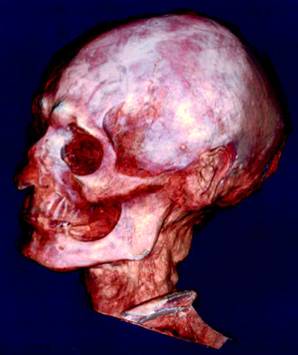
MultiDetector Computed Tomography (MDCT) can aid forensics teams in determining if a person has drowned, according to a study published in the June issue of Radiology.

MDCT is comparable to conventional autopsy in demonstrating airway froth and sediment that are indicative of drowning.


Skull using MDCT. Credit: American Journal of Roentgenology

The world's largest and most prolific team of planet hunters announced today (Monday, May 28) the discovery of 28 new planets outside our solar system, increasing to 236 the total number of known exoplanets.

University of California, Berkeley, post-doctoral fellow Jason T. Wright and newly minted Ph.D. John Asher Johnson reported the new exoplanets at a noon media briefing at the semi-annual meeting of the American Astronomical Society (AAS) in Honolulu.

Using NASA's Far Ultraviolet Spectroscopic Explorer (FUSE) satellite and ground-based telescopes, astronomers have determined, for the first time, the properties of a rare, extremely massive, and young binary star system.

The system, known as LH54-425, is located in the Large Magellanic Cloud, a satellite galaxy of our Milky Way. The binary consists of two O-stars, the most massive and luminous types of stars in the Universe.


An artist depicts the binary system LH54-425, which consists of two very massive stars. The larger star's powerful wind overpowers the smaller star's wind, creating a region of hot gas where the outflows collide.

