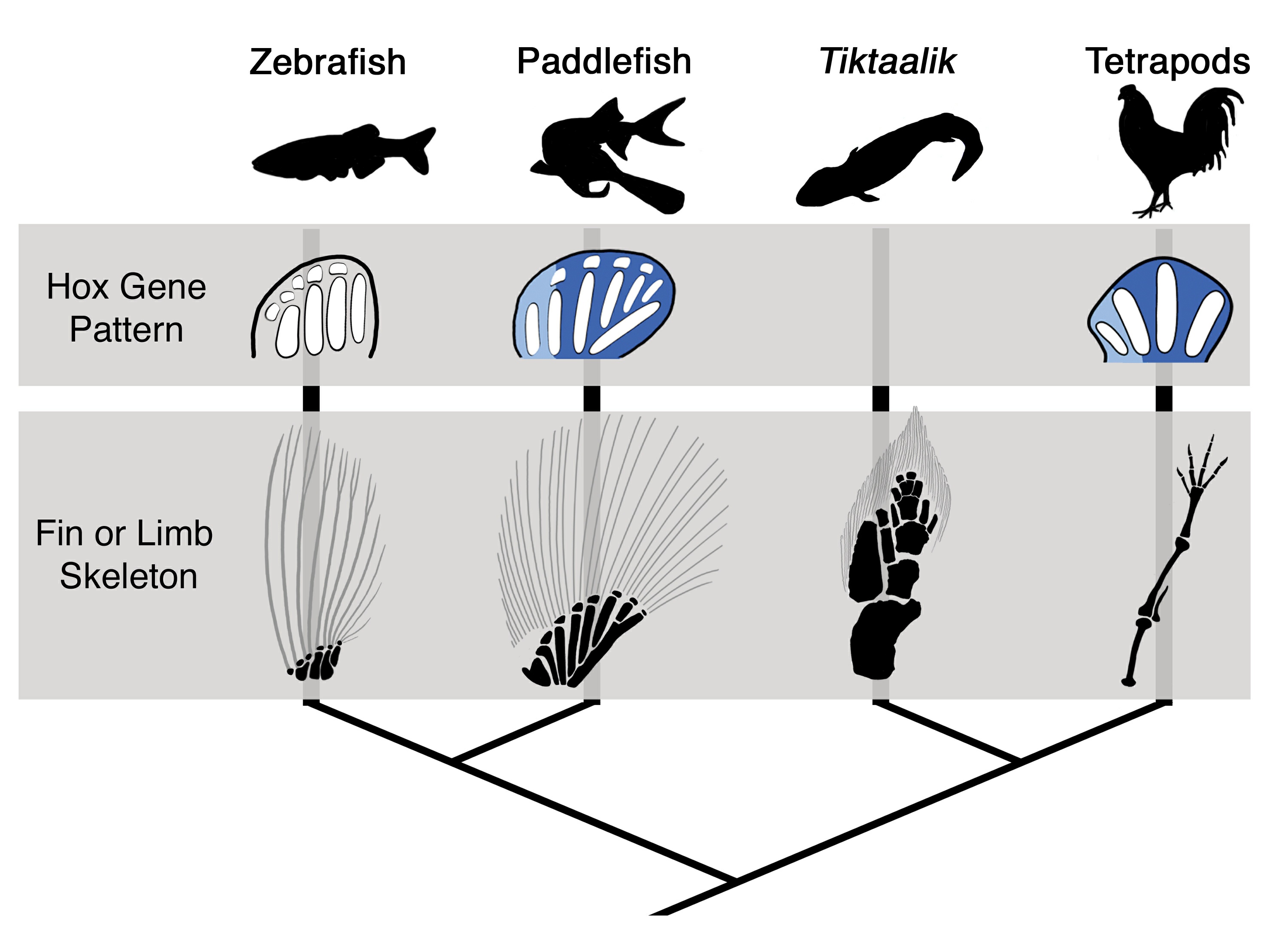




Long before animals with limbs (tetrapods) came onto the scene about 365 million years ago, fish already possessed the genes associated with helping to grow hands and feet (autopods) report University of Chicago researchers.

Paddlefish fins exhibit a unique pattern of Hox expression previously thought present only in the developing hands and feet of land vertebrates (tetrapods). This result supports the notion that fossil fish already possessed the genetic toolkit needed to evolve hands, feet, fingers and toes. Credit: University of Chicago Medical Center

During the first 24 hours of invasion by the malaria-inducing parasite Plasmodium falciparum, red blood cells start to lose their ability to deform and squeeze through tiny blood vessels-one of the hallmarks of the deadly disease that infects nearly 400 million people each year. Now, an international team of researchers led by an MIT professor has demonstrated just why that happens.

People addicted to alcohol and young adults who are heavy drinkers, but not considered alcoholics, have something in common: they possess poor decision-making skills, according to psychologists at the University of Missouri-Columbia. The findings are based on research examining binge drinking and heavy alcohol use among college students.

The vast majority of chemotherapy errors identified in children reach patients, according to one of the first epidemiological studies of cancer drug errors in children. Published in the July 1, 2007 issue of CANCER, a peer-reviewed journal of the American Cancer Society, the study concluded that the antimetabolite class of chemotherapeutic agents are most likely associated with errors, and that errors in drug administration and errors in drug dosing and frequency were the most common mistakes made and consequently, the most potentially harmful.

When the movie Spider-Man 3 swung into theaters a few weeks ago, it found University physics professor James Kakalios waiting. A diehard fan of superhero comics, he takes a double interest in Spidey foe Sandman, who can transform all or part of his body into living sand.

It doesn't always happen, but in the case of Sandman the writers manage to get much of the science right, Kakalios says. After 10 years researching the physics of sand and other granular materials--not to mention writing the bestselling book "The Physics of Superheroes"--he is delighted to see sand finally getting the billing it deserves.

The use of 12 tone intervals in the music of many human cultures is rooted in the physics of how our vocal anatomy produces speech, according to researchers at the Duke University Center for Cognitive Neuroscience.

The particular notes used in music sound right to our ears because of the way our vocal apparatus makes the sounds used in all human languages, said Dale Purves, the George Barth Geller Professor for Research in Neurobiology.


Evaluate the tones yourself at The Purves Lab

A team led by Dana-Farber Cancer Institute scientists has developed a more human-like mouse model of cancer they say will aid the search for cancer-causing genes and improve the predictive value of laboratory drug testing.

Ronald A. DePinho, MD, of Dana-Farber has created mice that form tumors that are more genetically complex and unstable -- and therefore a better stand-in for human cancers -- than those of conventional genetically engineered mouse models of cancer. To characterize these mouse tumors, DePinho collaborated with Lynda Chin, MD, also at Dana-Farber, to perform high-resolution array-CGH profiling, a genome-scanning technology that can define regions of DNA abnormalities.

Coffee is a habit for more than 50 percent of Americans, who drink, on average, 2 cups per day. This widely consumed beverage is regularly investigated and debated for its impact on health conditions from breast cancer to heart disease. Among its complex effects on the body, coffee or its components have been linked to lower insulin and uric acid levels on a short-term basis or cross-sectionally. These and other mechanisms suggest that coffee consumption may affect the risk of gout, the most prevalent inflammatory arthritis in adult males.

MIT researchers have undertaken a first-of-its-kind analysis of bone's mechanical properties and discovered new things about how a bone absorbs energy. The insights gained from this work could lead to the creation of new, tougher materials.


MIT researchers created this nanoscale map of the stiffness of bone. Image courtesy / Ortiz Lab, MIT

The researchers' up-close-and-personal look at bone probes its fundamental building block—a corkscrew-shaped protein called collagen embedded with tiny nanoparticles of mineral—at the level of tens of nanometers, or billionths of a meter. A human hair, by comparison, is 80,000 nanometers in diameter.

Compared to math teachers in the high-achieving nations of Hong Kong and Japan, teachers in the United States offer less of certain supports that could help students learn more. This could contribute to the lower performance among U.S. students on international math tests, a UCI researcher discovered.

