Fake Banner
Healthcare In Space - The First Medical Evacuation From The ISS

For the first time in 25 years of continuous crewed operations, an astronaut has been medically...

I Earned It, You're Privileged - The Paradox In How We View Achievement

The concept of “hard work v privilege”, and what either one says about someone’s social status...

Not Just The Holidays: The Hormonal Shift Of Perimenopause Could Be Causing Weight Gain

You’re in your mid-40s, eating healthy and exercising regularly. It’s the same routine that...

Anxiety For Christmas: How To Cope

Christmas can be hard. For some people, it increases loneliness, grief, hopelessness and family...

User picture.
The ConversationRSS Feed of this column.

The Conversation is an independent source of news and views, funded by the academic and research community and delivered direct to the public. The Conversation launched in Australia in March 2011.... Read More »

Blogroll

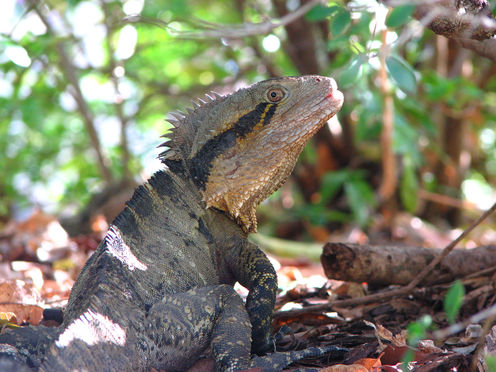
No, it's nothing to do with a reptilian existential crisis – just a name game. Credit: melanie cook/Flickr, CC BY-NC-SA

By Dustin Welbourne

You have likely been to a zoo at some point and visited their reptile house.

A building where the climate control dial is stuck on the “wet sauna” setting, and filled with maniacal children competing to be the first to press their ice cream covered face and hands on every available piece of clean glass.


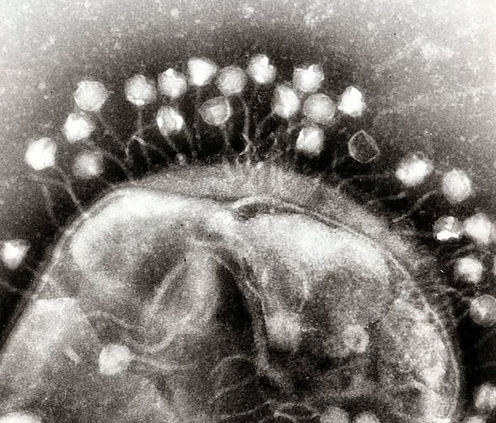
Bacteria under attack by a flock of bacteriophages. Credit: Graham Beards/Wikimedia Commons

By Luc Henry, Swiss Federal Institute of Technology in Lausanne


We are only beginning to see what augmented reality can do. Credit: Flickr/Karlis Dambra, CC BY

By Nick Kelly, University of Southern Queensland


Credit: Wing-Chi Poon, CC BY-SA

By Sana Suri, University of Oxford

The 2014 Nobel Prize for Physiology and Medicine was awarded to three neuroscientists for their pioneering work on the brain’s “inner GPS system”. Over the course of four decades, they revealed that a small part in the brain called the hippocampus stores a map of animals' surroundings and helps them navigate.


Very little has been published on VivaGel in peer-reviewed literature. Credit: Morgan/Flickr, CC BY

By Bridget Haire


Credit: Ed Bierman, CC BY

By Clive Trueman, University of Southampton

Fish are acutely aware of sea temperature; it’s one of the key reasons particular species of fish live where they do.

As the oceans warm however, many tropical species are moving towards cooler climes. So might the traditional cod and chips one day be replaced by Nemo and chips?