Featured Articles





It’s always the nastiest things which produce the worst body odor. Being forced to run the mile in gym class. A first date gone horribly wrong. Or maybe things are nasty because of bad BO. Either way, it’s safe to say that BO and nastiness go together like casual environmentalists and revolving doors. And as lung cancer kills more than one million people each year, I’d say it’s pretty nasty. So it should have some very distinct BO, right? Fortunately, it does.
Computers pound users over the head with countless options, enormous amounts of data, and small query boxes that turn keyword searches into ten lousy results. But computers are powerful; shouldn't they be able to tell us only what we need or want to know?
Nature reported this week that construction on the international fusion project ITER won't begin until next year, even though site preparation – clearing, leveling, and so on – was completed back in May. Turns out, there are still some details to be worked out about which countries are paying for what parts of the multi-billion-euro endeavor (whose construction costs, of course, have increased from initial estimates). Despite the delay, though, the machine is still projected to start operations by 2018.
A team of biologists has uncovered an unlikely friendship between a carnivorous pitcher plant and a fruit-eating tree shrew.
The pitcher plant, Nepenthes lowii, can be found sprawled on the forest floor in tropical regions of Malaysia and Borneo. The leaves of the plant form swollen vessels at regular intervals. Shaped like pitchers, these vessels have a bulbous base, narrowing at the neck and flaring into an open mouth at the top. Insects are attracted to the syrupy goo on the lip, landing at the open mouth of the pitcher to feed. Stuck to the goo, the insects slide into the pitcher through the slippery throat, landing in the soup of digestive juices at the bottom.
Imagine it’s Thanksgiving Day, and you’re about to sit down to a gargantuan meal that opens with roast turkey and stuffing, follows with sweet potatoes, cream of celery and cranberry sauce, and finishes with a slice of hot pecan pie. After such a caloric influx, your body gets busy breaking down all those carbohydrates and releasing sugar molecules into your bloodstream. Glucose moves through your body, enters your cells, and eventually gets broken down to fuel cellular processes.
Imagine for a minute that you are a zookeeper. One day while inspecting your prized lizard exhibit you make a startling discovery: your rare female Komodo dragon has produced a clutch of viable eggs --despite never having contact with a male dragon. “What’s going on here!?” you wonder. Well, the staff at two European zoos encountered this scenario recently. Their findings led to the discovery that the endangered Komodo dragon is capable of reproducing asexually, making it the largest vertebrate animal known to reproduce in this way.
If you’ve ever had to conduct research in a room within earshot of a vial of S35 or a BSL-2 model organism, you’ve probably been warned about chowing down in lab. See, the no-eating-in-lab policy (which applies to many labs in my department) is a respectable safety precaution, but it frequently prevents me from enjoying both my cafeteria burrito AND Science Lolcats at the same time, since my computer is next to my lab bench. Doh! Still, a guy’s gotta eat (and this guy’s gotta eat burritos), and so I regularly find myself alone in the ol’ lab lounge with my contraband black bean bombshell and nothing to entertain me while I eat it, save for the dozens of scientific journals strewn about the
In practice biology is rigorously assayed quantitatively. Unfortunately the teaching of biology at the high school and undergraduate level lacks this rigor. To efface this disparity we must present the beauty of biological phenomena to students, and allow for them to gain an appreciation for the dynamic nature of life; then instill an appreciation for calculation by implicating a quantitative evaluation of life as being instrumental to understanding the beauty. With this philosophy in place it puts the guru in a position to introduce the tools and techniques used in physical biology to assay complexity. It provides a critical segue to introduce statistical mechanics and have it received well due to its importance in resolving the beauty that fascinates the students. Most importantly it gives the pupils a contemporary briefing of biology today. The synergy between the items listed above will allow the students to begin to interpret biology by the numbers.

No sooner met but they looked;
No sooner looked but they loved;
No sooner loved but they sighed;
No sooner sighed but they asked one another the reason;
No sooner knew the reason but they sought the remedy;
And in these degrees have they made a pair of stairs to marriage;
Which they will climb incontinent;
Or else be incontinent before marriage.
-Shakespeare, As You Like It
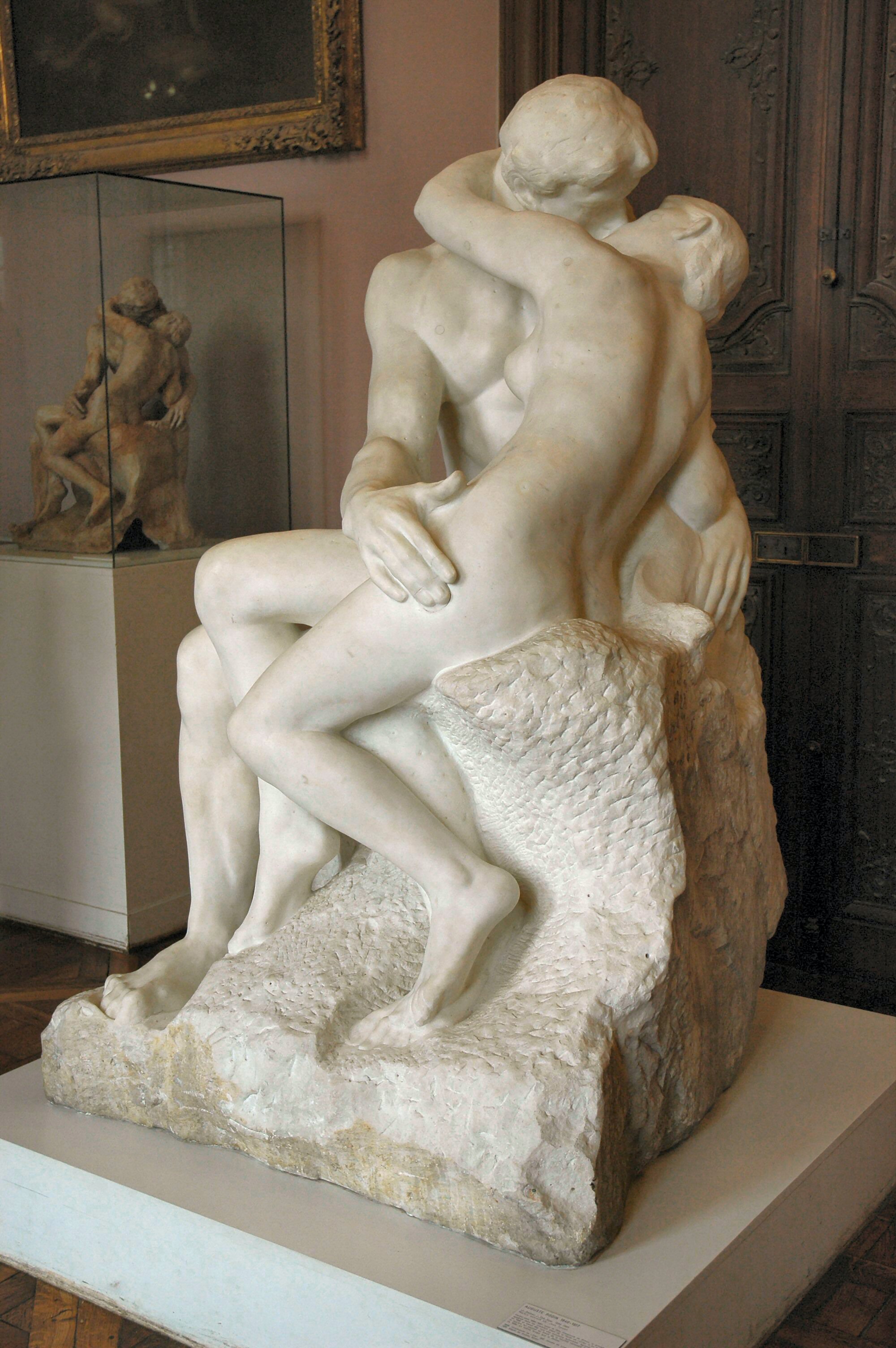
I was under the impression that the general subject of love, in all its oblique insanity, was the subject of study and much woeful writing by poets, mostly.
That is, until I came across neuroscientist Larry Young's absolutely bizarre work on the neurochemistry of love, attachment, cuddles and hugs.
DNA Damage
When a patient takes a pain killer, she doesn't usually care what it's made of. As it enters her bloodstream, she's not aware of the chemical interactions that cause her fever to go down, the molecular components that combine to relieve her pain. But she doesn’t have to know everything about the drug to feel the effects; she just has to swallow a pill. A pharmaceutical company has a patent on that drug, on the chemical responsible for alleviating her symptoms. This kind of patent is generally acknowledged to foster innovation by providing a monetary incentive.
Most people think that nearsightedness and farsightedness can be easily diagnosed, measured and corrected. All you need is an optometrist, an eye test and then a pair of glasses, right? But what if there were only one optometrist for every million people in your country? What if that optometrist was located in the city, and you lived in the countryside? What if a pair of glasses cost as much as you earned in two months?
Know Science And Want To Write?
Apply for a column: writing@science20.com
Donate or Buy SWAG
Please donate so science experts can write
for the public.
At Science 2.0, scientists are the journalists,
with no political bias or editorial control. We
can't do it alone so please make a difference.
We are a nonprofit science journalism
group operating under Section 501(c)(3)
of the Internal Revenue Code that's
educated over 300 million people.
You can help with a tax-deductible
donation today and 100 percent of your
gift will go toward our programs,
no salaries or offices.

Interesting insights from outside Science 2.0