
One of my institute’s projects is gaining too little traction with its target city. No surprise: The project is expensive, heavy on newer smart infrastructure, and this U.S. city is in the middle of a budgeting round. It’s evident to all, though, that the new infrastructure is critical to maintaining the city’s status as an innovative, ecological role model for other metros.
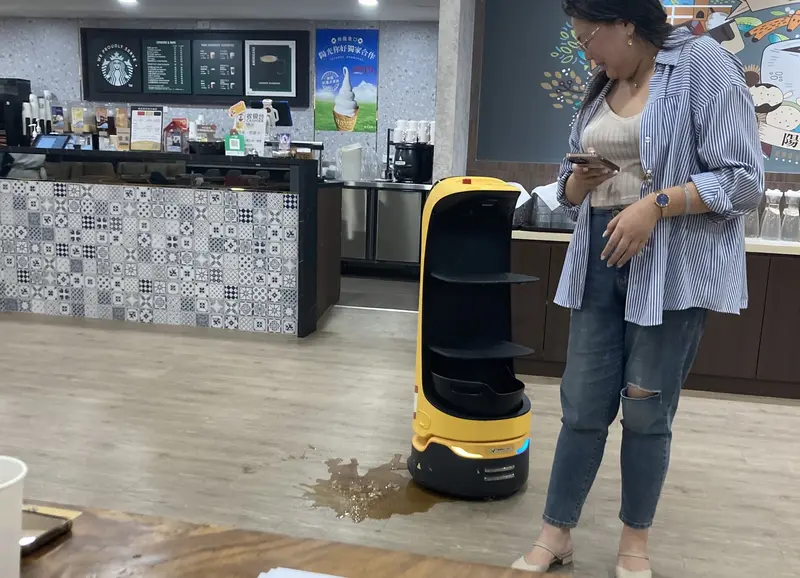
Meanwhile, travelers report the coolest technological advances in other countries – high-speed rail in Japan, automated trains in China, efficient payment systems in Kenya, robot assistants in Singapore, real-time public transit information in Taiwan – and wonder why we don’t have the same in our USA.
It’s elementary in my field of technology management that innovations gore the oxen of incumbent (“legacy”) firms that have much investment sunk in the older technologies. And further, that these legacy businesses do all they can to quash or delay the propagation of the new. Their resistance to pocketbook-hitting innovations is the stuff of legend, from lawsuits harassing the innovators, to buying innovators’ companies and burying the offending tech, right up to the (rumored!) murder of Nikola Tesla in order to disappear his invention that would have provided free energy to everyone.
I trust readers are familiar with the sunk cost fallacy, so let’s catalog the other motives for resisting beneficial, efficiency-enhancing innovation, with special attention to new pro-environmental tech.
· In the cases of the city mentioned above, and those like it, obstacles include the dollar cost of adopting (researching, procuring, installing, and training) the new, and the vision and ambition, or lack thereof, of the potential adopter.
· It’s not just the cost of acquiring and implementing the newer tech. Exnovation, “the process of phasing out, removing, or abandoning existing, often outdated, systems, practices, or technologies”* to make space for newer tech, is expensive also.
· Self-image. Macho oil drillers have a hard time seeing themselves as dainty wind-farmers. Also remember John Henry the steel-drivin’ man.
· Religion. High-minded clergy have tried to make Genesis sound like God gave mankind the job of “husbanding” or “nurturing” the Earth and its creatures. Their efforts seem strained: “Dominion” is the most common translation in the Good Book, and many still take that to mean exploitation. Then there are dispensationalists who believe they’ll be raptured to heaven in their own lifetimes. Neither group can find scriptural or practical reasons for ditching ecologically harmful tech.
· Careers. Experienced executives know productivity and profits go down after adopting a new technology, at least until all personnel are well-trained on it and exnovation is complete. Canny execs balance this expected time frame against their retirement timeline. They make the decision that will allow them to retire “on a high note” profit-wise. Especially if there are bonuses involved.
· Fear. Fear that “efficiency” will take on a higher priority than human dignity. If we shut down the old, and if the new doesn’t appear as promised, numerous voters will be left jobless. And though many current technological innovations will not lead to just one or two vendors dominating the world (like AI, social media, and driverless vehicles might), people do fear those that do. Many realize that AI is likely to take their jobs, and that online social networks are causing teen suicides. Other beneficial technologies suffer from the halo effect: Feelings of fear and futility transfer to all new tech.
These items fit every one of the four P.O.R.T. frames: Personal, Organizational, Religious, and Technical, making for a perfect storm of slower environmental innovation in America; And let’s not overlook basic psychological denial about climate change.
Now what are other tactics incumbents use (short of murder!) to sabotage beneficial innovations?
§ Lawsuits. Spurious accusations of patent infringement are expensive, time-consuming, and possibly terminal for a startup venture.
§ Lobbying. Incumbents are often large corporations, supporting staffs of Washington lobbyists. Legislators want these corporations to support their re-election, and so are amenable to voting for bills that shut out the innovators.
§ Threats. Judge for yourself the veracity of reports that legislators of one of our political parties are subject to threats to their (and their families’) safety if they do not vote according to the party line – a line which favors fossil fuels over sun, wind, tidal, and geothermal energy.
§ Standards. Large legacy corporations and their trade organizations may dominate standards negotiations. Government bodies like the U.S. Trade Representative may support their consensus, if it increases the country’s exports, even at the expense of excluding innovative new U.S. companies. (The latter companies are now hip to this, starting their own standards fora for advance tech – often before the legacy firms are aware of what’s going on.)
§ Building codes, ostensibly for the purpose of ensuring the safety of housing and other infrastructure, are really designed (with input to the city from legacy firms, natch) to keep innovators out. Has your city yet allowed 3-D printing of homes? No? See?
§ I hesitate to mention other federal and local government regulations and approval processes having to do with public health and safety, because the current administration is wiping them out en masse, the good with the bad. A very few of them do, in fact, inhibit innovation, or at least slow it down.
This brings us back to why startling innovations happen in other countries, but here in the U.S. very late or not at all:
o Being a technology-follower country can be cheaper than being a tech leader; You don’t have to fund the scientific R&D. Every technologist in a follower country feels the pressure to catch up.
o As incomes in the rest of the world increase, foreign students graduating in the U.S. have found opportunities back home. They’re inspired at the new prospect of helping their home countries develop further. And this was before our 47th president made life in the U.S. tougher for them.
o Other countries have stuck with national technology strategies, during the decade these strategies were out of fashion in America. Consistent strategies created more stable business environments than we experienced here. Businesses, including tech startups, love stable business environments! (Are government technology choices inferior to private sector choices? Both are equally likely to be wrong. The only advantage of private sector decisions is that bad ones tend to be corrected more quickly than government decisions.)
o The nouveau riches in Asia, for example, are giddy about gadgets. Here we’re more jaded. Witness how American boomers absolutely hate all the electronics in new cars.
o Different world regions have different problems. Each tries to solve its worst problems first. If foreign Country A succeeds in this, America might eventually adopt that solution, applying it to a lower-priority American problem.
o Of course, regulatory regimes are different in different countries. Some better, some worse. In particular, less restrictive building codes are common.
o Most countries are less litigious than the United States, and/or less shy about taxation.
What can be done about it?
· Offer subsidies to incumbent firms that show clear and plausible plans for transitioning to the new tech. Subsidies to be accompanied by penalties for not using the subsidies in the promised manner.
· Update building codes, by means of a committee at least half of whose members are not beholden to legacy construction companies.
· Technical standards should be formulated in ways that (1) emphasize consumer safety, (2) compliance should not be so expensive as to discourages new market entrants, (3) are not designed to consolidate the market positions of mature companies in the industry, and (4) anticipate and minimize negative social consequences. (An example of failure in the latter: New standards banning chloroflourocarbons in cooling appliances resulted in a black market in Freon, an ozone-depleting coolant.)
· European-style curbs on big tech, aimed not at freezing innovation but at slowing big tech’s ability to dominate markets, social practices, and political trends.
· Judges who are quicker to toss frivolous lawsuits.
· Re-jigger executive bonuses in ways that encourage eco-innovation.
· The most difficult but most effective measures would involve shorter legislative term limits, combined with a ban on lobbying, and/or public funding of election campaigns, with PACs banned and strict limits on individual campaign donations.
Thinking this through, I see our Institute’s urban project faces higher obstacles than I initially imagined. Nothing for it but to bring a powerful interdisciplinary team to bear on them, combined with aggressive P.R. and persuasion. In a year’s time I’ll tell you whether we’ve made progress.
Hitchhiking around Europe in 1972, I saw articulated buses, and self-pay, self-serve gasoline stations. Why, I wondered, don’t we have these things in America? Now we do, of course, but we should have had them sooner. And ironically, now we have the automated gas pumps just as companies are un-installing them in favor of EV charging stations.
As they say, timing is everything.
* https://innovationmanagement.se/2009/07/22/what-is-exnovation-and-where-...


