Banner
Here's Where Your Backyard Was 300 Million Years Ago

We may use terms like "grounded" and terra firma to mean stability and consistency but geology...

Convergent Evolution Cheat Sheet Now 120 Million Years Old

One tenet of natural selection is a random walk of genes but nature may be more predictable than...

Synchrotron Could Shed Light On Exotic Dark Photons

There are many hypothetical particles proposed to explain dark matter and one idea to explore how...

The Pain Scale Is Broken But This May Fix It

Chronic pain is reported by over 20 percent of the global population but there is no scientific...

User picture.
News StaffRSS Feed of this column.

News Releases From All Over The World, Right To You... Read More »

Blogroll

There may be unconscious race and social class biases in trauma and acute-care clinicians, according to a survey, but they did not affects clinical decisions finds an analysis in JAMA Surgery.

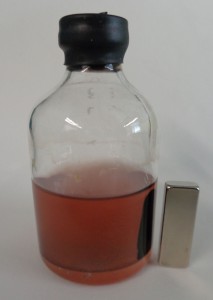
New research shows bacteria can use tiny magnetic particles to effectively create a 'natural battery.' The bacteria can load electrons onto and discharge electrons from microscopic particles of magnetite. This discovery holds out the potential of using this mechanism to help clean up environmental pollution, and other bioengineering applications. 

Researchers from the University of Tübingen, the University of Manchester, and Pacific Northwest National Laboratory, USA, incubated the soil and water dwelling purple bacteria Rhodopseudomonas palustris with magnetite and controlled the amount of light the cultures were exposed to.

Deforestation could impact global food production by triggering changes in local climate, according to research on albedo (the amount of the sun's radiation reflected from Earth's surface) and evapotranspiration (the transport of water into the atmosphere from soil, vegetation, and other surfaces) as the primary drivers of changes in local temperature.
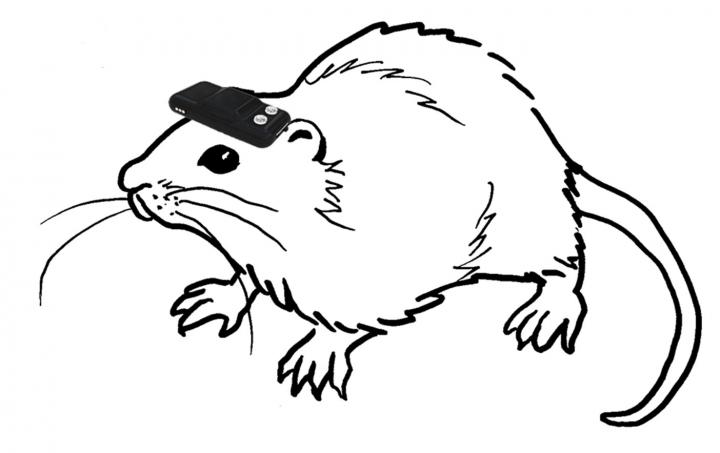
A microstimulator and geomagnetic compass attached to the brains of blind rats allows them to spontaneously learn to use new information about their location and navigate through a maze nearly as well as normally sighted rats.

The findings show the incredible flexibility of the mammalian brain but also suggest that a similar kind of neuroprosthesis could help blind people walk freely through the world.
In a study of more than 6,500 pairs of twins, researchers found that more than half of the differences between pupils performance on the General Certificate of Secondary Education (GCSE) can be explained by differences in genetics.

The research found that although IQ showed the strongest relationship with exam scores other genetically influenced traits such as personality and behavior also explained individual differences in achievement. Intelligence accounted for more of the heritability of GCSE results than any other single domain but the joint contribution of pupils' self-belief, health, behavior problems, personality, well-being, and perceptions of home and school, collectively accounted for the same amount again.

The scientific community is facing a 'pollution problem' in academic publishing, one that poses a serious threat to the "trustworthiness, utility, and value of science and medicine," according to Arthur L. Caplan, PhD, director of the Division of Medical Ethics in the Department of Population Health at NYU Langone Medical Center.