Banner
Here's Where Your Backyard Was 300 Million Years Ago

We may use terms like "grounded" and terra firma to mean stability and consistency but geology...

Convergent Evolution Cheat Sheet Now 120 Million Years Old

One tenet of natural selection is a random walk of genes but nature may be more predictable than...

Synchrotron Could Shed Light On Exotic Dark Photons

There are many hypothetical particles proposed to explain dark matter and one idea to explore how...

The Pain Scale Is Broken But This May Fix It

Chronic pain is reported by over 20 percent of the global population but there is no scientific...

User picture.
News StaffRSS Feed of this column.

News Releases From All Over The World, Right To You... Read More »

Blogroll

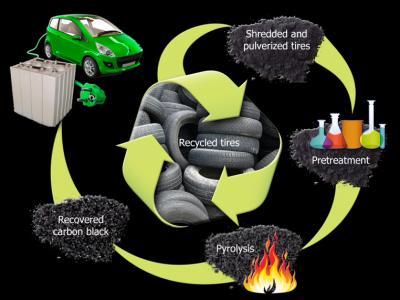
In the 1970s, Florida environmentalists who had invented the notion that landfills were going to overrun America came up with the idea of making coral reefs out of tires. A few short decades later, the clean-up costs when those all came loose were 100X the supposed savings and tires have fallen out of favor as clever quick fixes since then.

Leave it to people in Tennessee to find a new use for old tires.  Oak Ridge National Laboratory
researchers have found a way to use them to make better lithium-ion batteries.

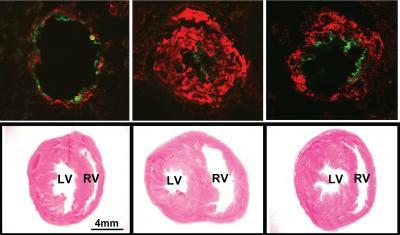
Oxidized lipids are known to play a key role in inflaming blood vessels and hardening arteries, which causes diseases like atherosclerosis. A new study at UCLA demonstrates that they may also contribute to pulmonary hypertension, a serious lung disease that narrows the small blood vessels in the lungs.

Using a rodent model, the researchers showed that a peptide mimicking part of the main protein in high-density lipoprotein (HDL), the so-called "good" cholesterol, may help reduce the production of oxidized lipids in pulmonary hypertension. They also found that reducing the amount of oxidized lipids improved the rodents' heart and lung function.

In the culture war on cigarette smoking that lingered long after the science and health issues were settled, nothing spoke to the fuzzy, non-evidence-based nature of arguments than claims that second-hand smoke would give someone lung cancer.

Cigarette smoking is annoying and smelly, to be sure, and asthmatics can't be happy in a smoke-filled room any more than non-smokers are, but there are no instances where second-hand smoke has caused cancer. The American Heart Association recently went to war on electronic-cigarettes, a nicotine vapor device, after embracing nicotine patches and lozenges, and some of the claims they made in their policy recommendation defied belief, like that second-hand smoke from e-cigarettes could be just as harmful.

Cellular reproduction seems simple but the ability to faithfully copy genetic material and distribute it equally to daughter cells is fundamental to all forms of life - and complex. Even seemingly simple single-celled organisms must have the means to meticulously duplicate their DNA, carefully separate the newly copied genetic material, and delicately divide in two to ensure their offspring survive.

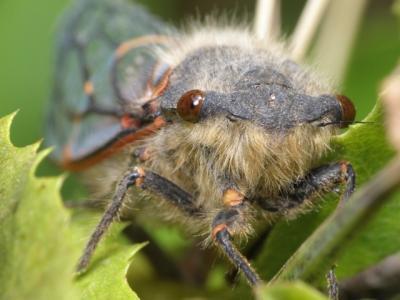
Organisms in a symbiotic relationship will often shed genes as they come to rely on the other organism for crucial functions but researchers have uncovered an unusual event in which a bacterium that lives in a type of cicada split into two species - doubling the number of organisms required for the symbiosis to survive.

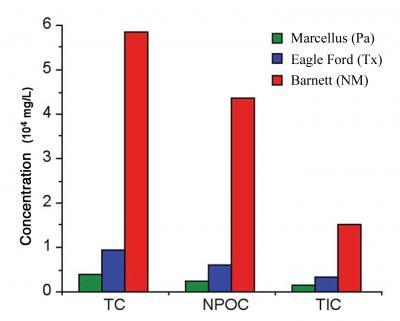
Rice University scientists have produced a detailed analysis of water produced by hydraulic fracturing of three gas reservoirs and suggest environmentally friendly remedies - advanced recycling rather than disposal of "produced" water pumped back out of wells - could calm fears of accidental spillage and save millions of gallons of fresh water a year.