Banner
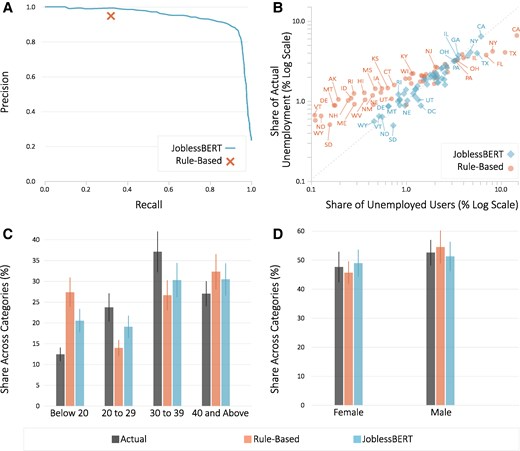
Social Media Is A Faster Source For Unemployment Data Than Government

Government unemployment data today are what Nielsen TV ratings were decades ago - a flawed metric...

Gestational Diabetes Up 36% In The Last Decade - But Black Women Are Healthiest

Gestational diabetes, a form of glucose intolerance during pregnancy, occurs primarily in women...

Object-Based Processing: Numbers Confuse How We Perceive Spaces

Researchers recently studied the relationship between numerical information in our vision, and...

Males Are Genetically Wired To Beg Females For Food

Bees have the reputation of being incredibly organized and spending their days making sure our...

User picture.
News StaffRSS Feed of this column.

News Releases From All Over The World, Right To You... Read More »

Blogroll

Researchers in the UK are gearing themselves up for an influx of help. Forty thousand people have already run the LHC@home program on their home or office computers, to help scientists discover the secrets of matter and this week researchers at Queen Mary, University of London, officially launched the new base for LHC@home, which has moved from CERN, the European particle physics laboratory in Geneva.

LHC@home is a collaboration between CERN, the Helsinki Institute of Physics, the Niels Bohr Institute in Copenhagen, Queen Mary University of London and TRIUMF in Vancouver.

The Norwegian Nobel Committee has decided that the Nobel Peace Prize for 2007 is to be shared, in two equal parts, between the Intergovernmental Panel on Climate Change (IPCC) and Albert Arnold (Al) Gore Jr. for their efforts to build up and disseminate greater knowledge about man-made climate change, and to lay the foundations for the measures that are needed to counteract such change.

How do global warming studies merit a peace prize?

In the words of the committee, extensive climate changes may alter and threaten the living conditions of much of mankind, inducing large-scale migration and greater competition for the earth's resources.

The enzyme TPPII may contribute to obesity by stimulating the formation of fat cells, suggests a study in EMBO reports this week. The enzyme, TPPII, has previously been linked to making people feel hungry, but Jonathan Graff and colleagues now show that it may be even more deeply involved in causing obesity.

The team found that TPPII actually stimulated the formation of fat cells in worms and mammalian cells and that by reducing it, fat stores decreased. Mice with lower levels of TPPII were thinner than their wild type littermates, although their food intake was comparable.

Statins are known to be good for lowering cholesterol and maybe even fighting dementia, and now they have another reported benefit: they appear to slow decline in lung function in the elderly— even in those who smoke. According to researchers in Boston, it may be statins’ anti-inflammatory and antioxidant properties that help achieve this effect.

Their findings were published in the second issue for October in the American Thoracic Society’s American Journal of Respiratory and Critical Care Medicine.

“We hypothesized that statins would have a protective effect on decline in lung function,” wrote Dr.

Central venous catheters are commonly used to provide permanent hemodialysis for patients with serious kidney disease. One technique, inserting a catheter through large vessels, has been commonly used worldwide in recent years.

A new study published in Hemodialysis International finds that this treatment may block the blood flow in the vessel, leading to superior vena cava syndrome (SVC syndrome), a highly serious complication caused by the obstruction of blood coming to the heart from the upper body.

The warning signs of SVC syndrome include shortness of breath, swelling of the upper limbs, neck and face, which occur as the catheter, generally inserted into a large blood vessel, blocks blood flow.

For the first time, scientists have linked the all-too-human preference for a food — chocolate — to a specific, chemical signature that may be programmed into the metabolic system and is detectable by laboratory tests. The signature reads ‘chocolate lover’ in some people and indifference to the popular sweet in others, the researchers say.

The study by Swiss and British scientists breaks new ground in a rapidly emerging field that may eventually classify individuals on the basis of their metabolic type, or metabotype, which can ultimately be used to design healthier diets that are customized to an individual’s needs. The study is scheduled for publication in the Nov.