Banner
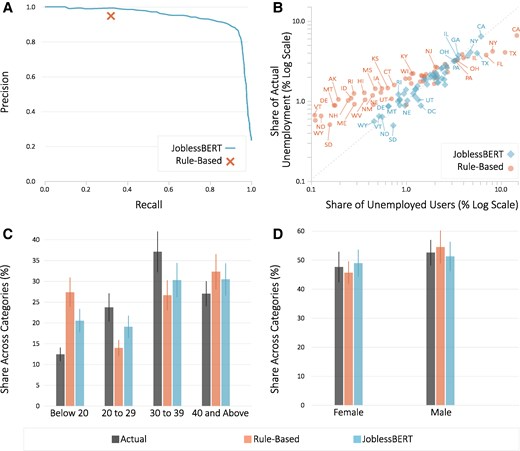
Social Media Is A Faster Source For Unemployment Data Than Government

Government unemployment data today are what Nielsen TV ratings were decades ago - a flawed metric...

Gestational Diabetes Up 36% In The Last Decade - But Black Women Are Healthiest

Gestational diabetes, a form of glucose intolerance during pregnancy, occurs primarily in women...
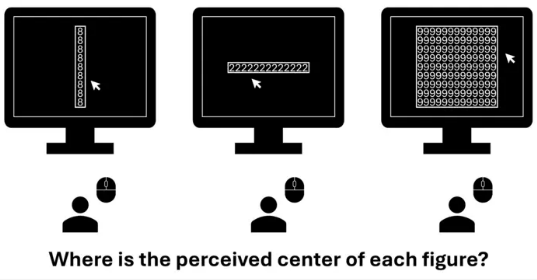
Object-Based Processing: Numbers Confuse How We Perceive Spaces

Researchers recently studied the relationship between numerical information in our vision, and...
Males Are Genetically Wired To Beg Females For Food

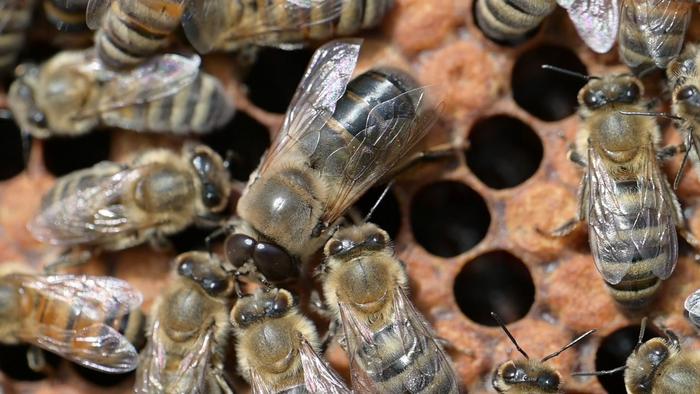
Bees have the reputation of being incredibly organized and spending their days making sure our...

User picture.
News StaffRSS Feed of this column.

News Releases From All Over The World, Right To You... Read More »

Blogroll

Most people who have tried to install new computer software are happy to know that a common set of default options is available. For many, they will work fine and customization is only required in a few instances, which leads to less technical support, frustration and downtime.

Can that same computer software model work in health care?

In an opinion article in the September 28 issue of the New England Journal of Medicine, lead author Scott D. Halpern, M.D., a fellow in the division of Pulmonary, Allergy and Critical Care Medicine in the University of Pennsylvania Health System, and colleagues, argue that these concepts applied by marketers should also be used by the medical community to benefit patients.

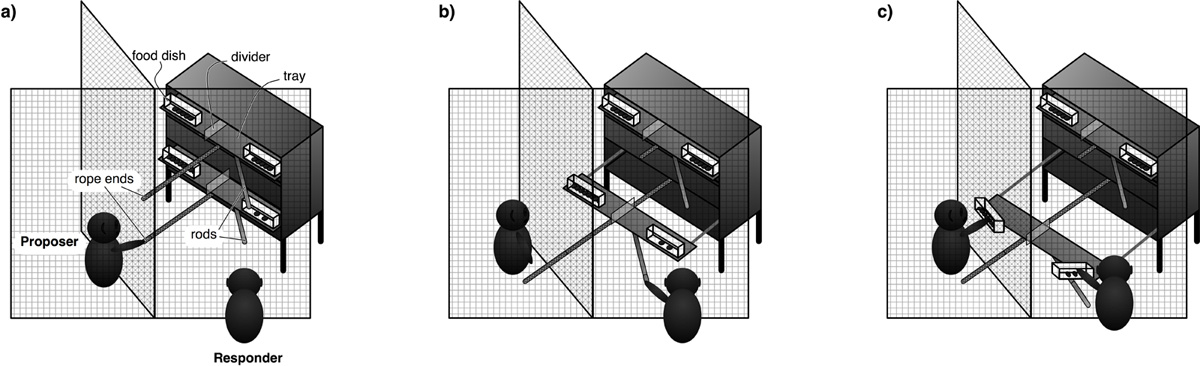
New research from the Max Planck Institute of Evolutionary Anthropology in Leipzig shows that, unlike humans, chimpanzees do not show a willingness to make fair offers and reject unfair ones. The research, conducted by Keith Jensen, Josep Call and Michael Tomasello, used a modification of one of the most widely used and accepted economic tools, the ultimatum game.

In the ultimatum game - developed by Werner Güth, now at the Max Planck Institute for Economics in Jena - one person, the proposer, is given money by an experimenter. That proposer can then divide the "mana from heaven" with a second person, the responder. The responder is not powerless - if he accepts the division, both people take home the offered amounts. But if he rejects it, both get nothing.

That question may be answered as scientists study the recently mapped genetic makeup of a fungus that spawns the worst cereal grains disease known and also can produce toxins potentially fatal to people and livestock.

The fungus, which is especially destructive to wheat and barley, has resulted in an estimated $10 billion in damage to U.S. crops over the past 10 years. The scientists who sequenced the fungus' genes said that the genome will help them discover what makes this particular pathogen so harmful, what triggers the process that spreads the fungus and why various fungi attack specific plants.

University of Utah scientists discovered a strange method of reproduction in primitive plants named cycads: The plants heat up and emit a toxic odor to drive pollen-covered insects out of male cycad cones, and then use a milder odor to draw the bugs into female cones so the plants are pollinated.

The unusual form of sexual reproduction used by some species of cycads – primeval plants known as “living fossils” – may represent an intermediate step in the evolution of plant pollination, the researchers say.

Thousands of new kinds of marine microbes have been discovered at two deep-sea hydrothermal vents off the Oregon coast by scientists at the MBL (Marine Biological Laboratory) and University of Washington’s Joint Institute for the Study of Atmosphere and Ocean. Their findings, published in the October 5 issue of the journal Science, are the result of the most comprehensive, comparative study to date of deep-sea microbial communities that are responsible for cycling carbon, nitrogen, and sulfur to help keep Earth habitable.

Using a new analytical technique called “454 tag sequencing,” the scientists surveyed one million DNA sequences of bacteria and archaea, two of the three major domains of life.

A human embryonic stem cell is reined in – prevented from giving up its unique characteristics of self-renewal and pluripotency – by the presence of a protein modification that stifles any genes that would prematurely instruct the cell to develop into heart or other specialized tissue. But, thanks to the simultaneous presence of different protein modifications, stem cells are primed and poised, ready to develop into specialized body tissue, Singapore scientists report.

The molecules central to this balancing act, H3K4me3 and H3K27me3, are among the so-called epigenetic modifications that influence the activity patterns of genes in both human embryonic stem (ES) cells and mature human adult cells.