Banner
Social Media Is A Faster Source For Unemployment Data Than Government

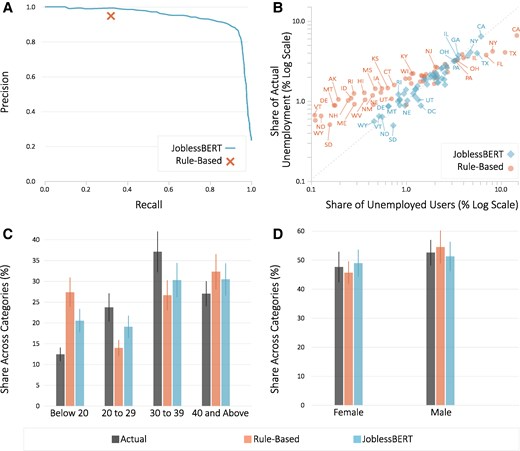
Government unemployment data today are what Nielsen TV ratings were decades ago - a flawed metric...
Gestational Diabetes Up 36% In The Last Decade - But Black Women Are Healthiest

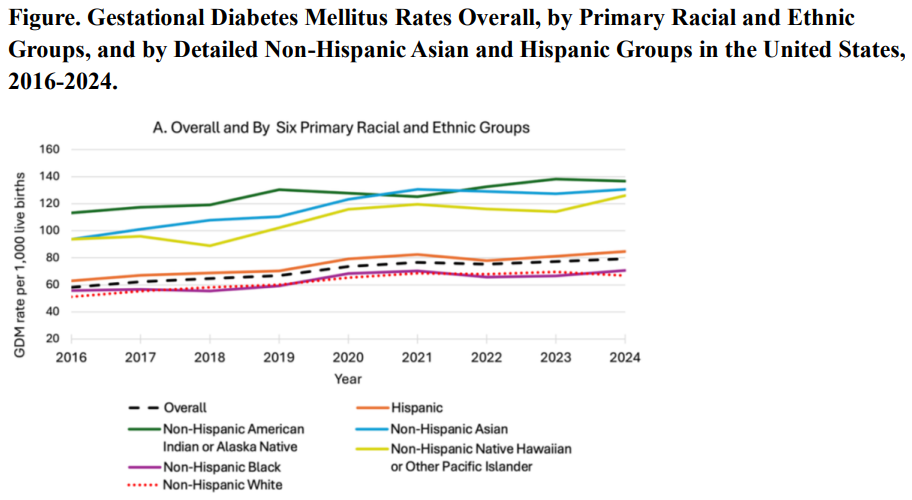
Gestational diabetes, a form of glucose intolerance during pregnancy, occurs primarily in women...

Object-Based Processing: Numbers Confuse How We Perceive Spaces

Researchers recently studied the relationship between numerical information in our vision, and...

Males Are Genetically Wired To Beg Females For Food

Bees have the reputation of being incredibly organized and spending their days making sure our...

User picture.
News StaffRSS Feed of this column.

News Releases From All Over The World, Right To You... Read More »

Blogroll

Researchers have found that lack of sleep can more than double the risk of death from cardiovascular disease. They also found that too much sleep can also more than double the risk of death.

One way or another, you are going to die. Strangely, your sleep habits may speed up that process.

The study detailed how sleep patterns affected the mortality of 10,308 civil servants in the “Whitehall II study”. Amongst other things the data they used provided information on the mortality rates and sleep patterns on the same group of civil servants at two points in their life (1985-8 and those still alive in 1992-3).

Six months of acupuncture treatment appears to be more effective than conventional therapy in treating low back pain, according to a study in the Sept. 24 issue of Archives of Internal Medicine, although the study suggests that both sham acupuncture and traditional Chinese verum acupuncture appear to be effective in treating low back pain.

“Low back pain is a common, impairing and disabling condition, often long-term, with an estimated lifetime prevalence of 70 percent to 85 percent,” the authors write as background information in the article.

Modern conservation techniques have brought us the resurgence of American bald eagles, sustainable forest harvests and the rescue of prized lobster fisheries. So how can modern conservation strategies also have wrought such failures, from the catastrophic loss of Guatemalan forests to the economy-crippling Klamath River salmon kill in 2006?

Indiana University political scientist Elinor Ostrom and colleagues argue that while many basic conservation strategies are sound, their use is often flawed.

For more than 100 years, scientists have tried to figure out the cell size problem: How does a cell know when it is big enough to divide? In research conducted in budding yeast (Saccharomyces cerevisiae), scientists at Rockefeller University have now identified the cellular event that marks the moment when a cell knows it is big enough to commit to cell division and spawn genetic replicas of itself.

The findings provide a precise and quantitative framework for studying the possible mechanisms that allow cells to monitor and sense their size.

During the first phase of the cell cycle, known as G1, budding yeast grows and begins to form a bud; in the final stage, the cell splits into two — one bigger than the other.

Florida Atlantic University received U.S. patent no. 10/822,496, “Promoting Cardiac Cell Differentiation,” based on an invention which induces and restores cardiac muscle function.

The invention was discovered by FAU researcher and vice president for research, Dr. Larry F. Lemanski and his postdoctoral fellow, Dr. Chi Zhang. Their research has focused on understanding the mechanisms that regulate myocardial (heart muscle mass) cell differentiation and myofibrillogenesis (the process by which proteins in the heart are changed into heart muscle cells) in the developing heart. From their findings, these researchers hope to repair myocardial deficiencies in the human heart which are caused by either congenital heart defects or heart attacks.

A University of Leicester mathematician has been working with scientists in Japan and The Netherlands to develop a new technique that produces accurate mathematical models of the actual behaviour of nerve (neural) cells. Developing such models requires detailed information about the dynamics of components responsible for the spike generation in the cell.

The main barrier between mathematical modelling and reality is that the most of intrinsic variables of living cell are not available for direct observation. Dr Ivan Tyukin and his colleagues developed a method for automatic reconstructing of hidden variables describing the cell dynamics using only the recordings of evoked electric activity of the cell.