Banner
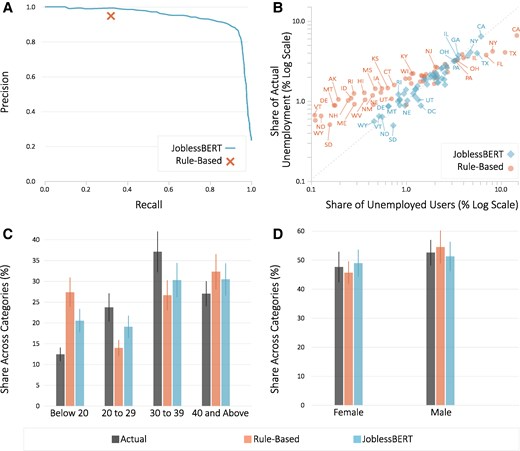
Social Media Is A Faster Source For Unemployment Data Than Government

Government unemployment data today are what Nielsen TV ratings were decades ago - a flawed metric...

Gestational Diabetes Up 36% In The Last Decade - But Black Women Are Healthiest

Gestational diabetes, a form of glucose intolerance during pregnancy, occurs primarily in women...

Object-Based Processing: Numbers Confuse How We Perceive Spaces

Researchers recently studied the relationship between numerical information in our vision, and...

Males Are Genetically Wired To Beg Females For Food

Bees have the reputation of being incredibly organized and spending their days making sure our...

User picture.
News StaffRSS Feed of this column.

News Releases From All Over The World, Right To You... Read More »

Blogroll

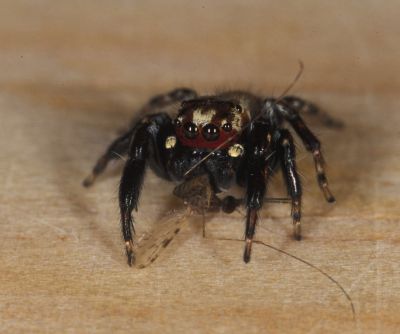
Researchers have discovered that even the gruesome and brutal lifestyle of the Evarcha culicivora, a blood gorging jumping spider indigenous to East Africa, can’t help but be tempted by that ‘big is beautiful’ mantra no matter what the costs.

A study recently published in Ethology found that despite the inherent risk of sexual cannibalism, virgin females were attracted to bigger males when losing their virginity before opting for the safer smaller male as a longer term mate choice.


Pick me, pick me. I am too small to eat you.

Everyone knows how a bicycle works - or so we think. But for 150 years why a moving bicycle can, all by itself, be so stable has been something of a mystery.

"Bicycle manufacturers have never been able to say precisely how a bicycle works," explains Dr Arend Schwab of the Faculty of Mechanical, Maritime and Materials Engineering (3mE). "They have always had to refine their designs purely through experimentation. In our model, they can enter into the computer all of the various factors that influence the stability and handling of their bicycle.

The majority of patients who undergo male to female sex-change surgery are happy with the results, despite the fact that complications are common, according to a study of over 200 patients in the September issue of the urology journal BJU International.

A research team from the Departments of Urology and Psychiatry at University Hospitals of Leicester NHS Trust, UK, explored the initial experiences of 222 patients who had undergone surgery and 70 who took part in detailed follow-ups.

They found that 88 per cent of patients were happy with their surgery at their first post-operative clinic visit, seven per cent were unhappy and five per cent made no comment.

"We've never seen anything quite like it," says solar physicist Lika Guhathakurta from NASA headquarters.

Last week she sat in an audience of nearly two hundred colleagues at the "Living with a Star" workshop in Boulder, Colorado, and watched in amazement as Saku Tsuneta of Japan played a movie of sunspot 10926 breaking through the turbulent surface of the sun. Before their very eyes an object as big as a planet materialized, and no one was prepared for the form it took.

"It looks like a prehistoric trilobite," said Marc De Rosa, a scientist from Lockheed Martin's Solar and Astrophysics Laboratory in Palo Alto, Calif.

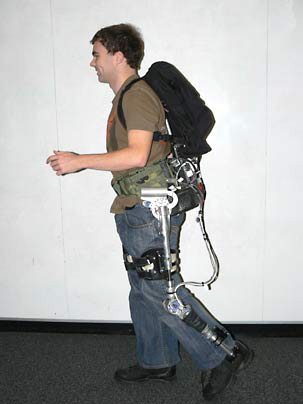
Researchers in the MIT Media Lab's Biomechatronics Group have created an exoskelton device to lighten the burden for soldiers by transferring that weight directly to the ground, effectively taking a load off the back of the person wearing the device.

In the September issue of the International Journal of Humanoid Robotics, the researchers report that their prototype can successfully take on 80 percent of an 80-pound load carried on a person's back, but there's one catch: The current model impedes the natural walking gait of the person wearing it.

"You can definitely tell it's affecting your gait," said Conor Walsh, a graduate student who worked on the project, but "you do feel it taking the load off and you definitely feel less stress on your upper body."

Whether it’s a mugger or a friend who jumps out of the bushes, you’re still surprised. But your response — to flee or to hug — must be very different. Now, researchers have begun to distinguish the circuitry in the brain’s emotion center that processes surprise from the circuitry that processes the aversive or reward “valence” of a stimulus.

C. Daniel Salzman and colleagues published their findings in the September 20, 2007 issue of the journal Neuron.

“Animals and humans learn to approach and acquire pleasant stimuli and to avoid or defend against aversive ones,” wrote the researchers. “However, both pleasant and aversive stimuli can elicit arousal and attention, and their salience or intensity increases when they occur by surprise.