Banner
The Scorched Cherry Twig And Other Christmas Miracles Get A Science Look

Bleeding hosts and stigmatizations are the best-known medieval miracles but less known ones, like ...
$0.50 Pantoprazole For Stomach Bleeding In ICU Patients Could Save Families Thousands Of Dollars

The inexpensive medication pantoprazole prevents potentially serious stomach bleeding in critically...
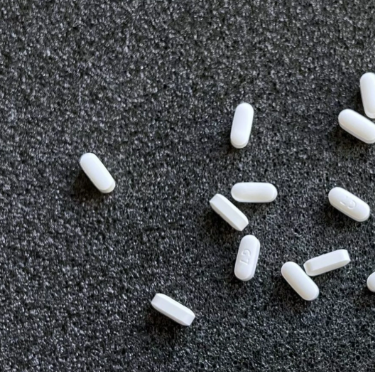
Metformin Diabetes Drug Used Off-Label Also Reduces Irregular Heartbeats

Adults with atrial fibrillation (AFib) who are not diabetic but are overweight and took the diabetes...

Your Predator: Badlands Future - Optical Camouflage, Now Made By Bacteria

In the various 'Predator' films, the alien hunter can see across various spectra while enabling...

User picture.
News StaffRSS Feed of this column.

News Releases From All Over The World, Right To You... Read More »

Blogroll

Special effects in movies have always had a problem: water drops are a consistent size. The one thing that always tips a viewer off in old movies are water drops that look huge next to scaled models.

It hasn't improved much in the last 50 years. Water looks fake and beer is even harder because of the bubbles but computer animation is a $55 billion global industry so it's only a matter of time before someone meets the challenge. A group of scientists think they have done it.

“As you pour beer into a glass, you see bubbles appearing on what are called nucleation sites, where the glass isn’t quite smooth,” CSIRO fluids researcher Dr Mahesh Prakash says.

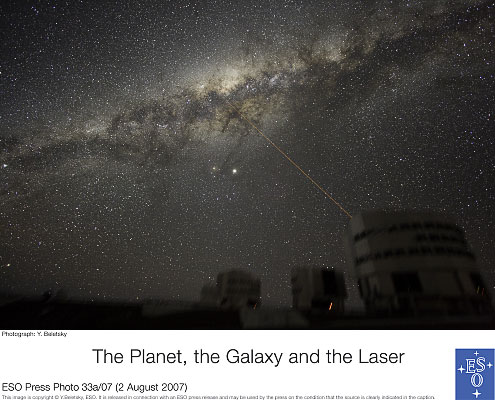
On the night of 21 July, ESO astronomer Yuri Beletsky took images of the night sky above Paranal, the 2600m high mountain in the Chilean Atacama Desert home to ESO's Very Large Telescope. The amazing images bear witness to the unique quality of the sky, revealing not only the Milky Way in all its splendour but also the planet Jupiter and the laser beam used at Yepun, one of the 8.2-m telescopes that make up this extraordinary facility.

"The images are not composite", emphasises Yuri Beletsky. "The camera was being tracked on the stars, which can be easily noticed if you look at the telescope domes on the image (they look a little fuzzy).

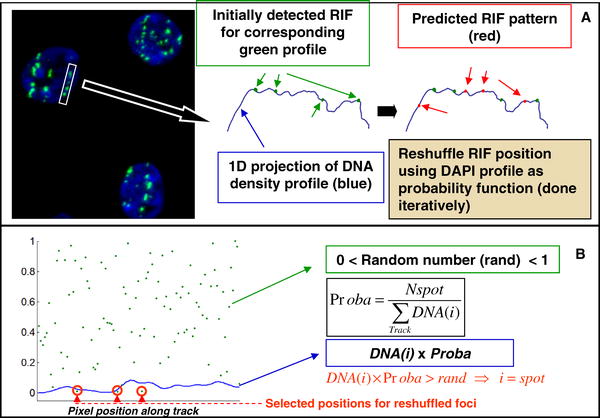
There are a number of things which can damage DNA - toxic chemicals are the primary concern on earth but, in space, ionized radiation is the worry. Unrepaired DNA can lead to mutations, which in turn can lead to diseases like cancer. Intricate DNA repair mechanisms in the cells' nuclei are constantly working to fix what's broken, but whether the repair work happens "on the road" — right where the damage occurs — or "in the shop" — at specific regions of the nucleus — is an unanswered question.

NASA scientists are working on understanding where and how DNA is repaired so they can be prepared for long distance space travel.

The dream of theoretical physics is to unite behind a common theory that explains everything, but that goal has remained highly elusive.

String theory emerged 40 years ago as one of the most promising candidates for such a theory, and has since slipped in and out of favor as new innovations have occurred. Now Europe is fortunate to have one of the world’s leading experts in string theory working on an ambitious project that could make significant progress towards a unified theory, and at least help resolve two mysteries.

One is how the universe emerged in the beginning as a random fluctuation of a vacuum state, and the other is a common explanation for all sub-atomic particles.

Greenhouse gas emissions from power stations could be cut to almost zero by controlling the combustion process with tiny tubes made from an advanced ceramic material, claim British engineers.

The material, known as LSCF, has the remarkable property of being able to filter oxygen out of the air.

Molly Brown of NASA’s Goddard Space Flight Center in Greenbelt, Md., and her colleagues have created a model using data from satellite remote sensing of crop growth and food prices.

Brown conceived the idea while working with organizations in Niger, West Africa, that provide information regarding failed crops and help address local farmers' worries about feeding their families. Brown's new approach could improve the ability for government and humanitarian aid officials to plan and respond to drought-induced food price increases in Niger and elsewhere.