Banner
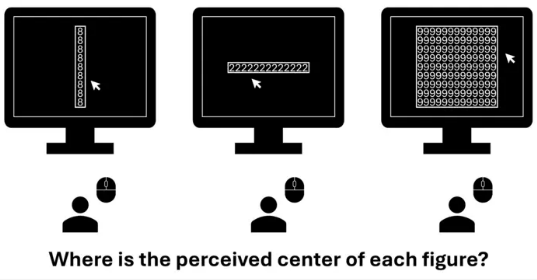
Object-Based Processing: Numbers Confuse How We Perceive Spaces

Researchers recently studied the relationship between numerical information in our vision, and...
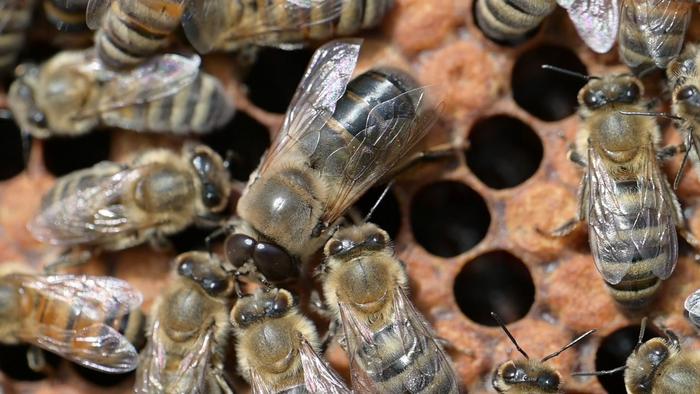
Males Are Genetically Wired To Beg Females For Food

Bees have the reputation of being incredibly organized and spending their days making sure our...

The Scorched Cherry Twig And Other Christmas Miracles Get A Science Look

Bleeding hosts and stigmatizations are the best-known medieval miracles but less known ones, like ...

$0.50 Pantoprazole For Stomach Bleeding In ICU Patients Could Save Families Thousands Of Dollars

The inexpensive medication pantoprazole prevents potentially serious stomach bleeding in critically...

User picture.
News StaffRSS Feed of this column.

News Releases From All Over The World, Right To You... Read More »

Blogroll

Rotary engines were developed by Wankel of Germany in the 1930s. They never really gained acceptance in the mass market, aside from Mazda in its RX-7 and later models. But a project team says they can take the Mazda rotary engine block and build an aero engine around it that could be retrofitted to all aircraft - and it will change aviation.

The four-stroke piston engine technology used by the majority of planes in general aviation dates back 60 years.

There's nothing wrong in sticking with what works but those motors require 70 to 80 moving parts and still use 100-octane low-leaded (100 LL) fuel that has long been displaced by kerosene for commercial aircraft.

A century-old dream of neuroscientists to visualize a memory has been fulfilled, as University of California, Irvine researchers, using newly developing microscopic techniques, have captured first-time images of the changes in brain cell connections following a common form of learning.

The study shows that synaptic connections in a region of rats’ brains critical to learning change shape when the rodents learn to navigate a new, complex environment. In turn, when drugs are administered that block these changes, the rats don’t learn, confirming the essential role the shape change plays in the production of stable memory.

“This is the first time anyone has seen the physical substrate, the ‘face,’ of newly encoded memory.

Carnegie Mellon University scientists have made an important discovery that aids the understanding of why HIV enters immune cells with ease. The researchers found that after HIV docks onto a host cell, it dramatically lowers the energy required for a cell membrane to bend, making it easier for the virus to infect immune cells. The finding, in press in Biophysical Journal, will provide vital data to conduct future computer simulations of HIV dynamics to help further drug discovery and prevent deadly infections.

“We found that HIV fusion peptide dramatically decreases the amount of energy needed to bend a cell-like membrane,” said Stephanie Tristram-Nagle, associate research professor of biological physics at Carnegie Mellon.

Experts from the Met Office, the University of Exeter and the Centre for Ecology & Hydrology, have found that projections of increasing ozone near the Earth’s surface could lead to significant reductions in regional plant production and crop yields. Surface ozone also damages plants, affecting their ability to soak up carbon dioxide from the atmosphere and accelerating global warming.

Near-surface ozone has doubled since 1850 due to chemical emissions from vehicles, industrial processes, and the burning of forests.

A new study out of Carnegie Mellon University reveals that people who regard themselves as humanitarians are even more likely than others to base donations to the poor on whether they believe poverty is a result of bad luck or bad choices.

The study by Christina Fong, a research scientist in the Department of Social and Decision Sciences at Carnegie Mellon, supports previous findings that people are more likely to give money to the poor when they believe that poverty is a result of misfortune rather than laziness. What’s surprising is that this effect is largest among people who claim to have more humanitarian or egalitarian beliefs. In fact, humanitarians give no more than others when recipients are deemed to be poor because of laziness.

A new study raises the issue of a direct link between breast cancer incidence and use of postmenopausal hormone therapy (HT).

Breast cancer incidence and mammography screening rates during 1980–2006 showed similar but not synchronous periodic fluctuations. The implication that HT use equates to the risk of breast cancer is therefore too simplistic and inappropriate.

The medical community has been debating for many years whether, and to what extent, postmenopausal hormone therapy (HT) use is associated with a higher risk of breast cancer, says Professor Amos Pines, President of the International Menopause Society.