Banner
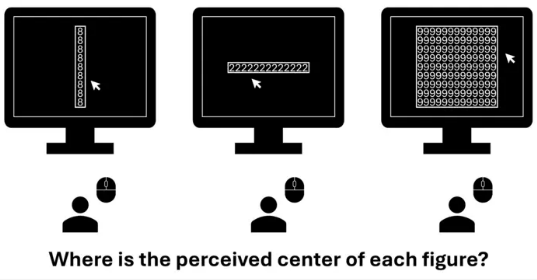
Object-Based Processing: Numbers Confuse How We Perceive Spaces

Researchers recently studied the relationship between numerical information in our vision, and...
Males Are Genetically Wired To Beg Females For Food

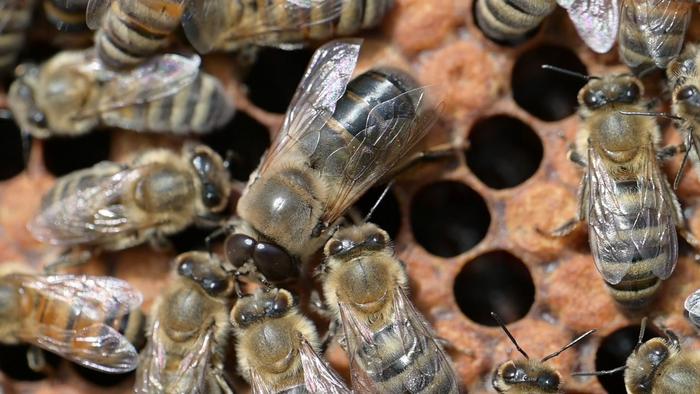
Bees have the reputation of being incredibly organized and spending their days making sure our...

The Scorched Cherry Twig And Other Christmas Miracles Get A Science Look

Bleeding hosts and stigmatizations are the best-known medieval miracles but less known ones, like ...
$0.50 Pantoprazole For Stomach Bleeding In ICU Patients Could Save Families Thousands Of Dollars

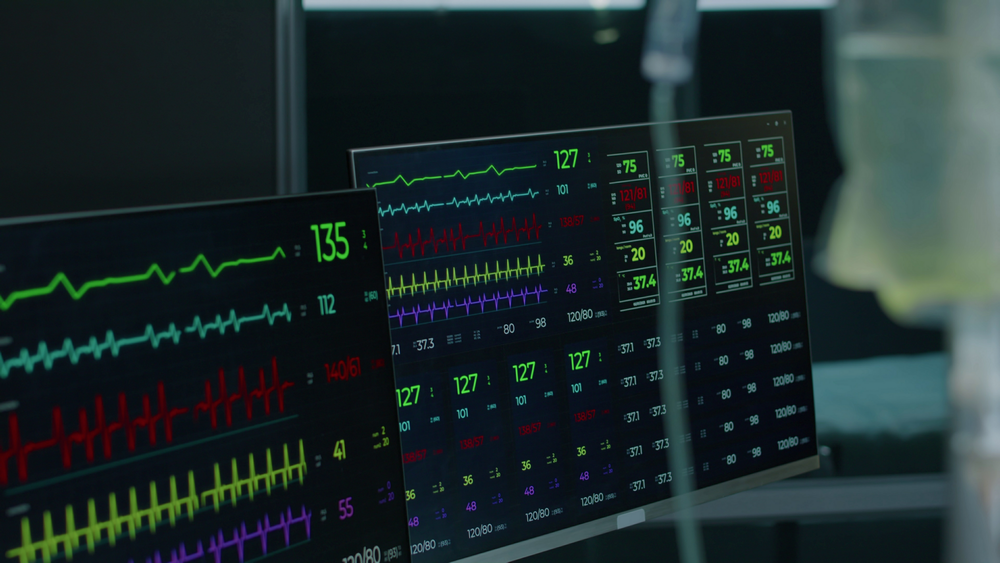
The inexpensive medication pantoprazole prevents potentially serious stomach bleeding in critically...

User picture.
News StaffRSS Feed of this column.

News Releases From All Over The World, Right To You... Read More »

Blogroll

A team of researchers is seeking to determine if an ingredient found in shrimp and lobster shells might make future missions to Mars safer for space crews who could be injured along the way.

Scientists from Harvey Mudd College (HMC) in California and the University of Louisville are collaborating with bioengineering and biomaterials company BioSTAR West on research efforts to better understand how to treat injuries aboard long space flights. This effort is directed and led by Hawaii Chitopure Inc., a Honolulu based biomaterials company specializing in the U.S. manufacture of ultra-pure chitosan, a polymer developed from the shells of crustaceans, such as lobsters, crabs, and shrimp. The team has developed experiments using chitosan, which has recently gained approval in the U.S.

Sounds like heresy, right? "Renewable and nuclear heresies" is the name of the paper written by Jesse Ausubel, Director, Program for the Human Environment for the Rockefeller University in New York.

Ausubel was one of the main organizers of the first UN World Climate Conference in Geneva (1979) so he was an early proponent of getting the global warming issue on scientific and political agendas. Following that, he led the Climate Task of the Resources and Environment Program of the International Institute for Applied Systems Analysis (1979-1981), an East-West think-tank created by the U.S. and USSR academies of sciences.

He's as green as it gets.

The emergence of nanotechnology brings with it the opportunity to manipulate materials at practically the molecular level. So, could a nanotech computer be built?

Robert Blick and colleagues in the department of Electrical & Computer Engineering at the University of Wisconsin-Madison think so. They propose a new type of electromechanical computer built from components a millionth the thickness of the human hair.

Mechanical? Before silicon chips or even transistors there were fictional dreams of levers, ratchets and cogs, complete with brass fittings that could solve mysteriers.

Researchers at the Monell Chemical Senses Center have identified a genetically-transmitted metabolic defect that can lead to obesity in some individuals. The defect involves decreased production of liver enzymes needed to burn fat and may help to explain why some people become obese while others remain thin.

The global obesity epidemic is thought to be caused in part by the increased availability and intake of high calorie foods rich in fat and carbohydrates. These foods promote weight gain in humans and other animals, leading to a diet-induced obesity. The propensity to gain weight and become obese when consuming a high-fat diet is at least partially controlled by genes.

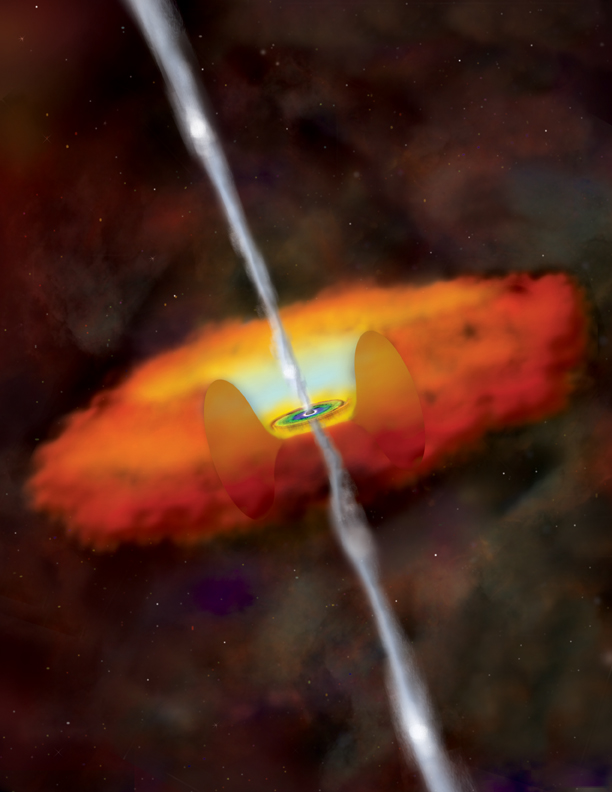
Supermassive black holes have been discovered to grow more rapidly in young galaxy clusters, according to new results from NASA's Chandra X-ray Observatory. These "fast-track" supermassive black holes can have a big influence on the galaxies and clusters that they live in.

Using Chandra, scientists surveyed a sample of clusters and counted the fraction of galaxies with rapidly growing supermassive black holes, known as active galactic nuclei (or AGN). The data show, for the first time, that younger, more distant galaxy clusters contained far more AGN than older, nearby ones.

Galaxy clusters are some of the largest structures in the Universe, consisting of many individual galaxies, a few of which contain AGN.

In the psychological phenomenon known as “synesthesia,” individuals’ sensory systems are a bit more intertwined than usual. Some people, for example, report seeing colors when musical notes are played.

One of the most common forms is grapheme-color synesthesia, in which letters or numbers (collectively called “graphemes”) are highlighted with particular colors. Although synesthesia has been well documented, it is unknown whether these experiences, reported as vivid and realistic, are actually being perceived or if they are a byproduct of some other psychological mechanism such as memory.