Banner
Object-Based Processing: Numbers Confuse How We Perceive Spaces

Researchers recently studied the relationship between numerical information in our vision, and...

Males Are Genetically Wired To Beg Females For Food

Bees have the reputation of being incredibly organized and spending their days making sure our...

The Scorched Cherry Twig And Other Christmas Miracles Get A Science Look

Bleeding hosts and stigmatizations are the best-known medieval miracles but less known ones, like ...
$0.50 Pantoprazole For Stomach Bleeding In ICU Patients Could Save Families Thousands Of Dollars

The inexpensive medication pantoprazole prevents potentially serious stomach bleeding in critically...

User picture.
News StaffRSS Feed of this column.

News Releases From All Over The World, Right To You... Read More »

Blogroll

By bypassing a well-known gene implicated in almost one-third of all cancers and instead focusing on the protein activated by the gene, Dr. Christopher Counter and colleagues at the Duke University Medical Center have identified IL6 as a new target in the battle against Ras-induced cancers.

The ras gene, known as an oncogene when it is in this mutated state, has been implicated in several different cancers, including those of the pancreas and lungs. To date, efforts at blocking or turning off ras have proven ineffective.

To protect us from disease our immune system employs macrophages, cells that roam our body in search of disease-causing bacteria. With the help of long tentacle-like protrusions, macrophages can catch suspicious particles, pull them towards their cell bodies, internalise and destroy them.

Using a special microscopy technique, researchers from the European Molecular Biology Laboratory (EMBL) now for the first time tracked the dynamic behaviour of these tentacles in three dimensions. In the current online issue of PNAS they describe a molecular mechanism that likely underlies the tentacle movement and that could influence the design of new nanotechnologies.

Contrary to textbook models, many genes that should be 'off' in embryonic stem cells and specialized adult cells remain primed to produce master regulatory proteins, leaving those cells vulnerable to identity changes

Biologists have long thought that a simple on/off switch controls most genes in human cells. Flip the switch and a cell starts or stops producing a particular protein. But new evidence suggests that this model is too simple and that our genes are more ready for action than previously thought.

Scientists in the lab of Whitehead Member Richard Young have discovered that many human genes hover between “on” and “off” in any given cell. According to the study, these genes begin making RNA templates for proteins—a process termed transcription—but fail to finish.

ESA’s Venus Express and NASA’s MESSENGER looked at Venus in tandem for a few hours in June. Here is the first set of images.

The orbital geometry of Venus Express when MESSENGER skimmed past Venus on 5 June meant that the two spacecraft were not at the same location (with respect to the surface of the planet) at the exact same time. So how could they make true joint observations of the same regions and phenomena? Scientists came up with a highly creative solution.


Bye-bye Venus. As NASA’s MESSENGER departed from planet Venus on 5 June 2007 to continue its journey towards Mercury, its Wide Angle Camera captured a sequence of 50 images (480-nm wavelength filter) showing the planet disappearing in the distance.

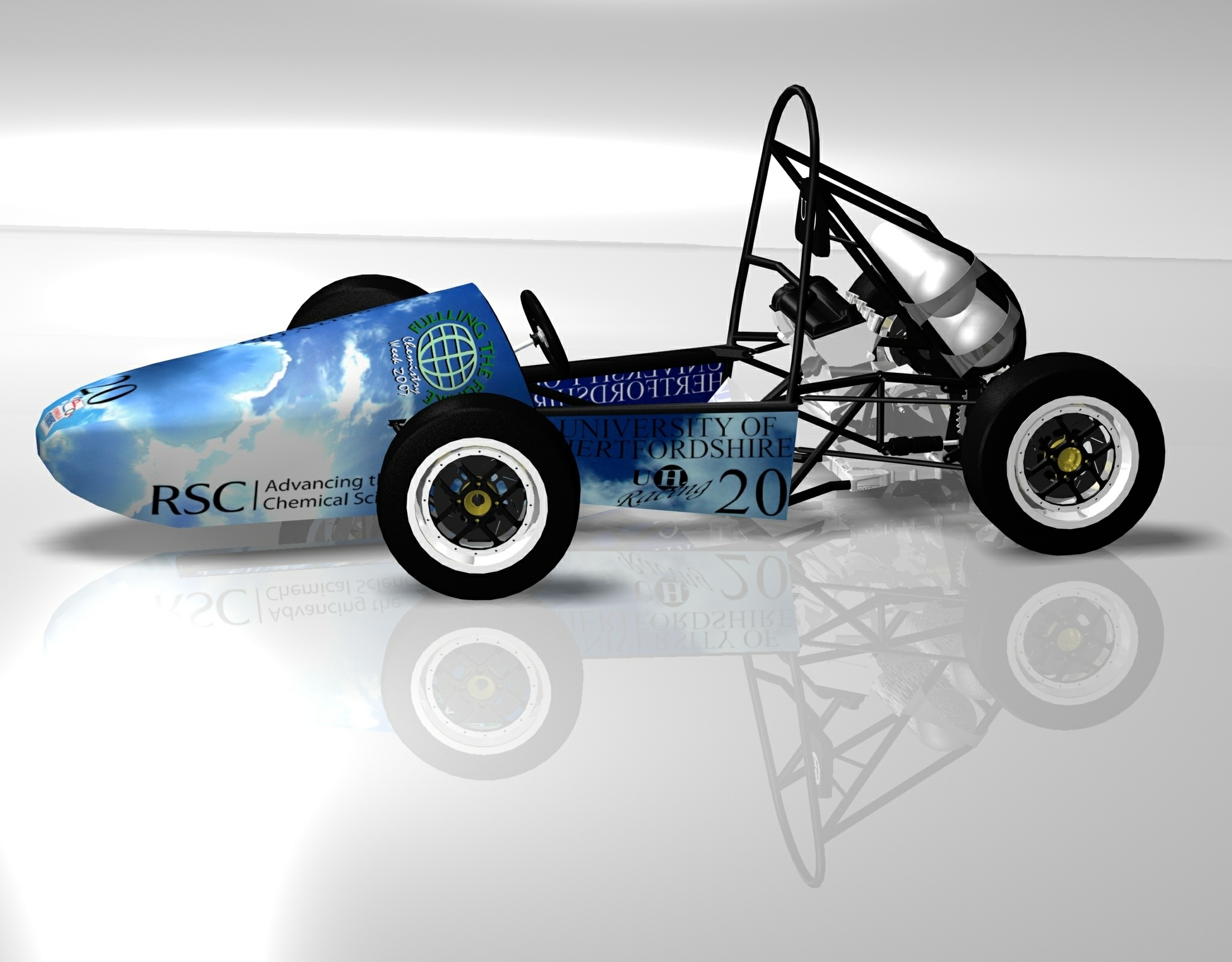
Engineers at the University of Hertfordshire have developed the first hydrogen-powered racing car which they will race this weekend.

A £5,000 grant from the Royal Society of Chemistry has made it possible for John Goddard and James Waters, two PhD students in the University’s new Sustainable Energy Technologies Centre to convert a Formula Student racing car into a hydrogen-powered vehicle.

This is the first time that a hydrogen-powered racing car has been developed anywhere in the world.

Opinions people have about innovations are influenced by the context in which they form their opinion. For example, opinions about a novel energy source like biomass are influenced by thoughts regarding other energy sources.

The less knowledge, interest or time people have, the stronger this effect. Sustainable energy options must therefore be promoted in the right context says Dutch researcher Wouter van den Hoogen.

People frequently form opinions about new technologies, such as novel energy options, despite having a very limited knowledge of the subject concerned. The subject is often complex and people are either not particularly interested or have limited time.