Banner
Social Media Is A Faster Source For Unemployment Data Than Government

Government unemployment data today are what Nielsen TV ratings were decades ago - a flawed metric...

Gestational Diabetes Up 36% In The Last Decade - But Black Women Are Healthiest

Gestational diabetes, a form of glucose intolerance during pregnancy, occurs primarily in women...
Object-Based Processing: Numbers Confuse How We Perceive Spaces

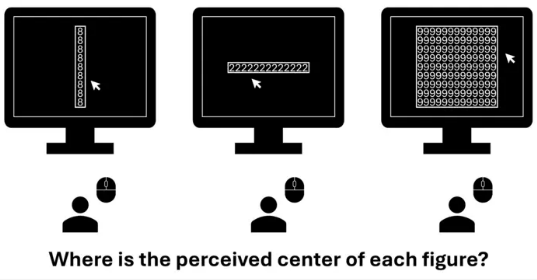
Researchers recently studied the relationship between numerical information in our vision, and...

Males Are Genetically Wired To Beg Females For Food

Bees have the reputation of being incredibly organized and spending their days making sure our...

User picture.
News StaffRSS Feed of this column.

News Releases From All Over The World, Right To You... Read More »

Blogroll

From Al Gore's "An Inconvenient Truth" to heated Congressional debates about federal tax incentives for new alternative fuels, the issue of coal's place in supplying America's energy and fuel needs has taken on added importance in recent months.

A research institute at the University of Kentucky, though, has been exploring ways to increase the efficiency of converting coal to liquid fuel well in advance of national discussions of the process.

At the UK Center for Applied Energy Research (CAER), Burt Davis is refining the process to identify ways to reduce or capture carbon dioxide generated by the Fischer-Tropsch method of converting coal to diesel and other products, such as paraffin and chemicals for making plastics.

Scientists' hunt for the cause of depression has implicated so many suspects and found so many treatments with different mechanisms that the condition remains an enigma. Now researchers at the Stanford University School of Medicine have identified one unifying principle that could explain how a range of causes and treatments for depression converge.

They found that in rats the differing mechanisms of depression and its treatment in the end appear to funnel through a single brain circuit. Changes in how the electrical signals spread through the circuit appear to be the cause of depression-related behavior, according to their study.

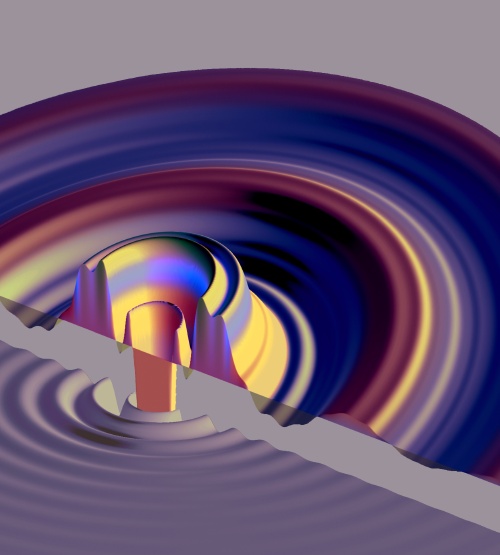
New research led by University of New Hampshire physicists has proved the existence of a new type of electron wave on metal surfaces: the acoustic surface plasmon, which will have implications for developments in nano-optics, high-temperature superconductors, and the fundamental understanding of chemical reactions on surfaces. The research, led by Bogdan Diaconescu and Karsten Pohl of UNH, is published in the July 5 issue of the journal “Nature.”

“The existence of this wave means that the electrons on the surfaces of copper, iron, beryllium and other metals behave like water on a lake’s surface,” says Pohl, associate professor of physics at UNH. “When a stone is thrown into a lake, waves spread radially in all directions.

For some years now, scientists throughout the world have been in a position to use the complete base sequence of the human genome for their analyses.

A question often encountered is whether or not specific sequence motifs have a special function. This is likely in cases where the motif is found in a particular place more often than mere chance distribution would suggest. So far, such calculations have only been possible using time-consuming computer simulations.

Increased exposure to common chemicals may impact ovarian development, says Dr. Paul Fowler, of the University of Aberdeen, Scotland. His research showed that exposing a developing female sheep fetus to low doses of chemicals in the modern-day environment can disturb the development of the ovary

“Our ‘real life’ model exposed developing sheep fetuses by pasturing their mothers on fields fertilised with either inorganic fertiliser, the control group, or, in the case of the treatment group, with digested human sewage sludge, before and during pregnancy”, said Dr. Fowler.

A generator that is 10 times more powerful than any other similar devices has been developed by engineers at the University of Southampton.

Dr Steve Beeby and his team at the University's School of Electronics & Computer Science (ECS) have developed a kinetic energy generator which generates electrical energy from the vibrations and movements present within its environment.