Banner
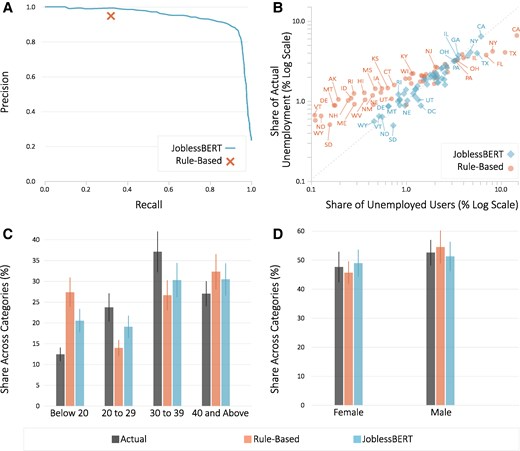
Social Media Is A Faster Source For Unemployment Data Than Government

Government unemployment data today are what Nielsen TV ratings were decades ago - a flawed metric...

Gestational Diabetes Up 36% In The Last Decade - But Black Women Are Healthiest

Gestational diabetes, a form of glucose intolerance during pregnancy, occurs primarily in women...
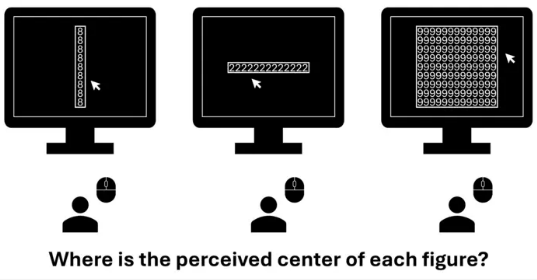
Object-Based Processing: Numbers Confuse How We Perceive Spaces

Researchers recently studied the relationship between numerical information in our vision, and...
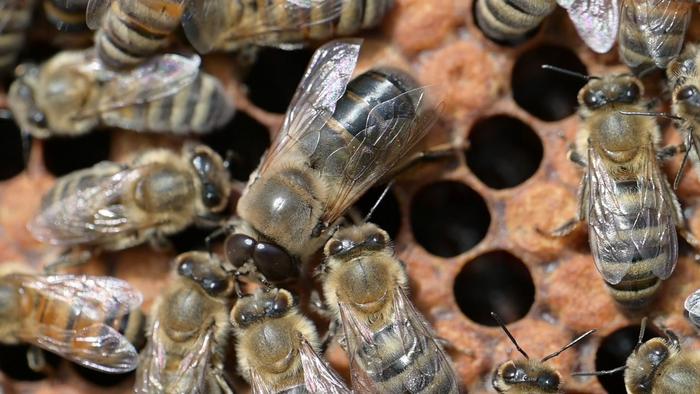
Males Are Genetically Wired To Beg Females For Food

Bees have the reputation of being incredibly organized and spending their days making sure our...

User picture.
News StaffRSS Feed of this column.

News Releases From All Over The World, Right To You... Read More »

Blogroll

The extinction of many large mammals at the end of the Ice Age may have packed an even bigger punch than scientists have realized. To the list of victims such as woolly mammoths and saber-toothed cats, a Smithsonian-led team of scientists has added one more: a highly carnivorous form of wolf that lived in Alaska, north of the ice sheets.

Wolves were generally thought to have survived the end-Pleistocene extinction relatively unscathed. But this previously unrecognized type of wolf appears to have vanished without a trace some 12,000 years ago.

The study combined genetic and chemical analyses with more conventional paleontological study of the morphology, or form, of the fossilized skeletal remains.

By making careful observations of the growth of a layer of molecules as they gradually cover the surface of a small silicon rectangle, researchers from the National Institute of Standards and Technology (NIST) and North Carolina State University (NCSU) have gained basic insights into how self-propagating self-assembly wave fronts develop and have produced the first experimental verification of recently improved theoretical models of such systems.

In the first trial of its kind in the world, 60 patients who have recently suffered a major heart attack will be injected with selected stem cells from their own bone marrow during routine coronary bypass surgery.

The Bristol trial will test whether the stem cells will repair heart muscle cells damaged by the heart attack, by preventing late scar formation and hence impaired heart contraction.

Dr Raimondo Ascione from the University of Bristol and colleagues at the Bristol Heart Institute (BHI) have been awarded a grant of £210,000 from the British Heart Foundation (BHF) to conduct the clinical trial.

Satellite tracking software freely available on the Internet and a smattering of textbook physics could be used by any organisation that can get hold of an intermediate range rocket to mount an unsophisticated attack on military or civilian satellites. Such an attack would require modest engineering capability and only a limited budget.

A terrorist organisation or rogue state could threaten essential satellite systems, say Adrian Gheorghe of Old Dominion University Norfolk, in Virginia, USA and Dan Vamanu of "Horia Hulubei" National Institute of Physics and Nuclear Engineering, in Bucharest, Romania. Military satellites, global positioning systems, weather satellites and even satellite TV systems could all become victims of such a simple attack.

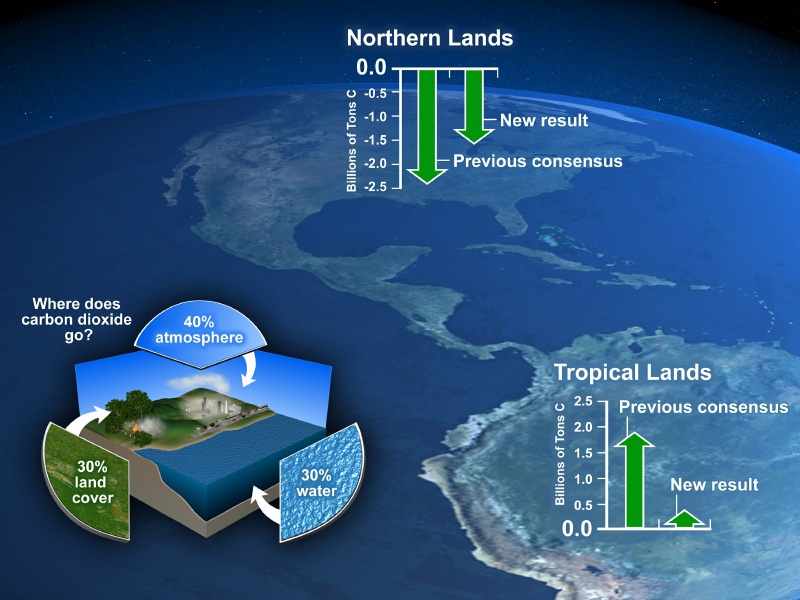
Forests in the United States and other northern mid- and upper-latitude regions are playing a smaller role in offsetting global warming than previously thought, according to a new study.

The study, which sheds light on the so-called missing carbon sink, concludes that intact tropical forests are removing an unexpectedly high proportion of carbon dioxide from the atmosphere, thereby partially offsetting carbon entering the air through industrial emissions and deforestation.

"This research fills in another piece of the complex puzzle on how the Earth system functions," said Cliff Jacobs of NSF's Division of Atmospheric Sciences.

We deal with ice every day. Yet we don't all there is to know about it. Now Dr Angelos Michaelides and Professor Karina Morgenstern say they have made a breakthrough in understanding how ice works.

Dr Michaelides said, “We are all familiar with the freezing of water. It features prominently in our daily lives, from fridge freezers to winter snow. Despite all this, the question of how individual water molecules come together and give birth to ice crystals remains mysterious.”

Understanding the process of ice nucleation at a molecular level also takes us a step closer to understanding the mysterious process through which ice forms around microscopic dust particles in the upper atmosphere.