Banner
Social Media Is A Faster Source For Unemployment Data Than Government

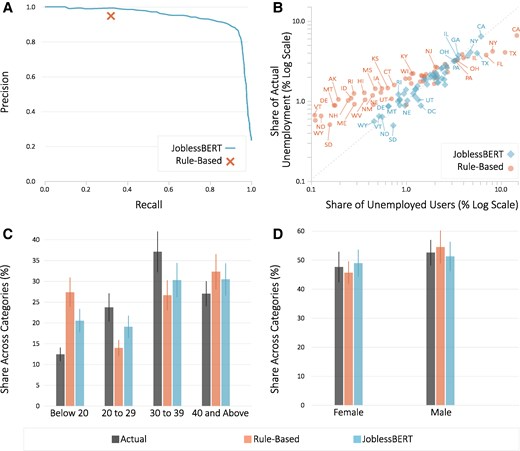
Government unemployment data today are what Nielsen TV ratings were decades ago - a flawed metric...
Gestational Diabetes Up 36% In The Last Decade - But Black Women Are Healthiest

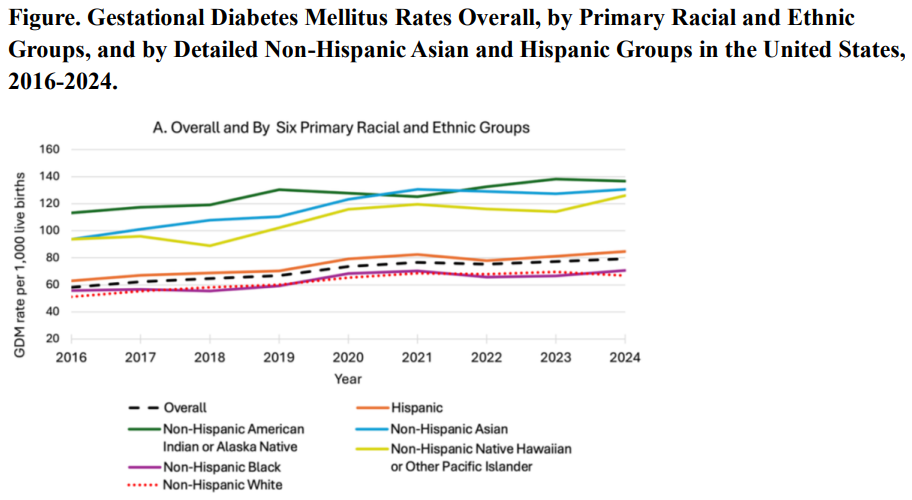
Gestational diabetes, a form of glucose intolerance during pregnancy, occurs primarily in women...

Object-Based Processing: Numbers Confuse How We Perceive Spaces

Researchers recently studied the relationship between numerical information in our vision, and...

Males Are Genetically Wired To Beg Females For Food

Bees have the reputation of being incredibly organized and spending their days making sure our...

User picture.
News StaffRSS Feed of this column.

News Releases From All Over The World, Right To You... Read More »

Blogroll

Millions of people the world over suffer today from obesity, yet there is no “magic bullet” that has yet provided a universally accepted solution. However, a young researcher at the Hebrew University of Jerusalem feels he has come up with a practical weight loss solution for the obese person without his having to feel hungry.

For this development, Yaniv Linde, a 32-year-old Ph.D. student of Prof. Chaim Gilon in the Department of Organic Chemistry at the Hebrew University, has been named a first place winner of a Kaye Innovation Award, which was presented today (June 6) during the 70th meeting of the Hebrew University Board of Governors.

Organic food is big business these days. Organic fruit and vegetables are hot items because everyone wants to feel like they are eating healthier. What hasn't been studied until now is the impact of organic business on the environment, namely in greenhouse gas emissions from transport.

A new study, conducted by a team of student researchers in the Department of Rural Economy at the University of Alberta in Edmonton, Canada, showed that the greenhouse gas emitted when the produce is transported from great distances mitigates the environmental benefits of growing the food organically.

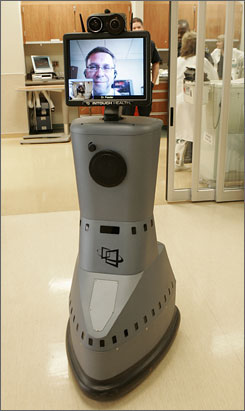
The Nursing Institute of West Central Ohio today unveiled a new addition to the regional nursing education community—a robot.

Developed by InTouch Health® from Santa Barbara, California, the Remote Presence Robotic System (RP-7™) will allow nursing faculty members to interact with students from remote locations. The Nursing Institute, headquartered at Wright State, will be the first location in Ohio to have access to this robotic technology and be the first nurse education center in the nation to use the RP-7 for educational purposes.


Courtesy InTouch Health®

Transporting energy without any loss, travelling in magnetically levitated trains, carrying out medical imaging (MRI) with small-scale equipment: all these things could come true if we had superconducting materials that worked at room temperature. Today, researchers at CNRS have taken another step forward on the road leading to this ultimate goal. They have revealed the metallic nature of a class of so-called critical high-temperature superconducting materials. This result has been eagerly awaited for 20 years. It paves the way to an understanding of this phenomenon and makes it possible to contemplate its complete theoretical description.


An experiment in magnetic levitation.

Sargassum seaweed, famous in nautical lore for entangling ships in its dense floating vegetation, has been detected from space for the first time thanks to an instrument aboard ESA’s environmental satellite, Envisat. The ability to monitor Sargassum globally will allow researchers to understand better the primary productivity of the ocean and better predict climate change.


CLICK ABOVE FOR FULL SIZE. Sargassum seaweed has been detected from space for the first time using optical radiance data from the Medium Resolution Imaging Spectrometer (MERIS) aboard Envisat.

Size matters. At least, it does to an alpine ibex.

According to a team of international researchers, mature, male alpine ibex demonstrate a correlation between horn growth and genetic diversity. Past research studies have shown that greater genetic diversity correlates with a greater chance of survival.