Banner
Social Media Is A Faster Source For Unemployment Data Than Government

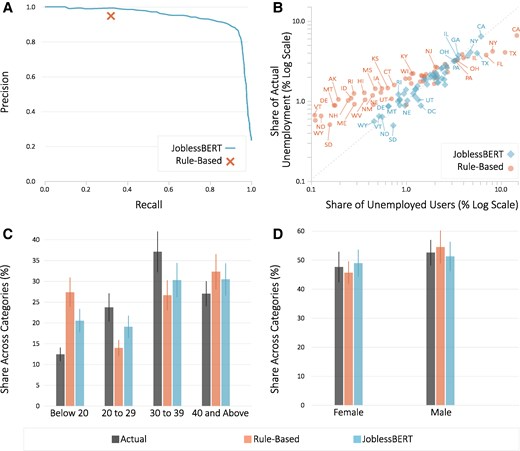
Government unemployment data today are what Nielsen TV ratings were decades ago - a flawed metric...

Gestational Diabetes Up 36% In The Last Decade - But Black Women Are Healthiest

Gestational diabetes, a form of glucose intolerance during pregnancy, occurs primarily in women...
Object-Based Processing: Numbers Confuse How We Perceive Spaces

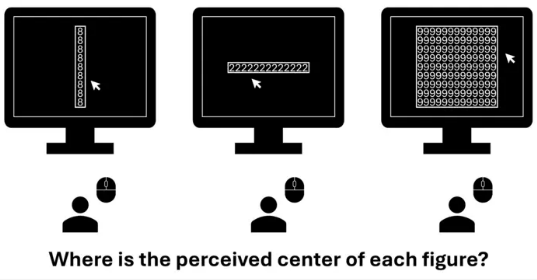
Researchers recently studied the relationship between numerical information in our vision, and...
Males Are Genetically Wired To Beg Females For Food

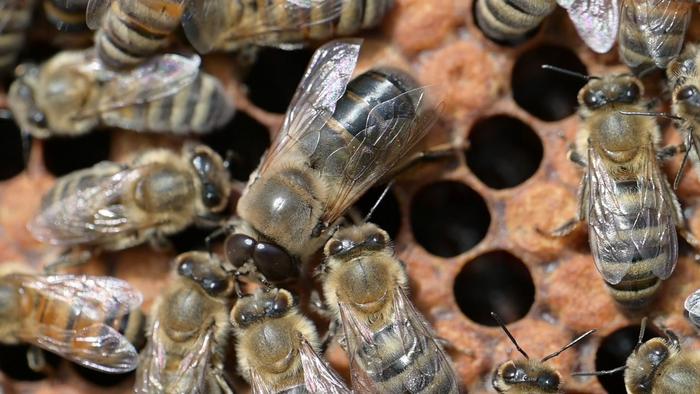
Bees have the reputation of being incredibly organized and spending their days making sure our...

User picture.
News StaffRSS Feed of this column.

News Releases From All Over The World, Right To You... Read More »

Blogroll

A new experiment has shown that it's possible to store multiple rudimentary memories in an artificial culture of live neurons. The ability to record information in a manmade network of neurons is a step toward a cyborg-like integration of living material into memory chips. The advance also may help neurologists to understand how our brains learn and store information.

A project which is using robots to help children with developmental or cognitive impairments to interact more effectively has just started at the University of Hertfordshire.

Professor Kerstin Dautenhahn, Dr. Ben Robins and Dr. Ester Ferrari at the University’s School of Computer Science are partners in the European Sixth Framework funded, €3.22 million Interactive Robotic Social Mediators as Companions (IROMEC) project which is investigating the use of robotic toys to enable children with disabilities to develop social skills.


KASPAR is a child-sized humanoid robot developed by the Adaptive Systems Research Group at the University of Hertfordshire.

A natural compound found in blueberries, tea, grapes, and cocoa enhances memory in mice, according to newly published research. This effect increased further when mice also exercised regularly.

"This finding is an important advance because it identifies a single natural chemical with memory-enhancing effects, suggesting that it may be possible to optimize brain function by combining exercise and dietary supplementation," says Mark Mattson, PhD, at the National Institute on Aging.

Polymer matrix composites with carbon black can be used as filler material and can beneficially modify the electrical and mechanical properties of the used matrixes. The polymer components of these composites are traditionally made using oleo-polymers; however, an alternative is to use natural and renewable sources as soybean oil, linseed oil, sunflower oil, etc.

Polymers derived from those natural oils can be tailored for engineering and aeronautical applications by reinforcing them with natural and synthetic fibers and clays.

Sound waves escaping the sun's interior create fountains of hot gas that shape and power a thin region of the sun's atmosphere which appears as a ruby red "ring of fire" around the moon during a total solar eclipse, according to new research.

This region, called the chromosphere because of its color, is largely responsible for the deep ultraviolet radiation that bathes the Earth, producing the atmosphere's ozone layer.


CLICK ABOVE FOR FULL SIZE.

mages of disembodied heads are widespread in the art of Nasca, a culture based on the southern coast of Peru from AD 1 to AD 750. But despite this evidence and large numbers of trophy heads in the region’s archaeological record, only eight headless bodies have been recovered with evidence of decapitation, explains Christina A. Conlee (Texas State University).

Conlee’s analysis of a newly excavated headless body from the site of La Tiza provides important new data on decapitation and its relationship to ancient ideas of death and regeneration.


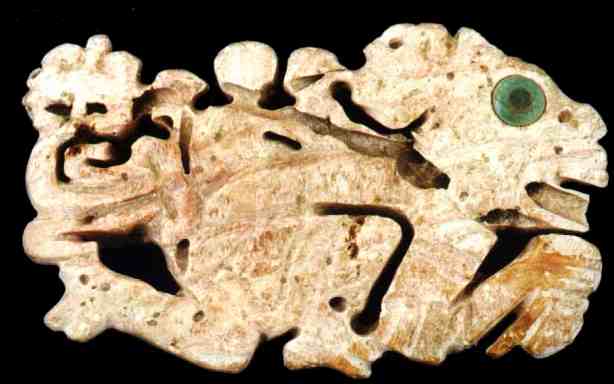
Nasca carved Spondylus fragment, length 4.5 cm. National Museum Collection.