
Banner
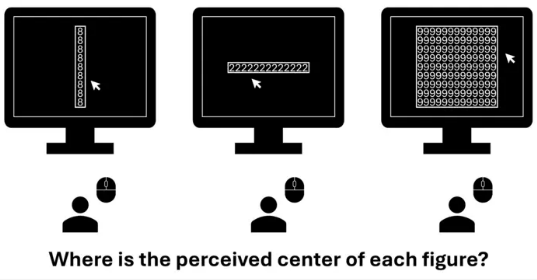
Object-Based Processing: Numbers Confuse How We Perceive Spaces

Researchers recently studied the relationship between numerical information in our vision, and...
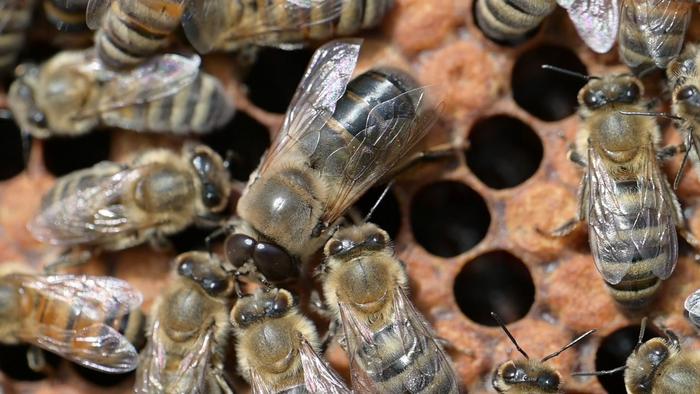
Males Are Genetically Wired To Beg Females For Food

Bees have the reputation of being incredibly organized and spending their days making sure our...

The Scorched Cherry Twig And Other Christmas Miracles Get A Science Look

Bleeding hosts and stigmatizations are the best-known medieval miracles but less known ones, like ...

$0.50 Pantoprazole For Stomach Bleeding In ICU Patients Could Save Families Thousands Of Dollars

The inexpensive medication pantoprazole prevents potentially serious stomach bleeding in critically...

User picture.
News StaffRSS Feed of this column.

News Releases From All Over The World, Right To You... Read More »

Blogroll

At unprecedented levels of difficulty involving highly biodiverse and continent-sized landscapes, scientists have successfully tested their ability to identify and DNA "barcode" entire assemblages of species -- the prelude to a genetic portrait of all animal life on Earth.

Revealing their results in the UK journal Molecular Ecology Notes, they report having assembled a genetic portrait of birdlife in the U.S.

Give college students less instruction and more freedom to think for themselves in laboratory classes, and the result may be a four-fold increase in their test scores.

So says Steve Rissing, a professor of evolution, ecology and organismal biology at Ohio State University. Rissing played a major role in revamping the way the university teaches its introductory-level biology courses.

“For one, we got away from the cookbook method of teaching concepts of biology in a lab course,” he said. “Instead, many of those classes now include real experiments that leave room for additional inquiry.”

The effort paid off.

There is no such thing as a free lunch, some say, but they would be wrong. In fact, the entirety of the universe defies them. According to Stanford physics Professor Andrei Linde, one of the architects of the inflationary theory, our universe (and all the matter in it) was born out of a vacuum.

"Recent developments in cosmology have irreversibly changed our understanding of the structure and fate of our universe and of our own place in it," says Linde, who will discuss the inflationary view of the universe at the annual meeting of the American Association for the Advancement of Science on Feb.

When cells become cancerous, they also become 100 times more likely to genetically mutate than regular cells, researchers have found. The findings may explain why cells in a tumor have so many genetic mutations, but could also be bad news for cancer treatments that target a particular gene controlling cancer malignancy.

The research was led by Dr. Lawrence Loeb, professor of pathology and biochemistry at the University of Washington School of Medicine in Seattle. Loeb will present his research Feb. 18 at the meeting of the American Association for the Advancement of Science in San Francisco.

Most types of cancer are believed to begin with a random genetic mutation that makes a normal cell go horribly awry.

Three years ago Mark Kay, MD, PhD, published the first results showing that a biological phenomenon called RNA interference could be an effective gene therapy technique. Since then he has used RNAi gene therapy to effectively shut down the viruses that cause hepatitis and HIV in mice.

With three human RNAi gene therapy trials now under way - two in macular degeneration and one in RSV pneumonia - the technique Kay pioneered may be among the first to find widespread use for treating human diseases.

Three hundred million years ago, Earth's climate shifted dramatically from icehouse to hothouse, with major environmental consequences. That shift was the result of both rising atmospheric carbon dioxide concentrations and the melting of vast ice sheets, new research by University of Michigan paleoclimatologist Christopher Poulsen shows.

Poulsen will discuss his findings in a symposium titled "Geosystems: Climate Lessons from Earth's Last Great Icehouse" at the annual meeting of the American Association for the Advancement of Science in San Francisco.

The changes occurred during the period of Earth's history when the continents were consolidated into a single supercontinent, Pangaea.





