Banner
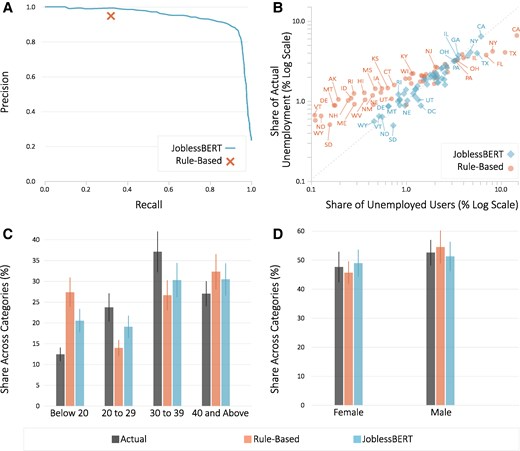
Social Media Is A Faster Source For Unemployment Data Than Government

Government unemployment data today are what Nielsen TV ratings were decades ago - a flawed metric...

Gestational Diabetes Up 36% In The Last Decade - But Black Women Are Healthiest

Gestational diabetes, a form of glucose intolerance during pregnancy, occurs primarily in women...

Object-Based Processing: Numbers Confuse How We Perceive Spaces

Researchers recently studied the relationship between numerical information in our vision, and...

Males Are Genetically Wired To Beg Females For Food

Bees have the reputation of being incredibly organized and spending their days making sure our...

User picture.
News StaffRSS Feed of this column.

News Releases From All Over The World, Right To You... Read More »

Blogroll

Over the years, two strands of thought on sustainable development have emerged; ecologism and environmentalism. Ecologism offers a solution by emphasizing the need for major socioeconomic reform aimed at a post-industrial era. Environmentalism focuses on the preservation, restoration, and improvement of the natural environment within the present framework.

Writing in International Journal of the Environment and Sustainable Development, Rasmus Karlsson suggests that space could provide us with a third alternative; a sustainable future not possible from an earthbound only perspective. An industrial space age.

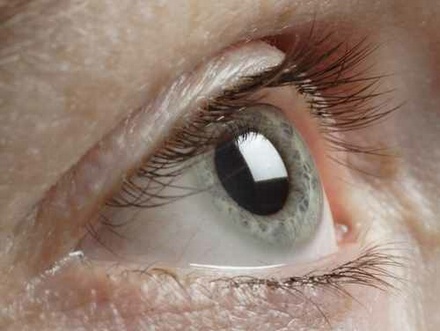
Every year, in Germany alone, around 7000 people wait for a new cornea to save their eyesight. But donor corneas are in short supply. In an EU project, researchers have developed an artificial cornea which is to be clinically tested in early 2008.

A patient whose cornea is damaged through a congenital malformation, hereditary disease or corrosion is at risk of going blind. One solution is to implant a donor cornea. The central part of the natural cornea is removed in a circular fashion, and the new cornea is inserted and sutured in place. A vast number of patients are affected: every year, 40,000 people in Europe alone hope for a donor – often in vain.

Physiotherapy ultrasound machines are commonplace in medicine and sports injury treatment but if patients are treated with the incorrect level of ultrasonic power it could not only be less helpful, it could lead to further injury.

Calibration is the answer and scientists at the National Physical Laboratory (NPL) say they have created technology that can greatly improve the accuracy of the calibration and therefore the quality of the treatment.

NPL has developed an acoustic absorber that can be retro-fitted into current calibration equipment to increase its accuracy.

Duke University Medical Center researchers believe they have discovered why the appendix exists and what purpose it serves in modern humans.

They think it is used to 'reboot' the digestive system and produce the bacteria sometimes eliminated by disease. How is it that people have them removed and live normal lives afterward?

In modern times, it is relatively unimportant. In crowded areas people can easily replace lost bacteria from contact with others but in ancient times, when isolation was more common or when diseases such as cholera or amoebic dysentery struck and eliminated the stomach's good bacteria, the appendix was likely how the human body regenerated good bacteria.

Computer and behavioral scientists at the University at Buffalo say they are working on a system to compute a numerical score that determines the likelihood that someone is about to commit a terrorist act. Their technology will track faces, voices and other biometrics against scientifically tested behavioral indicators to provide that numerical score for an individual.

“The goal is to identify the perpetrator in a security setting before he or she has the chance to carry out the attack,” said Venu Govindaraju, Ph.D., professor of computer science and engineering at the University at Buffalo School of Engineering and Applied Sciences. Govindaraju is co-principal investigator on the project with Mark G.

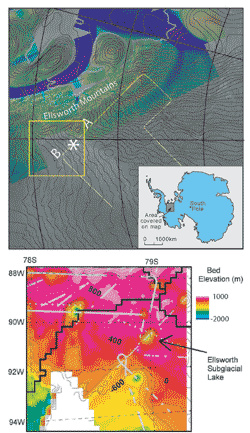
Why don't we know more about Lake Ellsworth? Because it's a frozen lake. Buried under two miles of ice. In Antarctica.

But Northumbria glaciologist Dr John Woodward, together with experts from the British Antarctic Survey and Edinburgh University, will spend five months working in sub zero conditions to unlock some of its secrets and discover what life may exist there.

More than 150 subglacial lakes have been identified in Antarctica, cut off from the outside world by thick caps of ice for tens or even hundreds of thousands of years. Any life forms will have had to adapt to complete darkness, very few nutrients, crushing water pressures and isolation from the atmosphere.


Lake Ellsworth.