Banner
Social Media Is A Faster Source For Unemployment Data Than Government

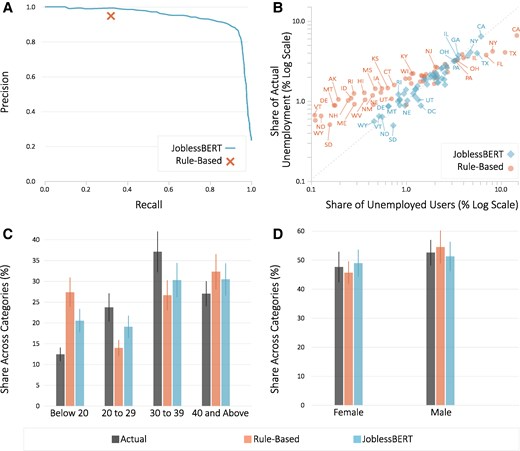
Government unemployment data today are what Nielsen TV ratings were decades ago - a flawed metric...

Gestational Diabetes Up 36% In The Last Decade - But Black Women Are Healthiest

Gestational diabetes, a form of glucose intolerance during pregnancy, occurs primarily in women...

Object-Based Processing: Numbers Confuse How We Perceive Spaces

Researchers recently studied the relationship between numerical information in our vision, and...

Males Are Genetically Wired To Beg Females For Food

Bees have the reputation of being incredibly organized and spending their days making sure our...

User picture.
News StaffRSS Feed of this column.

News Releases From All Over The World, Right To You... Read More »

Blogroll

An analysis by the Hudson Institute states that more than 500 scientists have published evidence refuting at least one element of current man-made global warming scares.

The analysis says that more than 300 of the scientists found evidence that 1) a natural moderate 1,500-year climate cycle has produced more than a dozen global warmings similar to ours since the last Ice Age and/or that 2) our Modern Warming is linked strongly to variations in the sun's irradiance.

"This data and the list of scientists make a mockery of recent claims that a scientific consensus blames humans as the primary cause of global temperature increases since 1850," said Hudson Institute Senior Fellow Dennis Avery.

In 1911 the discovery that the earth was billions of years old changed our view of the world forever. At the end of the 19th century, many geologists still believed the age of the Earth to be a few thousand years old, as indicated by the Bible, while others considered it to be around 100 million years old, in line with calculations made by Lord Kelvin, the most prestigious physicist of his day.

Before radiometric dating there was no way of knowing.

In 1898 Marie Curie discovered the phenomenon of radioactivity and by 1904 Ernest Rutherford, a physicist working in Britain, realised that the process of radioactive decay could be harnessed to date rocks.

Global child deaths have reached a record low, falling below 10 million per year to 9.7 million, down from almost 13 million in 1990, according to UNICEF.

"This is an historic moment," said UNICEF Executive Director Ann M. Veneman. "Now we must build on this public health success to push for the achievement of the Millennium Development Goals."

Among these goals, which range from halving extreme poverty to halting the spread of HIV/AIDS, is a commitment to a two-thirds reduction in child mortality between 1990 and 2015, a result which would save an additional 5.4 million children by 2015.

However, Veneman pointed out that there is no room for complacency.

"The loss of 9.7 million young lives each year is unacceptable.

Swedish researcher Maria Engberg has studied how the ability of the computer to combine words, images, movement, and sounds is impacting both writing and reading and she's going to defend her dissertation on the subject this week.

“The way digital poetry experiments with language raises questions and challenges conceptions of literature that were formed by printed books,” says Engberg, who has examined what this entails for literary scholarship.

She has analyzed works by English-speaking poets such as John Cayley, Stephanie Strickland, and Thomas Swiss. The focus is on space, time, movement, and word and image constructions.

Emissions targets for London stand little chance of being achieved unless the Greater London Authority (GLA) takes radical steps, one of which could be the removal of all cars from both inner and outer London, according to a report today at London School of Hygiene & Tropical Medicine (LSHTM) to launch the Lancet Series on Energy and Health.

Climate scientists argue that rapid reductions will be needed if England to avoid dangerous climate change[2], even going beyond the GLA commitment to reducing London’s carbon dioxide emissions by 60% by 2025[1]. A team of experts from LSHTM and the Transport Studies Unit (Oxford University Centre for the Environment) will today reveal that London is on course to reduce land transport emissions by only 10%-23%[3,4].

People who experience chronically high levels of loneliness show gene-expression patterns that differ markedly from those of people who don’t feel lonely, according to a new molecular analysis.

The findings suggest that feelings of social isolation are linked to alterations in immune system activity, which result in increased inflammatory signalling within the body. This is the first study to show an alteration in genome-wide transcriptional activity linked to a social epidemiological risk factor. It provides a molecular framework for understanding why social factors are linked to an increased risk of diseases where inflammation is thought to be a factor, such as heart disease, infection and cancer.