Banner
Social Media Is A Faster Source For Unemployment Data Than Government

Government unemployment data today are what Nielsen TV ratings were decades ago - a flawed metric...

Gestational Diabetes Up 36% In The Last Decade - But Black Women Are Healthiest

Gestational diabetes, a form of glucose intolerance during pregnancy, occurs primarily in women...

Object-Based Processing: Numbers Confuse How We Perceive Spaces

Researchers recently studied the relationship between numerical information in our vision, and...
Males Are Genetically Wired To Beg Females For Food

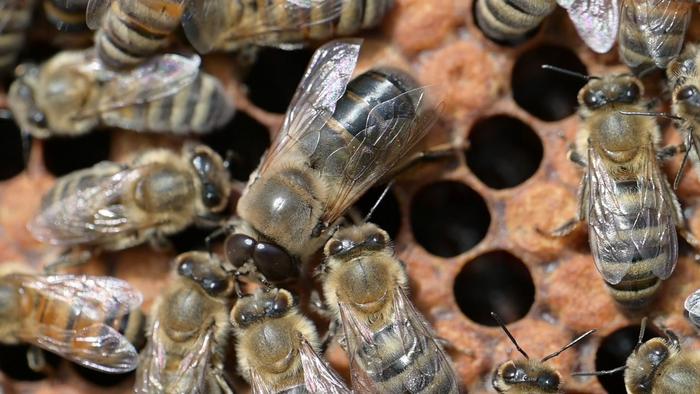
Bees have the reputation of being incredibly organized and spending their days making sure our...

User picture.
News StaffRSS Feed of this column.

News Releases From All Over The World, Right To You... Read More »

Blogroll

Four-Agents Decoction ( Si Wu Tang) is composed of dry roots of four plants native to China: prepared Radix Rehmanniae praeparata (Soe Dee Huang), Radix Paeoniae Alba (Bai Sau), Radix Angelicae Sinensis (Dang Guay), and Rhizoma Ligustici Chuanxiong (Tsuan Chyong).

This formula is originally listed in the Prescriptions of People’s Welfare Pharmacy (in Chinese) as a remedy for nourishing the blood and has been used as a basic formula in traditional Chinese medicine for treating women’s illnesses since the Song dynasty (twelfth century).

The first comprehensive, nationally representative survey on the prevalence of sexual activity among older Americans is in - and they are having a lot of sex.

Americans ages 57 to 85 are sexually active and view intimacy as an important part of life, despite a high rate of “bothersome” sexual problems, according to a new report in The New England Journal of Medicine.

Stacy Tessler Lindau, M.D., who conducted the study with Linda Waite, Ph.D., and others at the University of Chicago, expects the study to help open a dialogue between older patients and their doctors as older Americans were very receptive to the survey and its questions. This openness suggests that, when asked, many older people want to talk about this part of their lives.

Originating in Central Africa, Peters' elephantnose fish (Gnathonemus petersii), finds its bearings by means of weak electrical fields. Scientists from the University of Bonn have now been able to show how well this works. In complete darkness the animals can even distinguish the material of objects at a distance or dead organisms from living ones. The results have now been published in the Journal of Experimental Biology.

The fish, which is as long as a cigar, hovers with its head inclined, close to the gravel-covered bed. While it swims forward slowly, its trunk-like elongated chin sweeps steadily from right to left, always at a distance of a few millimetres from the bottom.

Chemists and food scientists at Rutgers employed natural antimicrobial agents derived from sources such as cloves, oregano, thyme and paprika to create novel biodegradable polymers or plastics to potentially block the formation of bacterial biofilms on food surfaces and packaging.

Typically, a variety of bacteria will congregate on a surface to form a bacterial community that exists as a slime-like matrix referred to as a biofilm. This kind of bacterial community is often described as being polymicrobial; it harbors multiple versions of infectious, disease-causing bacteria, such as Salmonella and E. coli.

Clemson University chemists have developed a method to dramatically improve the longevity of fluorescent nanoparticles that may someday help researchers track the motion of a single molecule as it travels through a living cell.

The chemists are exploiting a process called “resonance energy transfer,” which occurs when fluorescent dye molecules are added to the nanoparticles. Their findings will be reported at the 234th annual national American Chemical Society meeting Aug.19-24 in Boston.

If scientists could track the motion of a single molecule within a living cell it could reveal a world of information. Among other things, scientists could determine how viruses invade a cell or how proteins operate in the body.

A new study, published in the August issue of Glycobiology, found that exposing prostate cancer cells to pectin under laboratory conditions reduced the number of cells by up to 40 percent.

University of Georgia Cancer Center researcher Debra Mohnen and her colleagues found that the cells literally self-destructed in a process known as apoptosis. Pectin even killed cells that aren’t sensitive to hormone therapy and therefore are difficult to treat with current medications.

“What this paper shows is that if you take human prostate cancer cells and add pectin, you can induce programmed cell death,” said Mohnen, a professor of biochemistry and molecular biology. “If you do the same with non-cancerous cells, cell death doesn’t occur.”