
Banner
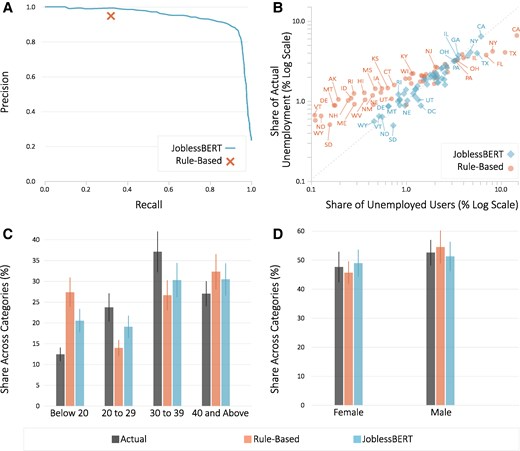
Social Media Is A Faster Source For Unemployment Data Than Government

Government unemployment data today are what Nielsen TV ratings were decades ago - a flawed metric...

Gestational Diabetes Up 36% In The Last Decade - But Black Women Are Healthiest

Gestational diabetes, a form of glucose intolerance during pregnancy, occurs primarily in women...

Object-Based Processing: Numbers Confuse How We Perceive Spaces

Researchers recently studied the relationship between numerical information in our vision, and...

Males Are Genetically Wired To Beg Females For Food

Bees have the reputation of being incredibly organized and spending their days making sure our...

User picture.
News StaffRSS Feed of this column.

News Releases From All Over The World, Right To You... Read More »

Blogroll

Alcohol and smoking can be harmful, if not deadly. While the desire for these substances can be due to environmental cues, genomic factors also play an important role. The etiology of these desires is multifactorial and a result of complex interactions with the environment. Adoption and twin studies have shown that the use of these substances is likely to be inherited. Such studies have provided evidence that one’s sex can influence the genetic factors for alcohol and tobacco use.

In an attempt to find the genomic determinants underlying alcohol and tobacco use, researchers examined 120 families (approximately 900 individuals). The researchers identified an area relating to alcohol and tobacco use on chromosome 1. They found another area relating to alcohol on chromosome 3.

More than a mile beneath the Atlantic’s surface, roughly halfway between New York and Portugal, seawater rushing through the narrow gullies of an underwater mountain range much as winds gust between a city’s tall buildings is generating one of the most turbulent areas ever observed in the deep ocean.

In fact, the turbulence packs an energy wallop equal to about five million watts -- comparable to output from a small nuclear reactor, according to a landmark study led by Florida State University researcher Louis St. Laurent.

The study -- an international collaboration of scientists from the United States and France -- documents for the first time the turbulent conditions in an undersea mountain range known as the Mid-Atlantic Ridge.

When molecular disaster strikes, causing structural damage to DNA, players in two important pathways talk to each other to help contain the wreckage, scientists at The University of Texas M. D. Anderson Cancer Center report in the August edition of Cell.

This connection between a signaling pathway crucial to DNA damage control and a pathway known as chromatin remodeling "opens an entirely new category of targets for potentially attacking cancer," says senior author Xuetong "Snow" Shen, Ph.D., an assistant professor in M. D. Anderson's Department of Carcinogenesis at the Science Park - Research Division in Smithville, Texas.

In a study published in the August 17 issue of the Journal of Biological Chemistry, Amanda J. Law, Associate Professor at the University of Oxford and colleagues at NIH describe for the first time a genetic variation that causes a gene to be overexpressed in the human brain. These results may provide a new way to design better drugs to treat schizophrenia.

“Although the exact causes of schizophrenia are yet to be determined, scientists agree that the disease is in part due to genetic variations,” Law says. “These variations are not simple to understand because they don’t directly disturb the function of proteins.

Scientists have discovered that leptin, one of the key hormones responsible for reducing hunger and increasing the feeling of fullness, also controls our fondness for food.

A University of Cambridge team, headed by Dr Sadaf Farooqi and Dr Paul Fletcher, have discovered that the appetising properties of food have strong effects on the same key brain regions responsible for rewarding emotions and desires. Using brain imaging technology, they show that these areas of the brain “light up” when individuals deficient in leptin are shown images of food.

Hunger influences what and how much we eat, but is not the only determinant of our eating behaviour.

Many people with long-standing high blood pressure develop heart failure. But some don't. Daniel P. Kelly, M.D., and colleagues at Washington University School of Medicine in St. Louis and other institutions are trying to figure out what could explain that difference.

Their latest research reveals that impaired energy production in heart muscle may underlie heart failure in some hypertensive patients. The researchers assert that a molecular factor involved in maintaining the heart's energy supply could become a key to new approaches to prevent or treat heart failure.

The molecular factor, a protein called estrogen-related receptor alpha (ERR alpha), helps the heart keep up with energy-draining conditions like high blood pressure, which makes the heart work harder to pump blood.





