Banner
Social Media Is A Faster Source For Unemployment Data Than Government

Government unemployment data today are what Nielsen TV ratings were decades ago - a flawed metric...

Gestational Diabetes Up 36% In The Last Decade - But Black Women Are Healthiest

Gestational diabetes, a form of glucose intolerance during pregnancy, occurs primarily in women...

Object-Based Processing: Numbers Confuse How We Perceive Spaces

Researchers recently studied the relationship between numerical information in our vision, and...

Males Are Genetically Wired To Beg Females For Food

Bees have the reputation of being incredibly organized and spending their days making sure our...

User picture.
News StaffRSS Feed of this column.

News Releases From All Over The World, Right To You... Read More »

Blogroll

The emerging threat of pesticide resistance means that biological malaria control methods are once again in vogue. New research published in the online open access journal BMC Public Health shows how Nile tilapia, a fish more commonly served up to Kenyan diners, is a valuable weapon against malaria mosquitoes.

Annabel Howard and Francois Omlin from the International Centre of Insect Physiology and Ecology in Nairobi, Kenya, introduced Nile tilapia (Oreochromis niloticus L.), to abandoned fishponds in western Kenya. The study, funded by the Government of Finland, BioVision Foundation (Switzerland) and the Toyota Environment Foundation, monitored pond life, comparing the restocked ponds with a control pond nearby.

Many common diseases exhibit gender bias and gender differences have been observed in the development of high blood pressure (hypertension) and heart (cardiovascular) disease. Previous studies have reported that gender may affect vascular physiology and the body’s response to some types of blood pressure medications.

Although gender is usually accounted for in association studies, newer research has focused on identifying autosomal (not on the X or Y chromosomes) genes that contribute differentially to complex traits (blood pressure) or diseases (hypertension). In a new study, researchers examined the differential contribution of genetic factors involved in regulating blood pressure based on samples drawn from a large community.

Just when you thought it was safer to stay out of the water.

Microbes that result in beach closures and health advisories when detected at unsafe levels in the ocean also have been detected in the sand, according to a recent study by a team of Stanford scientists.

Published in the July 1 issue of Environmental Science and Technology, the study found that sand at beaches all along the California coast contained some level of fecal indicator bacteria. Moreover, when the researchers looked closely at the sand quality at a popular beach in Monterey, Calif., they found evidence of human waste-raising doubt about the commonly held belief that some fecal indictor bacteria occur naturally in the sand and are therefore benign.

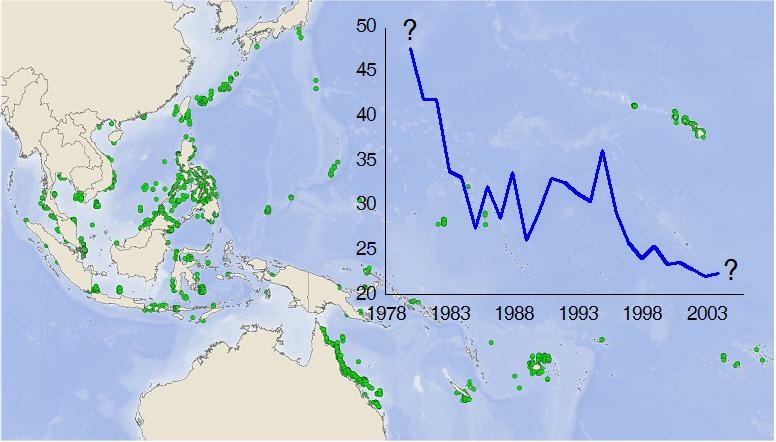
Corals in the central and western Pacific ocean are dying faster than previously thought, University of North Carolina at Chapel Hill researchers have found. Nearly 600 square miles of reef have disappeared per year since the late 1960s, twice the rate of rainforest loss.

The reefs are disappearing at a rate of one percent per year, a decline that began decades earlier than expected, the researchers discovered. Historically, coral cover, a measure of reef health, hovered around 50 percent.

A team of researchers contends that animals learn to connect the taste of food with the amount of caloric energy it provides, and children who consume low-calorie versions of foods that are normally high in calories may develop distorted connections between taste and calorie content, leading them to overeat as they grow up.

So diet foods and drinks for children may inadvertently lead to overeating and obesity.

"Based on what we've learned, it is better for children to eat healthy, well-balanced diets with sufficient calories for their daily activities rather than low-calorie snacks or meals," said Dr. David Pierce, a University of Alberta sociologist and lead author of the paper.

Researchers have identified a new player in the control of high-density lipoprotein cholesterol (HDL-C) ( the “good” cholesterol ) that circulates in the bloodstream and reduces heart attack risk.

In the current study, the researchers found that treatments that partially block the activity of liver enzymes called proprotein convertases decreased plasma HDL-C levels in mice. They showed that the metabolic effect of the proprotein convertases depended on yet another factor, an enzyme called endothelial lipase (EL), which breaks down HDL-C. Proprotein convertases normally reduce EL function, they reported.