Banner
Social Media Is A Faster Source For Unemployment Data Than Government

Government unemployment data today are what Nielsen TV ratings were decades ago - a flawed metric...

Gestational Diabetes Up 36% In The Last Decade - But Black Women Are Healthiest

Gestational diabetes, a form of glucose intolerance during pregnancy, occurs primarily in women...

Object-Based Processing: Numbers Confuse How We Perceive Spaces

Researchers recently studied the relationship between numerical information in our vision, and...

Males Are Genetically Wired To Beg Females For Food

Bees have the reputation of being incredibly organized and spending their days making sure our...

User picture.
News StaffRSS Feed of this column.

News Releases From All Over The World, Right To You... Read More »

Blogroll

In studies with monkeys, researchers have identified in detail the brain regions responsible for the unique ability of primates, including humans, to process visual 3D shapes to guide their sophisticated manipulation of objects.

Specifically, the researchers delineated regions of the parietal cortex responsible for extracting 3D information by integrating disparities in information from the two eyes. Such integration is critical to perceiving three dimensions, because each eye receives only a two-dimensional projection of an image on the retina.

A woman, whose ovaries had failed due to damage caused by chemotherapy and radiotherapy, has received a successful ovarian transplant from her genetically non-identical sister. The transplant restored her ovarian function, she started to menstruate and, after a year, doctors were able to recover two mature oocytes from her ovaries and fertilise them to produce two embryos.

This first case of a successful transplantation of ovarian tissue between two non-identical sisters is reported today by Professor Jacques Donnez, head of the department of gynecology and professor and chairman at the Catholic University of Louvain in Brussels, Belgium, who led the team that carried out the work.

Engineering pliable, new vocal cord tissue to replace scarred, rigid tissue in these petite, yet powerful organs is the goal of a new University of Delaware research project.

Xinqiao Jia, UD assistant professor of materials science and engineering, is leading the project. Jia's research focuses on developing intelligent biomaterials that closely mimic the molecular composition, mechanical responsiveness and nanoscale organization of natural extracellular matrices--the structural materials that serve as scaffolding for cells. These novel biomaterials, combined with defined biophysical cues and biological factors, are being used for functional tissue regeneration.

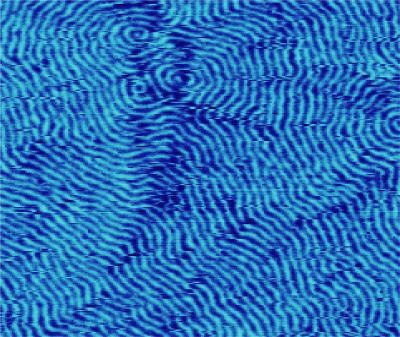
An international research team, led by scientists at the London Centre for Nanotechnology (LCN), has found a way to switch a material’s magnetic properties from ‘hard’ to ‘soft’ and back again – something which could lead to new ways of controlling electromagnetic devices. The research shows how a magnet can be ‘tuned’ by subjecting it to a second magnetic field, perpendicular to the original.

Magnets can be classified by their ‘hard’ or ‘soft’ magnetic properties. Hard magnets, sometimes called ‘permanent’ magnets, have fixed or ‘pinned’ domain walls which mean the material stays magnetised for a long time. Soft magnets have moveable domain walls that can be easily flipped.

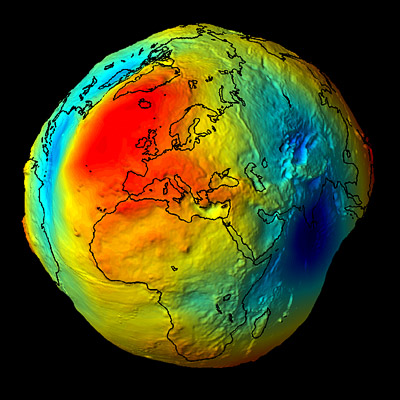
How high is Mount Everest exactly?

Recent surveys have come up with heights that differ by more than five meters. An expedition called the Geodetic Journey is making its way through China and Tibet to highlight the importance of geodesy and how an accurate model of the geoid from ESA's GOCE mission will lead to a unified system for measuring heights.

Geodesy is concerned with measuring and mapping the shape of the Earth's surface, to the benefit of all branches of Earth sciences and has many practical applications. Although surveying techniques go back thousands of years, it traditionally involves taking very precise three-dimensional positioning of points.

Narcolepsy is a sleep disorder that causes people to fall asleep uncontrollably during the day. It also includes features of dreaming that occur while awake. Other common symptoms include sleep paralysis, hallucinations and cataplexy.

About one out of every 2,000 people is known to have narcolepsy. The chance that you have narcolepsy is higher when a relative also has it. It is very rare for more than two people in the same family to have this sleep disorder. It affects the same number of men and women.

Puzzling? It sure is - but Susumu Tanaka, PhD, of the Tokyo Institute of Psychiatry in Japan has written the first report to identify the biological markers of narcolepsy using gene expression in white blood cells.