Banner
Social Media Is A Faster Source For Unemployment Data Than Government

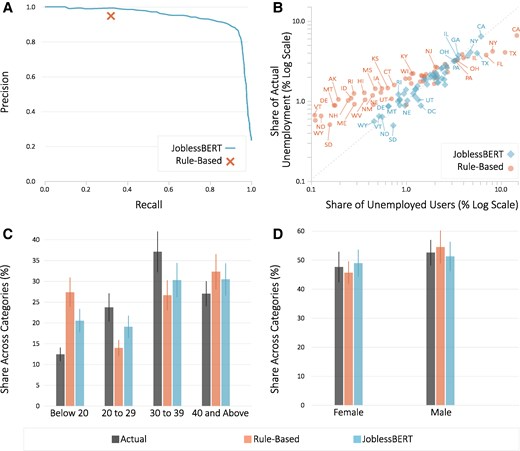
Government unemployment data today are what Nielsen TV ratings were decades ago - a flawed metric...
Gestational Diabetes Up 36% In The Last Decade - But Black Women Are Healthiest

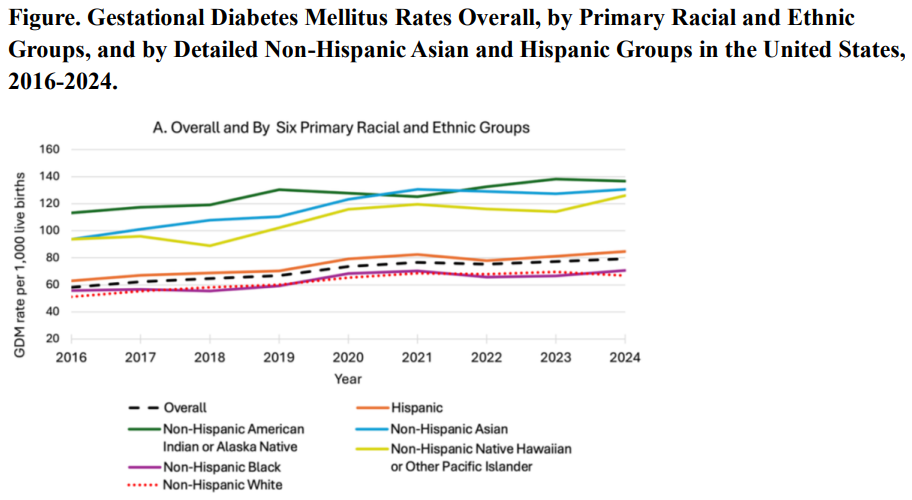
Gestational diabetes, a form of glucose intolerance during pregnancy, occurs primarily in women...

Object-Based Processing: Numbers Confuse How We Perceive Spaces

Researchers recently studied the relationship between numerical information in our vision, and...
Males Are Genetically Wired To Beg Females For Food

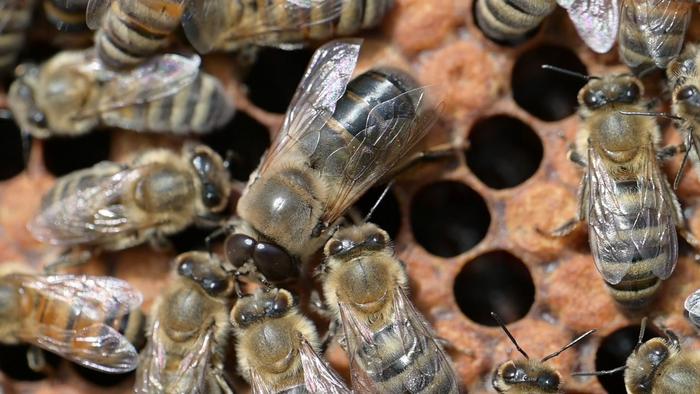
Bees have the reputation of being incredibly organized and spending their days making sure our...

User picture.
News StaffRSS Feed of this column.

News Releases From All Over The World, Right To You... Read More »

Blogroll

Limiting and labeling trans fats in food is not enough, according to Walter Willett, an epidemiologist and nutrition professor at the Harvard School of Public Health, who argues to food manufacturers that they should be banned altogether.

Willett was among dozens of speakers on the opening day of the Institute of Food Technologists Annual Meeting & Food Expo here, the world’s largest annual food science forum and exposition.

While some trans fats occur naturally in foods, most are the result of cooking or baking with hydrogenated oils. Those oils provide creamy textures that are enjoyable to eat and affect positively the shelf life and stability of many foods like baked goods.

Researchers at Johns Hopkins have found a way to overcome a major stumbling block to developing successful insulin-cell transplants for people with type I diabetes.

Traditional transplant of the cells, accompanied by necessary immune-suppressing drugs, has had highly variable results, from well- to poorly tolerated. Part of the problem, the Hopkins researchers say, is an inability to track the cells—so-called pancreatic beta cells—once they’re inside the body.

Now a new technique encapsulates the insulin-producing cells in magnetic capsules, using an FDA-approved iron compound with an off-label use, which can be tracked by magnetic resonance imaging (MRI).

In order for the best baseball team to win, the National League would have to extend its season to 256 games say a pair of physicists at the Los Alamos national Laboratory in New Mexico.

Because of randomness, there's always a chance a bad team can win so mathematically a certain outcome for the best team requires a number of games equal to roughly the cube of the number of teams. In the National League, with its 16 teams, that means 4096 regular season games or 256 per season, almost 100 more than the 162 games they play now.

Scientists at the U.S. Department of Energy's Argonne National Laboratory have identified a new technique for cleansing contaminated water and potentially purifying hydrogen for use in fuel cells, thanks to the discovery of a innovative type of porous material.

Argonne materials scientists Peter Chupas and Mercouri Kanatzidis, along with colleagues at Northwestern and Michigan State universities, created and characterized porous semiconducting aerogels at Argonne's Advanced Photon Source (APS). The researchers then submerged a fraction of a gram of the aerogel in a solution of mercury-contaminated water and found that the gel removed more than 99.99 percent of the heavy metal.

Insulin-dependent, or Type 1, diabetes is an autoimmune disease in which the body’s immune system attacks and destroys insulin and insulin-producing beta cells in the pancreas. Insulin is a hormone that is needed to convert sugar, starches and other food into energy.

Insulin typically is given through shots and not pills so the hormone can go straight into the bloodstream but a new method by Professor Henry Daniell’s research team may change that.

Their work involved genetically engineering tobacco plants with the insulin gene. They administered the freeze-dried plant cells to five-week-old diabetic mice in powder form for eight weeks. By the end of the study, the diabetic mice had normal blood and urine sugar levels, and their cells were producing normal levels of insulin.

About twice as many Atlantic hurricanes form each year on average than a century ago, according to a new statistical analysis of hurricanes and tropical storms in the north Atlantic. The study concludes that warmer sea surface temperatures (SSTs) and altered wind patterns associated with global climate change are fueling much of the increase.

"These numbers are a strong indication that climate change is a major factor in the increasing number of Atlantic hurricanes," says Greg Holland of the National Center for Atmospheric Research (NCAR).

The analysis identifies three periods since 1900, separated by sharp transitions, during which the average number of hurricanes and tropical storms increased dramatically and then remained elevated and relatively steady.