Banner
Social Media Is A Faster Source For Unemployment Data Than Government

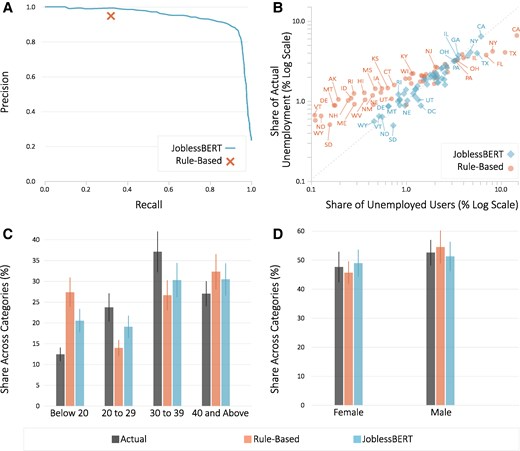
Government unemployment data today are what Nielsen TV ratings were decades ago - a flawed metric...

Gestational Diabetes Up 36% In The Last Decade - But Black Women Are Healthiest

Gestational diabetes, a form of glucose intolerance during pregnancy, occurs primarily in women...

Object-Based Processing: Numbers Confuse How We Perceive Spaces

Researchers recently studied the relationship between numerical information in our vision, and...

Males Are Genetically Wired To Beg Females For Food

Bees have the reputation of being incredibly organized and spending their days making sure our...

User picture.
News StaffRSS Feed of this column.

News Releases From All Over The World, Right To You... Read More »

Blogroll

Large quantities of ozone-depleting chemicals have been discovered in the Antarctic atmosphere by researchers from the University of Leeds, the University of East Anglia, and the British Antarctic Survey, but sea salt and algae are more to blame than mankind, say researchers.

The team of atmospheric chemists carried out an 18-month study of the make-up of the lowest part of the earth's atmosphere on the Brunt Ice Shelf, about 20 km from the Weddell Sea. They found high concentrations of halogens - bromine and iodine oxides – which persist throughout the period when there is sunlight in Antarctica (August through May). A big surprise to the science team was the large quantities of iodine oxide, since this chemical has not been detected in the Arctic.

‘Killer’ electrons are highly energetic, negatively charged particles found in near-Earth space. They can critically, and even permanently, damage satellites in orbit, including telecommunication satellites, and pose a hazard to astronauts.

Several theories have been formulated in the past to explain the origin of killer electrons, and many uncoordinated observations have already been performed. Recently, scientists got a boost in their understanding of this hazardous phenomenon. This was possible thanks to a unique set of data, collected simultaneously, by a global armada of ground and space observatories during the recovery phase of a large geomagnetic storm.

More than 180,000 women will be diagnosed with breast cancer this year, and 40,900 will die from the disease, according to the American Cancer Society. Researchers at the University of Michigan Comprehensive Cancer Center have identified a gene linked to the development of an aggressive form of breast cancer.

The researchers found that the gene, FOXP3, suppresses tumor growth. FOXP3 is located on the X chromosome, which means a single mutation can effectively silence the gene. This is unusual, as only one other gene linked to cancer has been found on the X chromosome.

Researchers at the University of Warwick's Department of Chemistry have found a way of replacing the soap used to stabilize latex emulsion paints with nanotech sized clay armour that can create a much more hard wearing and fire resistant paint.

To date latex emulsion paints have relied on the addition of soaps or similar materials to overcome the polymer parts of the paint's aversion to water, stabilize the paint, and make it work. The University of Warwick chemistry researchers led by Dr Stefan Bon have found a simple way to individually coat the polymer particles used in such paints with a series of nanosized Laponite clay discs.

The discs effectively create an armoured layer on the individual polymer latex particles in the paint.

Nutraceuticals are used to create ‘functional foods’, the most commonly known of which are yogurts containing probiotic bacteria. However, many natural food products contain powerful ingredients that could be incorporated into food products to create functional foods.

Dr Nigel Brunton and Dr Hilde Wijngaard describe a number of possible new ingredients in the most recent issue of TResearch, Teagasc’s research magazine.

Waste Not, Want Not

Fruit and vegetable processing in Ireland generates substantial quantities of waste and by-products. However, researchers at Teagasc Ashtown Food Research Centre (AFRC) have found a potential use for this ‘waste’ as a source of antioxidants, which may help in the prevention of degenerative conditions such as cancer and heart disease.

6% of the patient population in Melbourne carries a genetic abnormality implicated in thalassemia. As well as causing blood disorders and severe mental retardation, boys with ATRX mutations have genital abnormalities. Our understanding of the genetic mutations which underlie this cluster of disorders has been advanced significantly by research performed by Dr. Anthony Argentaro.

Employing nuclear magnetic resonance while at Oxford and Cambridge Universities, he solved the three-dimensional structure of part of the huge ATRX protein that carries most of the clinical mutations. By comparing the structure of normal and mutated ATRX, he determined that too much OR too little ATRX leads to developmental disorders.