Banner
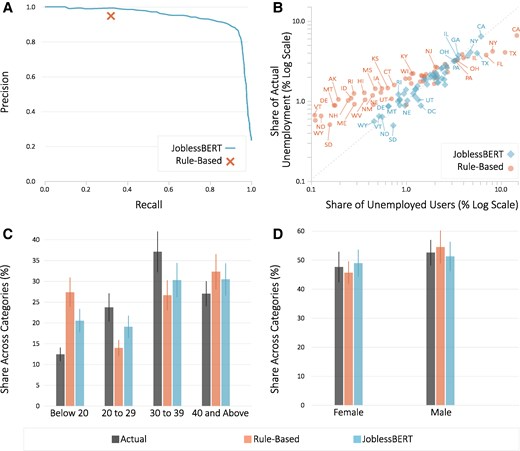
Social Media Is A Faster Source For Unemployment Data Than Government

Government unemployment data today are what Nielsen TV ratings were decades ago - a flawed metric...

Gestational Diabetes Up 36% In The Last Decade - But Black Women Are Healthiest

Gestational diabetes, a form of glucose intolerance during pregnancy, occurs primarily in women...

Object-Based Processing: Numbers Confuse How We Perceive Spaces

Researchers recently studied the relationship between numerical information in our vision, and...
Males Are Genetically Wired To Beg Females For Food

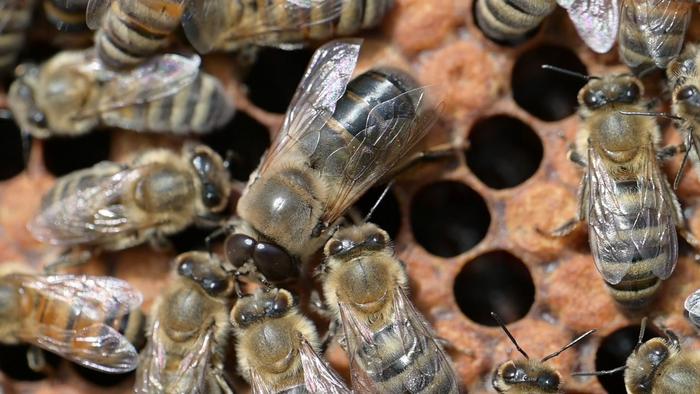
Bees have the reputation of being incredibly organized and spending their days making sure our...

User picture.
News StaffRSS Feed of this column.

News Releases From All Over The World, Right To You... Read More »

Blogroll

Scientists thought that most new genes were formed from existing genes, but Cornell researchers have discovered a gene in some fruit flies that appears to be unrelated to other genes in any known genome.

The new gene, called hydra, exists in only a small number of species of Drosophila fruit flies, which suggests it was created about 13 million years ago, when these melanogaster subgroup species diverged from a common ancestor.

And early evidence indicates that the new gene is functional (as opposed to being nonfunctional "junk" DNA) and is likely to express a protein involved in late stages of sperm cell development (spermatogenesis).

What do sand, coal, cereal, ice cubes, marbles, gravel, sugar, pills, and powders have in common" They are all granular materials, members of an unruly family of substances that refuse to completely conform to the laws of behavior for either solids or liquids—much to the consternation of theoretical physicists and manufacturers alike. Whether it’s a huge grain silo, a coal hopper or a pharmaceutical manufacturing plant, being able to predict the behavior of dense granular packings subjected to different external stresses is key to keeping things from jamming up or collapsing.

A quarter of adult New Yorkers have elevated blood mercury levels, according to survey results released today by the Health Department, and the elevations are closely tied to fish consumption. Asian and higher-income New Yorkers eat more fish, and have higher average mercury levels, than others both locally and nationally.

These mercury levels pose little if any health risk for most adults, but may increase the risk of cognitive delays for children whose mothers had very high mercury levels during pregnancy.

Today’s findings are the latest presented from New York City’s Health and Nutrition Examination Survey (NYC-HANES), the first such survey ever conducted by a U.S. city. It’s possible that other cities have similarly high levels, or higher ones, but haven’t yet documented them.

University of New South Wales (UNSW) researchers have uncovered an important naturally occurring mechanism in the body where "bad" cells that cause blockages in our blood vessels are kept under strict growth control, while "good" cells that keep our blood vessels free of clots and growths are left unaffected.

The discovery is expected to benefit those who will need heart coronary bypass surgery, an angioplasty - the mechanical widening of a narrowed or totally blocked blood vessel - or will undergo haemodialysis.

Obese girls are half as likely to attend college as non-obese girls, according to a new study from The University of Texas at Austin.

The study also shows obese girls are even less likely to enter college if they attend a high school where obesity is relatively uncommon. The findings appear in the July issue of the journal Sociology of Education.

The study tracked nearly 11,000 American adolescents, using data from the National Longitudinal Study of Adolescent Health.

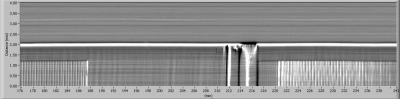
National Institute of Standards and Technology (NIST) has developed an improved version of a real-time magnetic microscopy system that converts evidence of tampering on magnetic audio and video tapes—erasing, overdubbing and other alterations—into images with four times the resolution previously available.

This system is much faster than conventional manual analysis and offers the additional benefit of reduced risk of contaminating the tapes with magnetic powder. NIST recently delivered these new capabilities to the Federal Bureau of Investigation (FBI) for validation as a forensic tool.

Earlier versions of this system made images with a resolution of about 400 dots per inch (dpi).