Banner
Social Media Is A Faster Source For Unemployment Data Than Government

Government unemployment data today are what Nielsen TV ratings were decades ago - a flawed metric...

Gestational Diabetes Up 36% In The Last Decade - But Black Women Are Healthiest

Gestational diabetes, a form of glucose intolerance during pregnancy, occurs primarily in women...

Object-Based Processing: Numbers Confuse How We Perceive Spaces

Researchers recently studied the relationship between numerical information in our vision, and...
Males Are Genetically Wired To Beg Females For Food

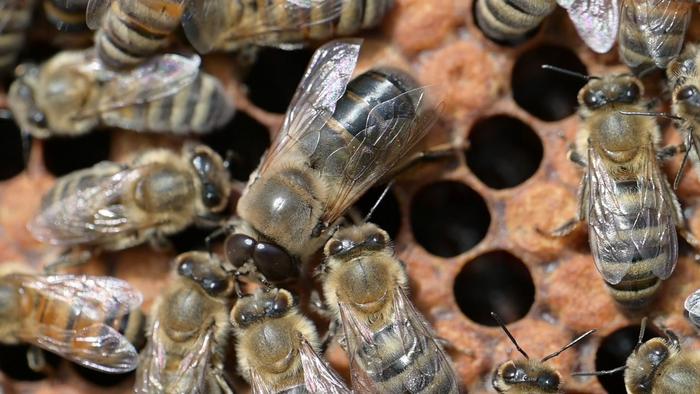
Bees have the reputation of being incredibly organized and spending their days making sure our...

User picture.
News StaffRSS Feed of this column.

News Releases From All Over The World, Right To You... Read More »

Blogroll

Not all fat is bad. Brown fat is a type of adipose tissue that generates heat and counters obesity caused by overeating.

Researchers at Dana-Farber Cancer Institute have identified a long-sought "master switch" in mice for the production of brown fat and they say that turning up the equivalent switch in people might be a new strategy for treating overweight and obesity. The investigators said their next step is to rev up the control in mice and overfeed them to see if they are resistant to becoming obese.

Brightly colored birds are among the species most adversely affected by the high levels of radiation around the Chernobyl nuclear plant, ecologists have discovered. The findings help explain why some species are harder hit by ionising radiation than others.

Dr Anders Møller of the Université Pierre et Marie Curie and Professor Timothy Mousseau of the University of South Carolina examined 1,570 birds from 57 different species in the forests around Chernobyl at varying distances from the reactor. They found that populations of four groups of birds - those whose red, yellow and orange plumage is based on carotenoids, those that laid the biggest eggs, and those that migrated or dispersed the furthest - declined more than other species.

Scientists at the University of Bonn, together with colleagues from Romania, have discovered a gene variant that significantly increases the risk of developing gallstones.

It is estimated that one in ten Europeans has this variant in their hereditary disposition. For those affected, the likelihood of developing a gallstone in the course of their life is two to three times higher. The relevant gene contains the instructions for building a molecular pump which transports cholesterol from the liver into the bile ducts – cholesterol being the substance from which most gallstones are formed.

The genetic modification appears to cause this pump to work permanently at high speed.

A detailed understanding of key chemical reactions that take place in interstellar space has been provided by groundbreaking research at two U.S. Department of Energy national laboratories and two European universities.

Argonne National Laboratory senior chemist Stephen Klippenstein – along with colleagues at Sandia National Laboratories; the Institute of Physics, University of Rennes, France; and the University of Cambridge, U.K. – has developed a detailed understanding of the dynamics of reactions between neutral radicals and neutral molecules, known as “neutral-neutral” reactions, at temperatures as low as 20 Kelvin, approximately the temperature of interstellar space.

To protect us from disease our immune system employs macrophages, cells that roam our body in search of disease-causing bacteria. With the help of long tentacle-like protrusions, macrophages can catch suspicious particles, pull them towards their cell bodies, internalise and destroy them.

Using a special microscopy technique, researchers from the European Molecular Biology Laboratory (EMBL) now for the first time tracked the dynamic behaviour of these tentacles in three dimensions. In the current online issue of PNAS they describe a molecular mechanism that likely underlies the tentacle movement and that could influence the design of new nanotechnologies.

A research team at the Swedish medical university Karolinska Institutet has shown for the time that microRNA, small RNA molecules, may play an important role in the development of inflammatory skin diseases such as psoriasis and atopic eczema. The research team is led by Professor Mona Ståhle, one of Sweden’s most prominent scientists in the field.

MicroRNA are small RNA molecules that regulate gene expression, and by acting on many different proteins and different cellular mechanisms in skin and immune cells these small RNA molecules may be an important factor in the development of disease. Therapies based on microRNA might therefore in the future become more effective than medicines targeted at individual proteins.