
Banner
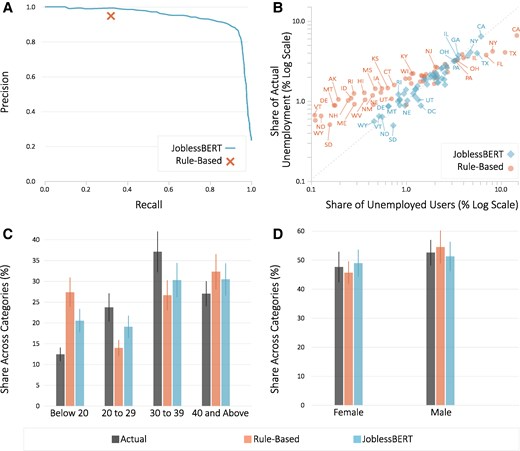
Social Media Is A Faster Source For Unemployment Data Than Government

Government unemployment data today are what Nielsen TV ratings were decades ago - a flawed metric...

Gestational Diabetes Up 36% In The Last Decade - But Black Women Are Healthiest

Gestational diabetes, a form of glucose intolerance during pregnancy, occurs primarily in women...

Object-Based Processing: Numbers Confuse How We Perceive Spaces

Researchers recently studied the relationship between numerical information in our vision, and...

Males Are Genetically Wired To Beg Females For Food

Bees have the reputation of being incredibly organized and spending their days making sure our...

User picture.
News StaffRSS Feed of this column.

News Releases From All Over The World, Right To You... Read More »

Blogroll

Researchers from Boston University School of Medicine (BUSM) and Boston University School of Public Health (BUSPH) have developed a method to estimate sickle cell disease severity and predict the risk of death in people with this disease.

Sickle cell disease is caused by mutations in the beta-hemoglobin gene (HBB). Individuals having identical pairs of genes for the HBB glu6val mutation (HbS) have sickle cell anemia; individuals with both HbS and HbC mutations have sickle cell-HbC (HbSC) disease. Both of these types of sickle cell-disease have extremely variable characteristics. While the median age of death in the United States was estimated to be in the fifth decade for patients with sickle cell anemia, some individuals die young while others live into their eight or ninth decade.

A research team at the Swedish medical university Karolinska Institutet has shown for the time that microRNA, small RNA molecules, may play an important role in the development of inflammatory skin diseases such as psoriasis and atopic eczema. The research team is led by Professor Mona Ståhle, one of Sweden’s most prominent scientists in the field.

MicroRNA are small RNA molecules that regulate gene expression, and by acting on many different proteins and different cellular mechanisms in skin and immune cells these small RNA molecules may be an important factor in the development of disease. Therapies based on microRNA might therefore in the future become more effective than medicines targeted at individual proteins.

Researchers from Boston University School of Medicine (BUSM) and Boston University School of Public Health (BUSPH) have developed a method to estimate sickle cell disease severity and predict the risk of death in people with this disease. The study appears online in the June issue of the journal Blood.

Sickle cell disease is caused by mutations in the beta-hemoglobin gene (HBB). Individuals having identical pairs of genes for the HBB glu6val mutation (HbS) have sickle cell anemia; individuals with both HbS and HbC mutations have sickle cell-HbC (HbSC) disease. Both of these types of sickle cell-disease have extremely variable characteristics.

A chemically-modified version of a mitochondrial toxin long used to control species of invasive fish in lakes has been found to selectively inhibit two "survival proteins” in cancer cells. The research is a first step toward developing a molecularly-targeted drug that could eliminate cellular-level resistance to multiple types of chemotherapy and radiation therapy found in many types of cancers.

In a paper published today in the July 2007 issue of Molecular Cancer Therapeutics, scientists at Fred Hutchinson Cancer Research Center report that a modified version of antimycin called 2-Methoxy antimycin is selective in killing cells that have high levels of Bcl-2 and Bcl-xL proteins.

Researchers from the University of Pittsburgh School of Medicine report a significant new advance in the search for an effective treatment for human liver cancer in the July issue of Molecular Cancer Therapeutics.

Using a newly available monoclonal antibody, they demonstrated significant reductions in tumor cell proliferation and survival in human and mouse hepatocellular cancer (HCC) cell lines. According to the researchers, this finding has significant implications not only for the treatment of liver cancer but for a number of different types of cancer.

Most cases of HCC are secondary to either a viral hepatitis infection or cirrhosis of the liver.

Argonaute 2 (Ago2) is unique among its family: It is the only one of the four mammalian Argonaute proteins that exhibits endonuclease “slicer” activity (facilitation of miRNA-guided cleavage of target mRNA).

However, as Drs. Donal O’Carroll and Alexander Tarakhovsky (The Rockefeller Institute) report, Ago2’s defining characteristic is surprisingly non-essential for its role in hematopoiesis and miRNA biogenesis.

Drs. O’Carroll, Tarakhovsky and colleagues generated transgenic mice harboring mutated versions of Ago2 in their bone marrow. The researchers found that Ago2 is, indeed, quite necessary for normal blood cell development. Its endonulcease activity, however, is not.




