
Banner
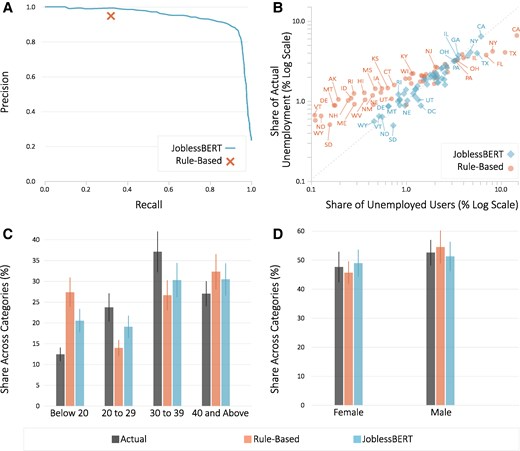
Social Media Is A Faster Source For Unemployment Data Than Government

Government unemployment data today are what Nielsen TV ratings were decades ago - a flawed metric...
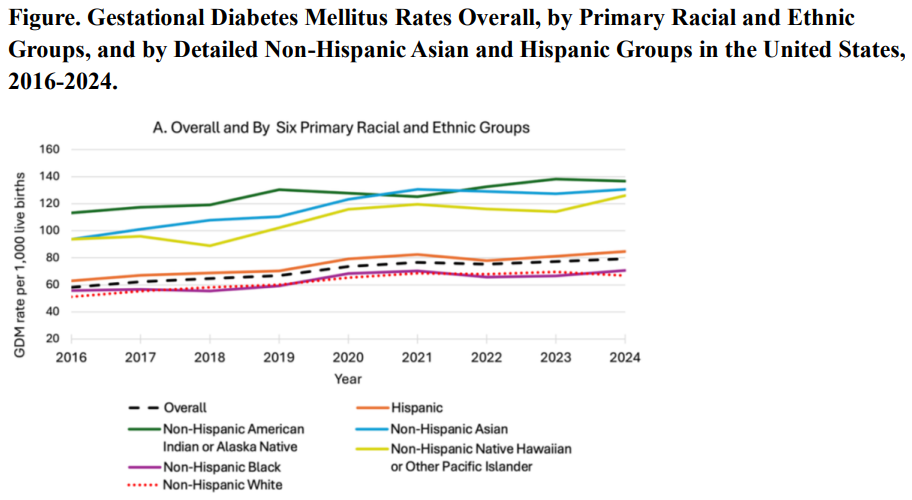
Gestational Diabetes Up 36% In The Last Decade - But Black Women Are Healthiest

Gestational diabetes, a form of glucose intolerance during pregnancy, occurs primarily in women...
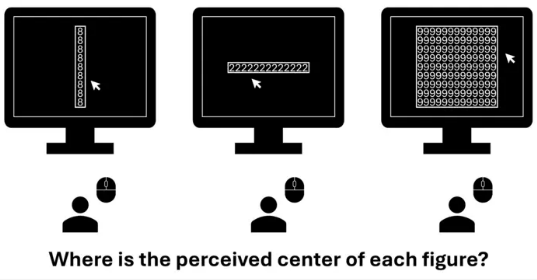
Object-Based Processing: Numbers Confuse How We Perceive Spaces

Researchers recently studied the relationship between numerical information in our vision, and...
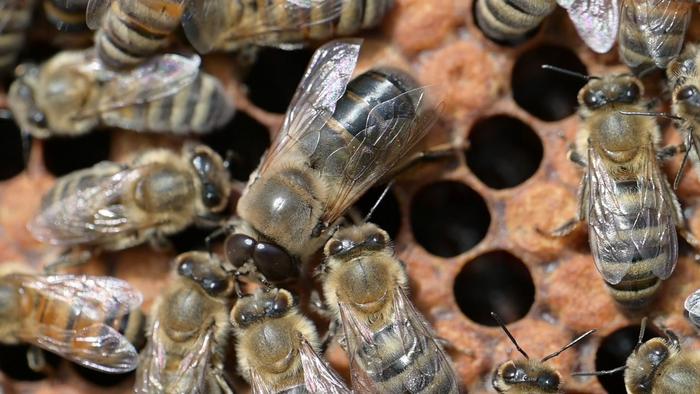
Males Are Genetically Wired To Beg Females For Food

Bees have the reputation of being incredibly organized and spending their days making sure our...

User picture.
News StaffRSS Feed of this column.

News Releases From All Over The World, Right To You... Read More »

Blogroll

Using natural ‘gravitational lenses’, an international team of astronomers claim to have found a hint of a population of the most distant galaxies yet seen - the light we see from them today left more than 13 thousand million years ago, when the Universe was just 500 million years old.

Team leader Professor Richard Ellis, Steele Professor of Astronomy at Caltech, will present images of these faint and distant objects in his talk on Wednesday 11 July at the ‘From IRAS to Herschel and Planck’ conference at the Geological Society in London.

A University of Alabama astronomer has co-developed a new way to characterize galaxy features that is giving scientists additional insight into how galaxies formed and changed over time, according to a paper published in the June 2007 issue of The Astronomical Journal.

Dr. Ronald J. Buta, professor of astronomy at UA, and Dr. Xiaolei Zhang, of the Naval Research Laboratory, Washington, D.C., co-authored the paper detailing the new method of characterizing density wave features in galaxies. Density waves are mass enhancements in galaxies that appear in the forms of spiral arms, linear bar features, and ring-shaped patterns. Orbiting stars and gas clouds stream in and out of these features much like vehicles in heavy traffic.

Researchers have identified a new gene mutation linked to frontotemporal dementia, according to a study published in the July 10, 2007, issue of Neurology®, the medical journal of the American Academy of Neurology.

Frontotemporal dementia, one form of which is known as Pick’s disease, involves progressive shrinking of the areas of the brain that control behavior and language. Symptoms include language problems and personality changes, often with inappropriate social behavior. Unlike Alzheimer’s disease dementia, the disease does not affect memory in the early stages. The genetic form of the disease is rare; most cases occur randomly.

Computer graphics researchers at Carnegie Mellon University have developed systems for editing or altering photographs using segments of the millions of images available on the Web.

Whether adding people or objects to a photo, or filling holes in an edited photo, the systems automatically find images that match the context of the original photo so they blend realistically. Unlike traditional photo editing, these results can be achieved rapidly by users with minimal skills.

“We are able to leverage the huge amounts of visual information available on the Internet to find images that make the best fit,” said Alexei A. Efros, assistant professor of computer science and robotics.

A new study of sweetened beverages shows that cane sugar and high fructose corn syrup have similar effects on hunger, fullness, and food consumption at lunch.

According to the study, which appears in the July issue of the American Journal of Clinical Nutrition, this may be because sucrose (table sugar) in beverages splits into glucose and fructose molecules, such as are present in high-fructose corn syrup. The results suggest that while appetite and food intake are influenced by the number of calories consumed earlier, the types of sugars consumed in those calories seem to make little or no difference.

A new study finds that the more “western” the diet -- marked by red meat, starches and sweets -- the greater the risk for breast cancer among postmenopausal Chinese women. According to researchers who conducted the analysis at Fox Chase Cancer Center in Philadelphia, Harvard University, Shanghai Cancer Institute, and Vanderbilt University, the findings mark the first time a specific association between a western diet and breast cancer has been identified in Asian women.

The study is the latest set of findings derived from the Shanghai Breast Cancer Study, conducted in the 1990s by Wei Zheng, M.D., Ph.D., M.P.H, and colleagues at Vanderbilt University.





