Banner
Pilot Study: Fibromyalgia Fatigue Improved By TENS Therapy

Fibromyalgia is the term for a poorly-understood condition where people experience pain and fatigue...

High Meat Consumption Linked To Lower Dementia Risk

Older people who eat large amounts of meat have a lower risk of dementia and cognitive decline...

Long Before The Inca Colonized Peru, Natives Had A Thriving Trade Network

A new DNA analysis reveals that long before the Incan Empire took over Peru, animals were...

Mesolithic People Had Meals With More Tradition Than You Thought

The common imagery of prehistoric people is either rooting through dirt for grubs and picking berries...

User picture.
News StaffRSS Feed of this column.

News Releases From All Over The World, Right To You... Read More »

Blogroll
Hydroxychloroquine is an effective drug for the treatment of diseases like lupus and malaria and because it is used off-label for maladies that act in a biologically similar way to how COVID-19, caused by the SARS-CoV-2 virus, acts in the body, there has been discussion that clinical trials might show it having a positive therapeutic impact.

Could it prevent COVID-19, though? A clinical trial of health care workers finds that it does not, though the good news is that because the trial was health care workers they had low rates of infection anyway, likely due to other prevention measures. Masks, hand-washing, and social distancing work.
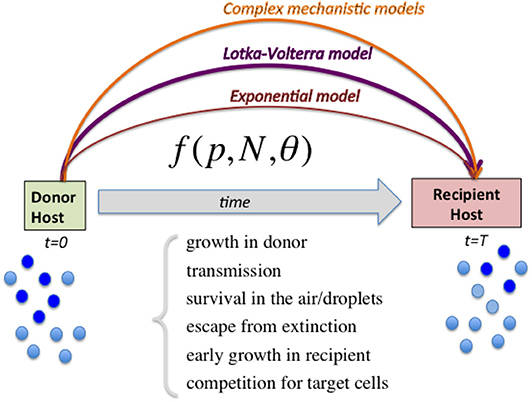
To estimate infection rates of viruses like SARS-CoV-2, immunologists use a basic reproduction number, known as R0 (pronounced “R naught”) - an expression of the number of people likely to catch a disease from one contagious person - and a Susceptible-Infected-Removed (SIR) model.

Yet as we have seen, those are only telling part of the science story. Coronavirus is in the same family as the common cold and for many COVID-19 will be just like the cold, and can spread like the cold. But when it comes to successful transmission, viruses only win they can optimize their aptitude to survive and reproduce in given conditions - which means they lose if we can optimize disease control measures.
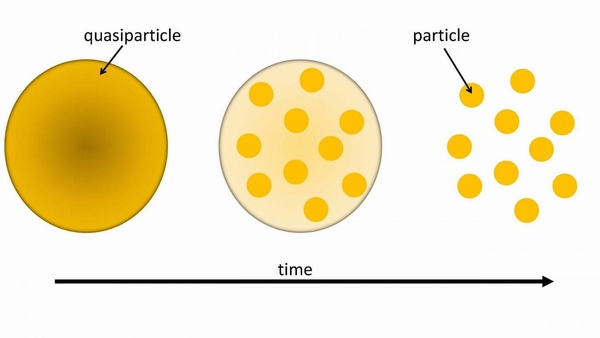
In large systems of interacting particles in quantum mechanics, groups of particles can begin to behave like single particles.

Physicists refer to such groups of particles as quasiparticles and while they live, they are useful in helping us understand superconductivity and superfluidity. But many quasiparticles die after less than one second. 

What kills them? How do quasiparticles die?

A new paper goes beyond the usual suspect - quasiparticle decay into lower energy states - and identifies a new culprit: many-body dephasing.

Humans each have 23 pairs of chromosomes, the 23rd of which determines sex. Females carry two X sex chromosomes, males carry one X and one Y chromosome. Yet this male chromosome carries genes that females lack and those male genes are expressed in all cells of the body, but their only confirmed role has been limited determining male or female.
Yaws is a childhood disease causing highly infectious skin lesions. It is spread by touch and, in advanced cases, can leave sufferers with severe bone disfigurement.

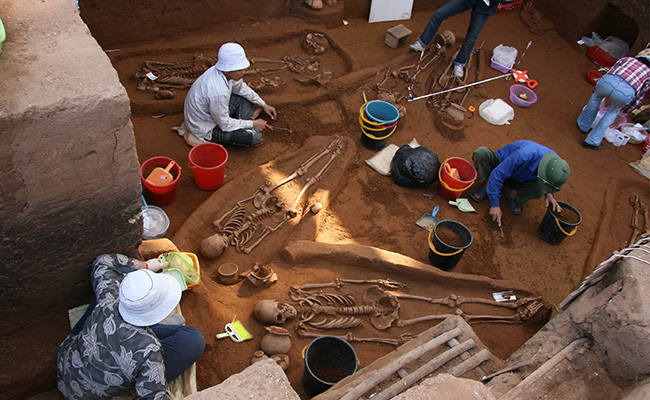
While it is easily curable in its early stages today, and is almost eradicated, the bone disfigurements are irreversible. Yet 4,000 years ago there was no treatment and a new study looked at skeletal remains from the Man Bac archaeological site,  excavated in 2005 and 2007, in the Ninh Bình Province of Vietnam. After seeing what might be yaws on a photograph of Man Bac remains, a team of experts confirmed it - and University of Otago graduate student Melandri Vlok found a second example of the disease. 
A new study shows there is even more reason to worry about the Zika and chikungunya viruses and the pests that spread them; increased risk of neurological diseases like stroke.