Banner
Pilot Study: Fibromyalgia Fatigue Improved By TENS Therapy

Fibromyalgia is the term for a poorly-understood condition where people experience pain and fatigue...

High Meat Consumption Linked To Lower Dementia Risk

Older people who eat large amounts of meat have a lower risk of dementia and cognitive decline...

Long Before The Inca Colonized Peru, Natives Had A Thriving Trade Network

A new DNA analysis reveals that long before the Incan Empire took over Peru, animals were...

Mesolithic People Had Meals With More Tradition Than You Thought

The common imagery of prehistoric people is either rooting through dirt for grubs and picking berries...

User picture.
News StaffRSS Feed of this column.

News Releases From All Over The World, Right To You... Read More »

Blogroll
The Mars Curiosity rover has been on the job since the summer of 2012, exploring Gale Crater on the red planet. It's slow going, it has driven only 25 kilometers to date.  

But it can be fun to watch, like its ascent of Mount Mercou, a broad outcrop of rocks on the northern flank of Mount Sharp near the center of the crater, on April 18th 2021.

Mt. Sharp is over 2 miles high and Curiosity is the size of a small car. In the picture, it is above a 20-foot-high cliff where it examined the exposed rocks.


Credit: NASA/JPL/University of Arizona

An analysis of noble gases dissolved in groundwater finds that the low-to-mid latitude land surfaces at low elevation cooled on average by 11 degrees Fahrenheit during the Last Glacial Maximum - the ice age.

Prior to modern times, ice ages were about 90,000 of every 100,000 years. Since it has been 12,000 years since the last one, prior to concern about global warming there was concern about global cooling happening again.

Yet 11 degrees is less than some notable marine and low-elevation terrestrial studies that have relied on various proxies to reconstruct past temperatures. 
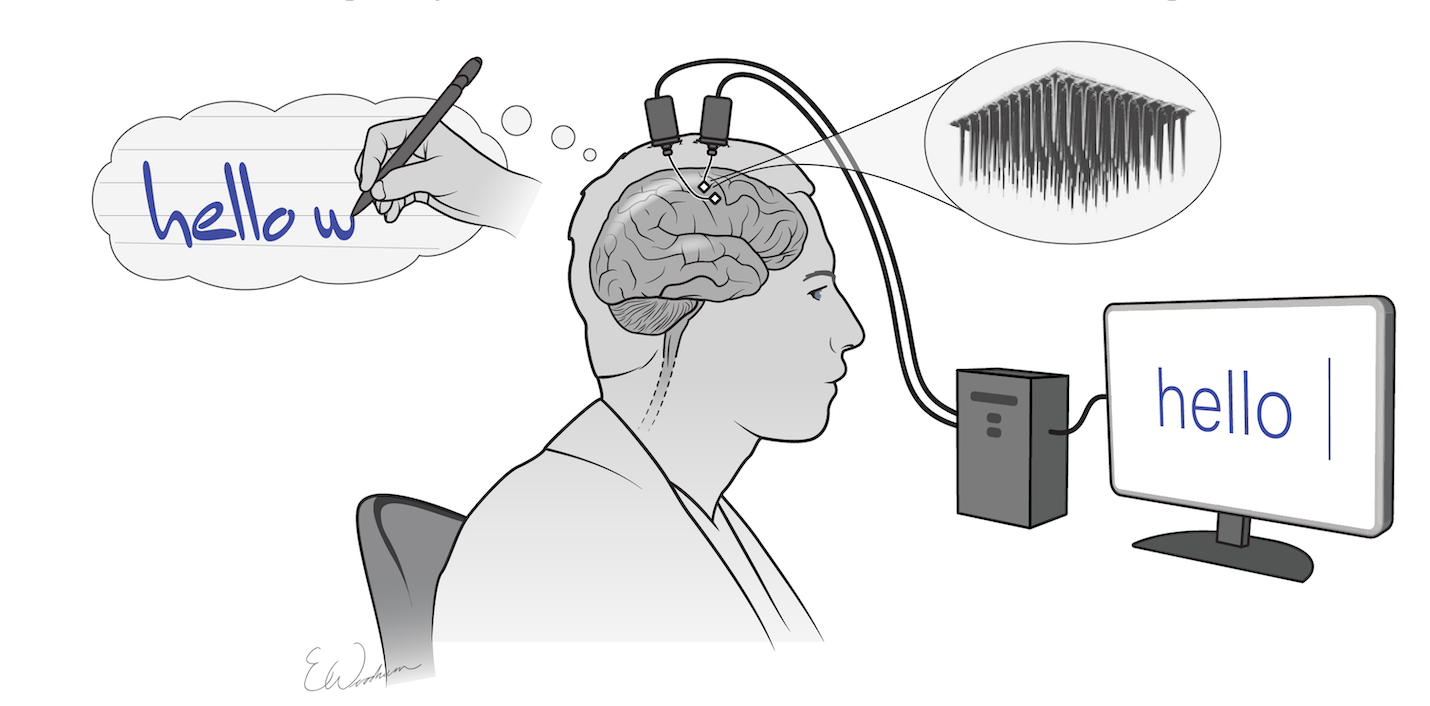
Researchers working with a paralyzed participant who has sensors implanted in his brain have deciphered the brain activity associated with trying to write letters by hand.

They used an algorithm to identify letters as he attempted to write them. Then, the system displayed the text on a screen - in real time. 

Brain-computer interfaces convert thought into action. By attempting handwriting, the study participant typed 90 characters per minute - more than double the previous record for typing with such a "brain-computer interface."

Preclinical findings suggest that targeting the mitochondrial enzyme dihydroorotate dehydrogenase (DHODH) can restore ferroptosis-driven cell death, pointing to new therapeutic strategies that may be used to induce ferroptosis and inhibit tumor growth.

Ferroptosis is a form of controlled cell death triggered by the toxic accumulation of lipid peroxides in the cell. Because lipid peroxides are generated through normal metabolic activities, cells also have mechanisms in place to defend against ferroptosis. Glutathione peroxidase 4 (GPX4) is one of the key defense mechanisms identified to date. 
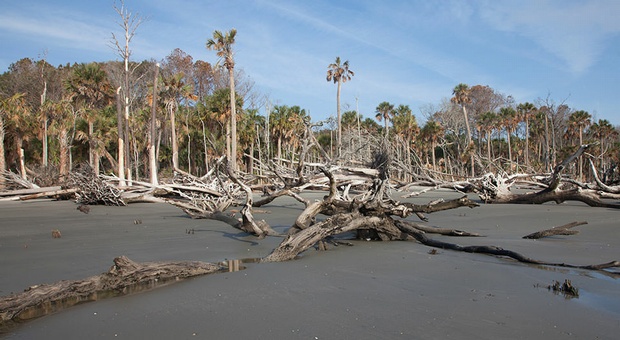
A new paper finds that greenhouse gas emissions from standing dead trees in coastal wetland forests are not properly accounted for when assessing the environmental impact of so-called "ghost forests."

Ghost forests are what is left of former forests in coastal regions where changes led to shifts in the height of land. As salt water moves in, dead, white, trees are created. North Carolina has some that can even be seen from space.
If a post is not popular, you will never see it, so views count, but it is the message and not the popularity of it that persuades people, according to a new paper.

819 demographically diverse American adults aged 18-35 were shown two YouTube videos either for or against vaping. The pro-vaping videos were commercials for e-cigarette brands. The anti-vaping videos were public service announcements produced by anti-tobacco groups. What was changed was the view numbers that participants saw for the videos.

Participants saw view numbers either around 10, 100, 100,000 or 1,000,000.