Dr. Aleem Gangjee, Distinguished Professor of Medicinal Chemistry at Duquesne University’s Mylan School of Pharmacy, and his team of collaborators continue to test a compound that appears not only to prevent cancer tumors from developing but to eliminate already-existing tumors.
In 2008, tests of a new compound developed by Gangjee showed that it stifled the growth of cancer tumors, which were composed of KB tumor cells, in mice. An unexpected result also showed that the compound shrunk and eventually eliminated cancer tumors in another group of mice, which remained tumor-free for 60 days.
“What we’re seeing here is a compound that can treat early- and late-stage cancer,” Gangjee said. “There are many ramifications to that.”
As part of the International Year of Astronomy 2009 Cornerstone project, 100 Hours of Astronomy, the ambitious “Around the World in 80 Telescopes” event is a unique live webcast over 24 hours, following night and day around the globe to some of the most advanced observatories on and off the planet.
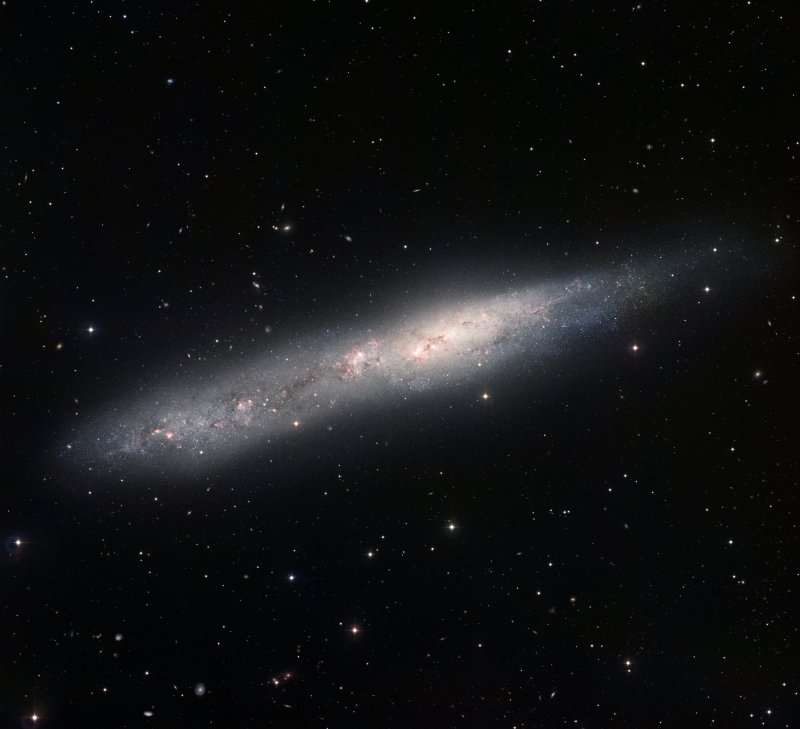
To provide a long-lasting memory of this amazing world tour, observatories worldwide are revealing wonderful, and previously unseen, astronomical images. For its part, ESO is releasing outstanding pictures of two galaxies, observed with telescopes at the La Silla and Paranal observatories.
Older people can dance their way towards improved health and happiness, according to a report from the Changing Ageing Partnership (CAP). The research, by Dr Jonathan Skinner from Queen’s University Belfast, reveals the social, mental and physical benefits of social dancing for older people. It suggests that dancing staves of illness, and even counteracts decline in aging.
Recommendations include the expansion of social dance provision for older people in order to aid successful aging and help older people enjoy longer and healthier lives.
Jonathan Skinner, Lecturer in Social Anthropology at the School of History and Anthropology at Queen’s, studied the effects of social dancing amongst older people in Northern Ireland, Blackpool and Sacramento.
Does the stress of being a parent lead to decay in children's teeth?
A team of scientists from The Ohio State University has examined the stress levels of parents whose young children either had no cavities or so many cavities that the children had receive anesthesia before undergoing dental treatment.
The investigators presented their findings today during the 87th General Session of the International Association for Dental Research.
The team also looked at the parents' education levels and income, and noted if they were single parents. Finally, they measured the parents' stress levels again after the children had received dental treatment.
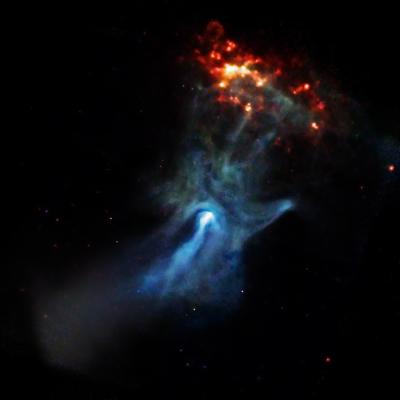
A small, dense object only twelve miles in diameter is responsible for this beautiful X-ray nebula that spans 150 light years. At the center of this image made by NASA's Chandra X-ray Observatory is a very young and powerful pulsar, known as PSR B1509-58, or B1509 for short.
The pulsar is a rapidly spinning neutron star which is spewing energy out into the space around it to create complex and intriguing structures, including one that resembles a large cosmic hand. In this image, the lowest energy X-rays that Chandra detects are red, the medium range is green, and the most energetic ones are colored blue. Astronomers think that B1509 is about 1,700 years old and is located about 17,000 light years away.
Integral has captured one of the brightest gamma-ray bursts ever seen. A meticulous analysis of the data has allowed astronomers to investigate the initial phases of this giant stellar explosion, which led to the ejection of matter at velocities close to the speed of light. In particular, the astronomers believe that the explosion lifted a piece of the central engine’s magnetic field into space.
On 19 December 2004, the blast from an exploding star arrived at Earth. ESA’s Integral satellite, an orbiting gamma-ray observatory, recorded the entire event, providing information for what may prove to be one of the most important gamma-ray bursts (GRBs) seen in recent years. As the data was collected, astronomers saw the 500-second-long burst rise to extraordinary brilliance.


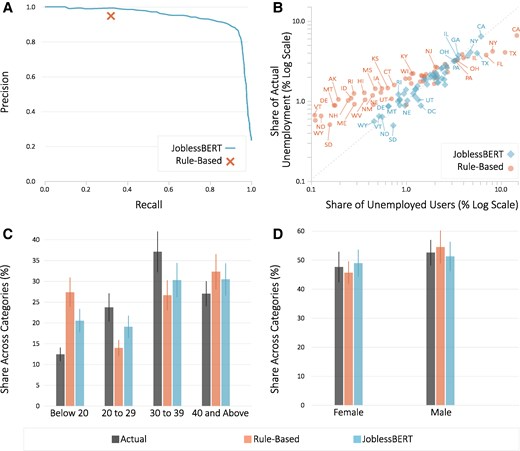 Social Media Is A Faster Source For Unemployment Data Than Government
 Gestational Diabetes Up 36% In The Last Decade - But Black Women Are Healthiest
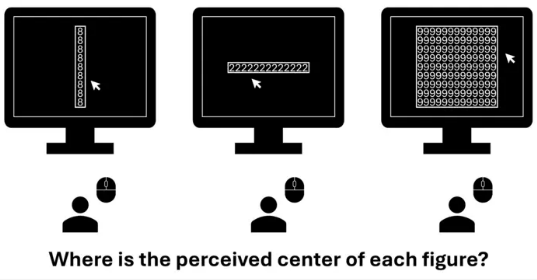 Object-Based Processing: Numbers Confuse How We Perceive Spaces
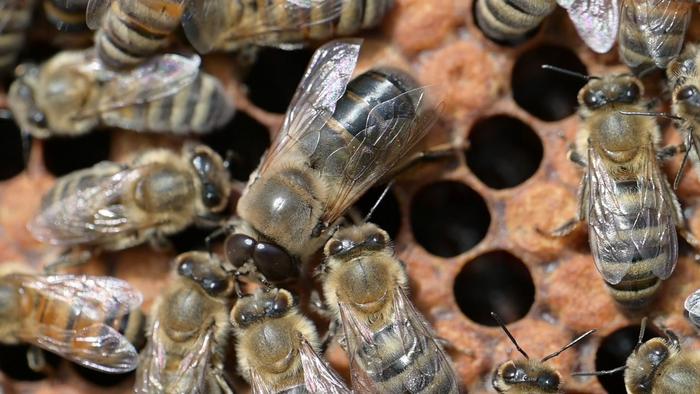 Males Are Genetically Wired To Beg Females For Food