Banner
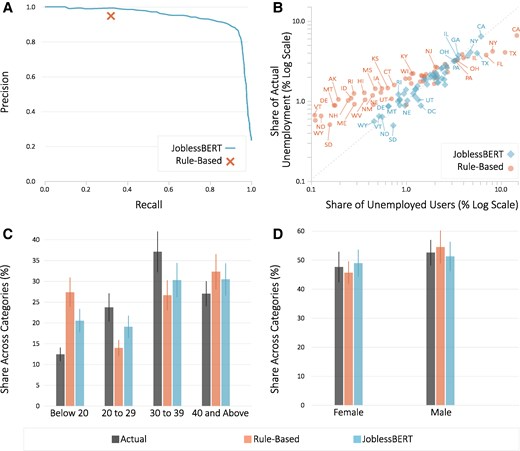
Social Media Is A Faster Source For Unemployment Data Than Government

Government unemployment data today are what Nielsen TV ratings were decades ago - a flawed metric...

Gestational Diabetes Up 36% In The Last Decade - But Black Women Are Healthiest

Gestational diabetes, a form of glucose intolerance during pregnancy, occurs primarily in women...
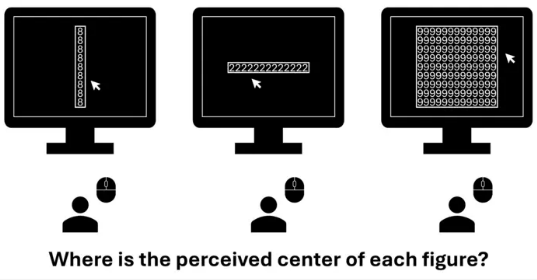
Object-Based Processing: Numbers Confuse How We Perceive Spaces

Researchers recently studied the relationship between numerical information in our vision, and...
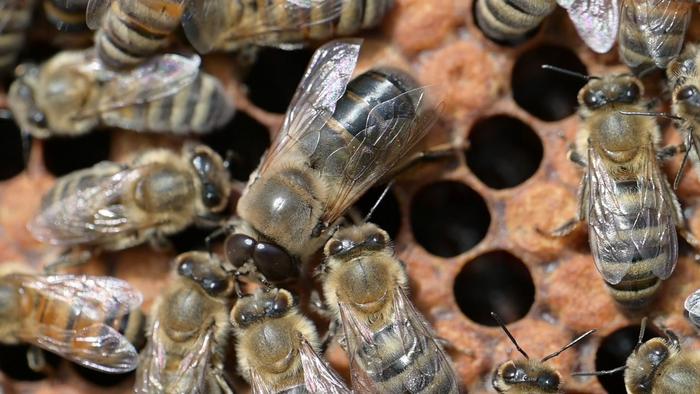
Males Are Genetically Wired To Beg Females For Food

Bees have the reputation of being incredibly organized and spending their days making sure our...

User picture.
News StaffRSS Feed of this column.

News Releases From All Over The World, Right To You... Read More »

Blogroll
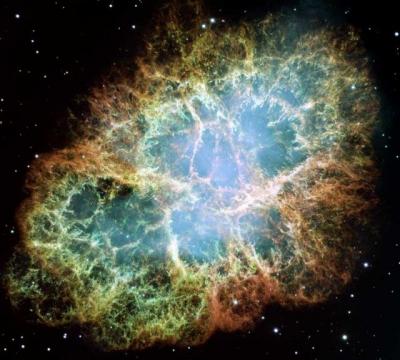
Where do supernovae come from?

It depends on who you ask.   Astronomers know they were exploding stars but there was always more to the story.  Researchers from the Dark Cosmology Centre at the Niels Bohr Institute, University of Copenhagen and from Queens University, Belfast say dying red supergiant stars can also produce supernovae.
Want to know what will make you happy?   Ask a stranger.    Another person's objective opinion may be more informative than your own best guess.  The study in Science was led by Daniel Gilbert, professor of psychology at Harvard and author of the 2007 bestseller "Stumbling on Happiness," along with Matthew Killingsworth and Rebecca Eyre, also of Harvard, and Timothy Wilson of the University of Virginia.

Previous research in psychology, neuroscience, and behavioral economics has shown that people have difficulty predicting what they will like and how much they will like it, which leads them to make a wide variety of poor decisions. Interventions aimed at improving the accuracy with which people imagine future events have been generally unsuccessful. 
A new study says that some aspects of peoples' cognitive skills, like making rapid comparisons, remembering unrelated information and detecting relationships, will peak at about the age of 22 and then begin a slow decline starting around age 27.

Timothy Salthouse, a University of Virginia professor of psychology and the study's lead investigator, and a team conducted the study during a seven-year period, working with 2,000 healthy participants between the ages of 18 and 60.Participants were asked to solve various puzzles, remember words and details from stories, and identify patterns in an assortment of letters and symbols.

A new study says that the human brain lives "on the edge of chaos", at a critical transition point between randomness and order.   Theoretical speculation?  Well, yeah, but that's the nature of neuroscience.

The researchers say self-organized criticality (where systems spontaneously organize themselves to operate at a critical point between order and randomness), can emerge from complex interactions in many different physical systems, including avalanches, forest fires, earthquakes, and heartbeat rhythms.
To look at Matthew Houdek, you could never tell he was born with virtually no left ear.

A surgery at Loyola University Health System made it possible for Houdek to be fitted with a prosthetic ear that looks just like the real thing.

Ear-nose-throat surgeon Dr. Sam Marzo implanted three small metal screws in the side of Houdek's head. Each screw is fitted with a magnet, and magnetic attraction holds the prosthetic ear in place.

It takes only a few seconds for Houdek to put his prosthetic ear on in the morning and take it off when he showers or goes to bed. It doesn't fall off, and it's much more convenient than prosthetic ears that are attached with adhesive. 
Humans excel at recognizing faces, but how we do this has been an abiding mystery in neuroscience and psychology. In an effort to explain our success in this area, researchers are taking a closer look at how and why we fail. 

A new study from MIT looks at a particularly striking instance of failure: our impaired ability to recognize faces in photographic negatives. The study, which appears in the Proceedings of the National Academy of Sciences this week, suggests that a large part of the answer might lie in the brain's reliance on a certain kind of image feature.