Banner
Social Media Is A Faster Source For Unemployment Data Than Government

Government unemployment data today are what Nielsen TV ratings were decades ago - a flawed metric...

Gestational Diabetes Up 36% In The Last Decade - But Black Women Are Healthiest

Gestational diabetes, a form of glucose intolerance during pregnancy, occurs primarily in women...
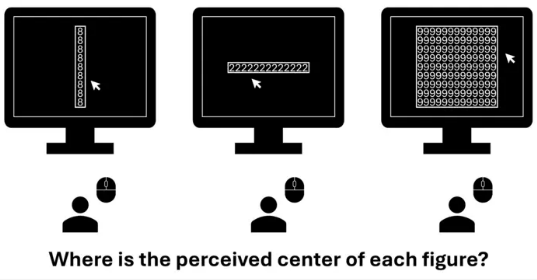
Object-Based Processing: Numbers Confuse How We Perceive Spaces

Researchers recently studied the relationship between numerical information in our vision, and...
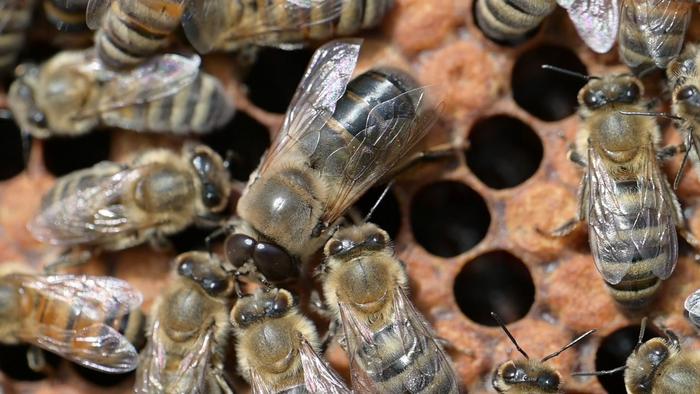
Males Are Genetically Wired To Beg Females For Food

Bees have the reputation of being incredibly organized and spending their days making sure our...

User picture.
News StaffRSS Feed of this column.

News Releases From All Over The World, Right To You... Read More »

Blogroll
The phenomenon of light emission by living organisms, bioluminescence, is quite common, especially in marine species. It is known that light is generated by chemical reactions in which oxygen molecules play an important part. In the animal world, these chemical reactions take place in special luminescent cells called photocytes. These are aggregated into complex light organs, in which the intensity of light is regulated by nerve impulses, and in which light can be modulated with the help of reflectors, lenses and filters. By these means, organisms can adjust the wavelength, diffusion and intensity of light according to need. But the exact mechanisms behind these processes remain shrouded in mystery.

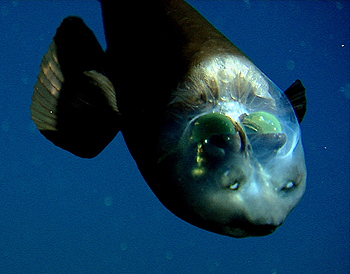
Researchers at the Monterey Bay Aquarium Research Institute recently solved the half-century-old mystery of a fish with tubular eyes and a transparent head. Ever since the "barreleye" fish Macropinna microstoma was first described in 1939, marine biologists have known that its tubular eyes are very good at collecting light. However, the eyes were believed to be fixed in place and seemed to provide only a "tunnel-vision" view of whatever was directly above the fish's head. A new paper by Bruce Robison and Kim Reisenbichler shows that these unusual eyes can rotate within a transparent shield that covers the fish's head. This allows the barreleye to peer up at potential prey or focus forward to see what it is eating.

People differ from one another in millions of ways. For starters, there is eye color, hair color, body build, and tendencies toward certain diseases and conditions. We know that genes determine these differences. Now, we also are learning that genes affect how our bodies respond to disease. Through the study of genetic links between patients and chronic diseases, Geisinger Health System researchers are hoping to gain a better understanding of how to prevent, diagnose and treat these diseases. 
People voluntarily pick what information they store in short-term memory. Now, using functional magnetic resonance imaging (fMRI), researchers can see just what information people are holding in memory based only on patterns of activity in the brain.

Psychologists from the University of Oregon and the University of California, San Diego, reported their findings in the February issue of Psychological Science. By analyzing blood-flow activity, they were able to identify the specific color or orientation of an object that was intentionally stored by the observer.
Scientists are harnessing the cosmos as a scientific “instrument” in their quest to determine the makeup of the universe.   Evalyn Gates calls from the University of Chicago calls it “Einstein’s telescope” but she actually means the phenomenon of gravitational lensing, which acts as a sort of natural telescope.

In general relativity, mass can warp space and create gravitational fields that bend light - confirmed in  by Arthur Eddington during a solar eclipse, when he saw that the light from stars that passed close to the sun was slightly bent, making them appear out of position.
During the next decade, some cosmologists say a delicate measurement of primordial light could reveal evidence for the cosmic inflation hypothesis, which proposes that a random, microscopic density fluctuation in the fabric of space gave birth to the universe in a hot big bang approximately 13.7 billion years ago - it also predicts the existence of an infinite number of universes.   The hypothesis was first proposed by Alan Guth of the Massachusetts Institute of Technology in 1979 but cosmologists currently have no way of testing this prediction.