Banner
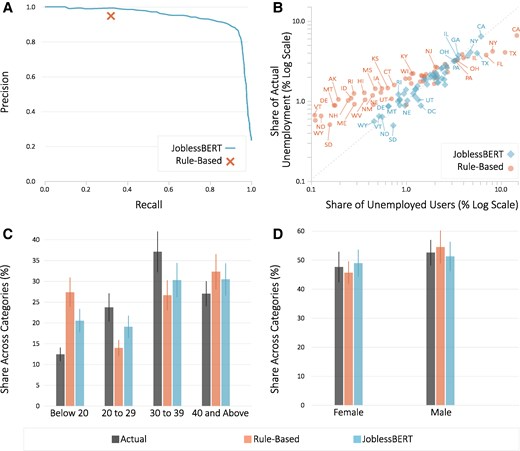
Social Media Is A Faster Source For Unemployment Data Than Government

Government unemployment data today are what Nielsen TV ratings were decades ago - a flawed metric...

Gestational Diabetes Up 36% In The Last Decade - But Black Women Are Healthiest

Gestational diabetes, a form of glucose intolerance during pregnancy, occurs primarily in women...

Object-Based Processing: Numbers Confuse How We Perceive Spaces

Researchers recently studied the relationship between numerical information in our vision, and...
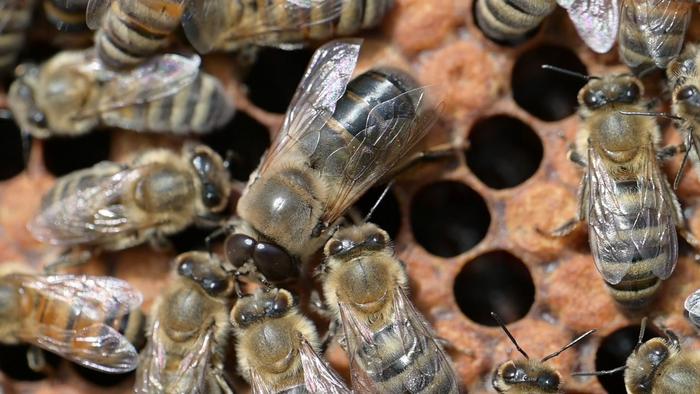
Males Are Genetically Wired To Beg Females For Food

Bees have the reputation of being incredibly organized and spending their days making sure our...

User picture.
News StaffRSS Feed of this column.

News Releases From All Over The World, Right To You... Read More »

Blogroll
A new gene that provides resistance to a fungal disease responsible for millions of hectares of lost wheat yield has been discovered by scientists from the US and Israel.  Resistance to stripe rust has previously been achieved using genes that are specific to single races of the disease. Unfortunately, each of these genes has had limited durability in the field because the pathogen has mutated to overcome them.

In the paper to be published in Science Express tomorrow, the international team of scientists report finding a novel type of gene in wild wheat that is absent in modern pasta and bread wheat varieties.
Coffee shrubs, both in themselves and because they are most often cultivated in the shade of large trees, can have a positive impact on plant and animal diversity in those parts of the landscape that are deforested and dominated by agriculture.

What constitutes a dilemma for consumers wishing to shop ecologically is that when coffee is grown in a forest, which is also common, the impact on diversity is negative, say researchers at the Department of Botany, Stockholm University, in Sweden, who recently published two articles about the role of coffee cultivation in conserving plants and animals in Ethiopia, the original home of coffee.
For many children, a trip to the doctor or dentist is a stressful experience. The sensory environment (i.e., the sounds, smells, and lights associated with the clinical setting) can cause a child's anxiety levels to rise. This is especially true in children with developmental disabilities who may have difficulty understanding the unfamiliar clinical environment. A new study soon explores the relationship between the sensory environment and anxiety levels in children.
NASA's Kepler spacecraft will soon begin a journey to search for worlds that could potentially host life. Kepler is scheduled to blast into space from Cape Canaveral Air Force Station, Fla., aboard a Delta II rocket on March 5 at 7:48 p.m. Pacific Time (10:48 p.m. Eastern Time). It is the first mission with the ability to find planets like Earth -- rocky planets that orbit sun-like stars in a warm zone where liquid water could be maintained on the surface. Liquid water is believed to be essential for the formation of life. 

- Bioidentical Hormones for Physical Rejuvenation and Fitness

"The Curious Case of Benjamin Button" has come to the movie theatres around the globe. Benjamin Button is born with the appearance and physical maladies of an elderly man but continuously growing younger - ailments and visible signs of aging disappear.

While in the film the effect of rejuvenation was achieved by changing actors, make up, and digital processing, modern medical technology can provide gentle rejuvenation of the body by up to 15 years.

DDr. Karl-Georg Heinrich, Vienna-based expert in anti-ageing and cosmetic surgery: "Age-related hormone deficiency is one of the main reasons for premature ageing and can be treated by use of bioidentical hormones." His surgery Clinic DDr.

Coastal erosion has more than doubled in Alaska – up to 45 feet per year – in a 5-year period between 2002 and 2007 along a 40-mile stretch of the Beaufort Sea, according to a U.S. Geological Survey(USGS) study that says average annual erosion rates along this part of the Beaufort Sea climbed from historical levels of about 20 feet per year between the mid-1950s and late-1970s, to 28 feet per year between the late-1970s and early 2000s, to a rate of 45 feet per year between 2002 and 2007.