A case report published in PLoS Medicine describes a rare side effect of human fetal stem cell therapy. Ninette Amariglio and Gideon Rechavi from the Sheba Medical Center, Tel Aviv, Israel, and colleagues report the case of a boy with a rare genetic disease, Ataxia Telangiectasia, who underwent human fetal stem cell therapy at an unrelated clinic in Moscow and who, four years after the therapy began, was shown to have abnormal growths in his brain and spinal cord.
Increasing numbers are risking their health just because they want to have a tan, say researchers in an editorial published on bmj.com today.
The authors, led by Michael Evans-Brown from Liverpool John Moores University, argue that while the actual number of people having 'tan jabs' (the drugs Melanotan I and Melanotan II) is unknown, they are easily available via the internet and in some tanning salons and hairdressers. A thriving online community of users exist, the largest of which is Melanotan.org with over 5,000 members.
The Rift Valley fever virus is a mosquito-borne African virus that causes fever in humans, inflicting liver damage, blindness and even death on a small percentage of the people it infects. Rift Valley fever also afflicts cattle, goats and sheep, resulting in a nearly 100 percent abortion rate in these animals. Its outbreaks periodically cause economic devastation in parts of Kenya, Somalia, Sudan and Zimbabwe, and bioterrorism experts warn that its introduction to the United States would cripple the North American beef industry.
Researchers at the University of Texas Medical Branch at Galveston say they have discovered a key tactic that the Rift Valley fever virus uses to disarm the defenses of infected cells.
Plants are obviously essential to our survival and that of most other animals on earth but it is easy to overlook how they have become discretely embedded into our everyday lives; plants provide us with food, medicines, and raw materials used by our industries.
Despite their importance, very few of us could name more than a tiny fraction of the plants that surround us and while most of us could easily between a buttercup and a dandelion (provided both are in flower), only a hand full of experts could identify all 1600 native plants in the UK - and nobody is able to name all of the 250,000 or so plant species recorded world-wide.
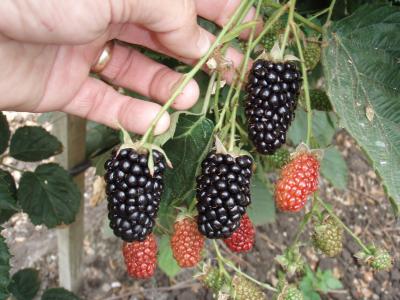
Introducing 'Natchez', the twelfth release in a series of erect-growing, high-quality, productive, floricane-fruiting blackberry (Rubus L. subgenus Rubus Watson) cultivars developed by the University of Arkansas.
According to John R. Clark and James N. Moore of the Department of Horticulture at the University of Arkansas, the new blackberry is a result of a cross of Ark. 2005 and Ark. 1857 made in 1998. The original plant was selected in 2001 from a seedling field at the University of Arkansas Fruit Research Station in Clarksville, and tested as selection Ark. 2241.
'Natchez' produces large fruit, near 9 grams on average in research trials. Fruit of 'Natchez' are elongated, somewhat blocky, and very attractive with an exceptional glossy, black finish.
How many arms does a spiral galaxy have? Can you spot a galaxy with a central “peanut” bulge? How about a galactic merger? You won't need a towel to write an astronomical 'Hitchhiker’s Guide to the Galaxy', just a computer. Answers to these and other strange questions will be provided by worldwide web users in an online citizen science project called Galaxy Zoo 2, which launches today.


 Social Media Is A Faster Source For Unemployment Data Than Government
 Gestational Diabetes Up 36% In The Last Decade - But Black Women Are Healthiest
 Object-Based Processing: Numbers Confuse How We Perceive Spaces
 Males Are Genetically Wired To Beg Females For Food