Banner
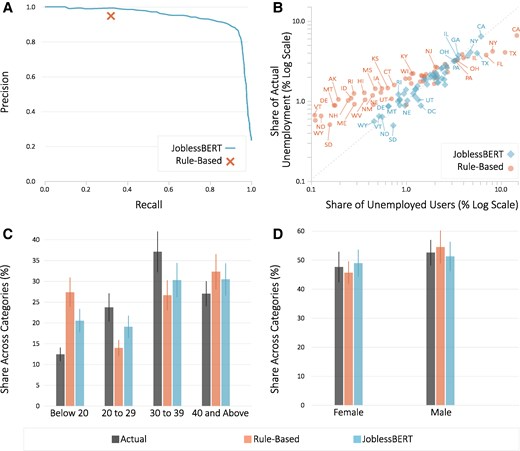
Social Media Is A Faster Source For Unemployment Data Than Government

Government unemployment data today are what Nielsen TV ratings were decades ago - a flawed metric...

Gestational Diabetes Up 36% In The Last Decade - But Black Women Are Healthiest

Gestational diabetes, a form of glucose intolerance during pregnancy, occurs primarily in women...
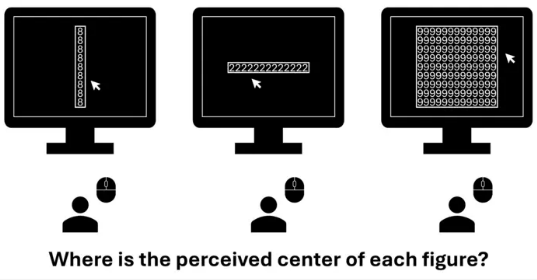
Object-Based Processing: Numbers Confuse How We Perceive Spaces

Researchers recently studied the relationship between numerical information in our vision, and...
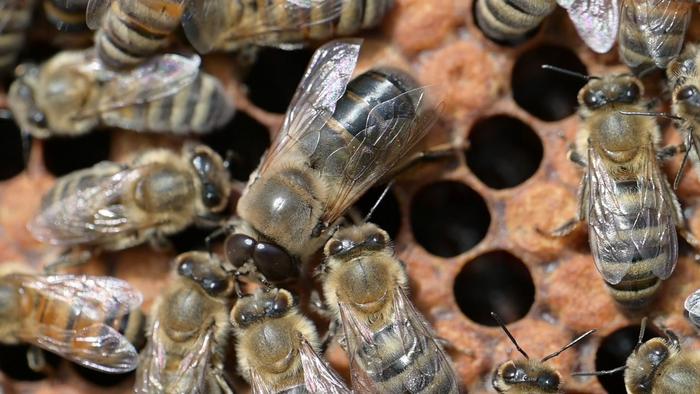
Males Are Genetically Wired To Beg Females For Food

Bees have the reputation of being incredibly organized and spending their days making sure our...

User picture.
News StaffRSS Feed of this column.

News Releases From All Over The World, Right To You... Read More »

Blogroll
Think there's not enough time to do everything you need to do?   You may just need to change your perception, says Michael DeDonno, a doctoral student in psychology at Case Western Reserve University.

If you don't think you have enough time, you've already given up.

DeDonno recently studied 163 subjects performing the Iowa Gambling Task (IGT), a popular psychological assessment tool, to investigate the effect of perceived time pressure on a learning-based task. His study, the first to look at the relationship between perceived time pressure and IGT performance, was published in the December issue of Judgment and Decision Making. 
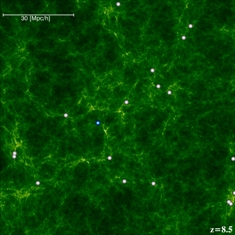
Scientists have used a computer simulation to predict what the very early Universe would have appeared like 500 million years after the Big Bang.  The images, produced by scientists at Durham University's Institute for Computational Cosmology, show the "Cosmic Dawn" - the formation of the first big galaxies in the Universe.


Universe 590 million years after the Big Bang. Credit:Alvaro Orsi, Institute for Computational Cosmology
You mat have read recently about chemical fossils discovered in sedimentary rocks in Oman.   Those fossil steroids, remnants of a type of sponge known as Demosponges, are between 635 and 750 million years old. They date back to around the time of the Marinoan glaciation, the last of the huge ice ages at the end of the Neoproterozoic era.

Many of the world's cultural treasures are creations made of organic materials such as paper, canvas, wood and leather which, in prolonged warmth and dampness, attract mold, micro-organisms and insects, causing decay and disintegration.

Researchers at the Swedish medical university Karolinska Institutet have shown for the first time that the active training of the working memory brings about visible changes in the number of dopamine receptors in the human brain. The study, which is published in the prestigious scientific journal Science, was conducted with the help of PET scanning and provides deeper insight into the complex interplay between cognition and the brain's biological structure.

"Brain biochemistry doesn't just underpin our mental activity; our mental activity and thinking process can also affect the biochemistry," says Professor Torkel Klingberg, who led the study. "This hasn't been demonstrated in humans before, and opens up a floodgate of fascinating questions."
Sensors able to identify individuals’ brain patterns and heart rhythms could become part of security systems which also use more traditional forms of biometric recognition, thanks to pioneering work being done by European researchers. 

Since 9/11, the need to secure important facilities from terrorist attack has become a top priority around the world. And one of the keys to this is making sure the right people are allowed into sensitive areas and the wrong people are kept out.

A range of technologies and systems have been deployed in the past few years, but the more successful they are the more obtrusive they tend to be, causing disruptions and delays.