Banner
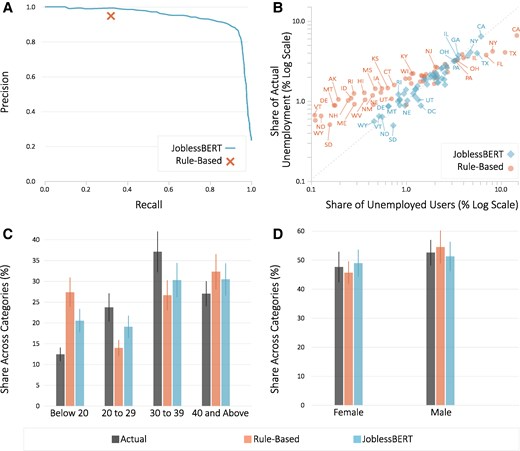
Social Media Is A Faster Source For Unemployment Data Than Government

Government unemployment data today are what Nielsen TV ratings were decades ago - a flawed metric...
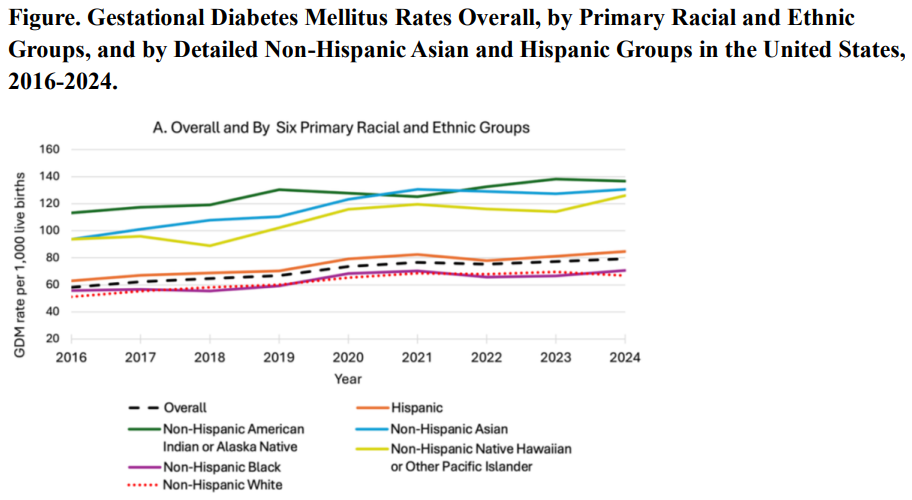
Gestational Diabetes Up 36% In The Last Decade - But Black Women Are Healthiest

Gestational diabetes, a form of glucose intolerance during pregnancy, occurs primarily in women...
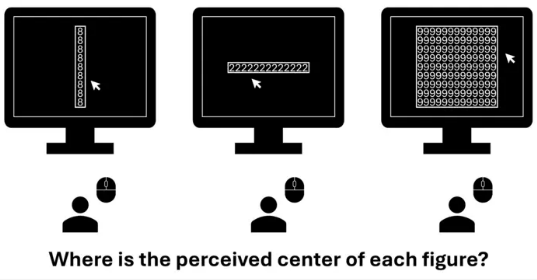
Object-Based Processing: Numbers Confuse How We Perceive Spaces

Researchers recently studied the relationship between numerical information in our vision, and...
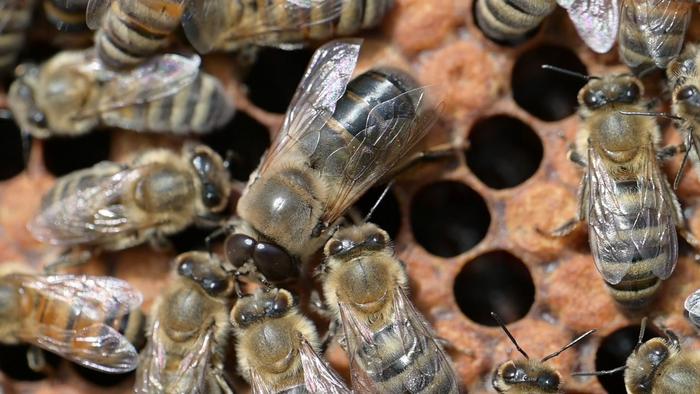
Males Are Genetically Wired To Beg Females For Food

Bees have the reputation of being incredibly organized and spending their days making sure our...

User picture.
News StaffRSS Feed of this column.

News Releases From All Over The World, Right To You... Read More »

Blogroll
Writing in the Journal of Biological Chemistry, a group of researchers found that nutrient deprivation of neurons produced sex-dependent effects. Male neurons more readily withered up and died, while female neurons did their best to conserve energy and stay alive.

That's right, nature has declared female brains should survive with a lot less than males.   Take that, glass ceiling!

The idea that the sexes respond differently to nutrient deprivation is not new and revolves around the male preferences to conserve protein and female preferences to conserve fat. However, these metabolic differences have really only been examined in nutrient-rich tissues like muscles, fat deposits, and the liver. 
Scientists have achieved the first definitive detection of methane in the atmosphere of Mars, which would seem to indicate our reddish neighbor is biologically active.   Or geologically active.   Or both.

Wait, how can a bunch of smart people from NASA not know which?   

It's because methane, four atoms of hydrogen bound to a carbon atom, is the main component of natural gas on Earth and is released by organisms as they (and we) digest nutrients  but is also created in purely geological processes, like oxidation of iron. 

The unique planetary nebula NGC 2818 is nested inside the open star cluster NGC 2818A. Both the cluster and the nebula reside 10,400 light-years (3.2 kiloparsecs) away, in the southern constellation Pyxis, also called the Compass.

NGC 2818 is one of very few planetary nebulae in our galaxy located within an open cluster. Open clusters, in general, are loosely bound and they disperse over hundreds of millions of years. Stars that form planetary nebulae typically live for billions of years. Hence, it is rare that an open cluster survives long enough for one of its members to form a planetary nebula. This open cluster is particularly ancient, estimated to be nearly one billion years old.

Massive stars, those up to 120 times the mass of our sun, should blow away the clouds of gas and dust that instead feed their growth.   Despite outward-flowing radiation pressure that exceeds the gravitational force pulling material inward, these huge stars get bigger, which hasn't made a lot of sense.  Until now.

Using 3-D radiation hydrodynamics simulations, a group of researchers from Lawrence Livermore National Laboratory, University of California, Santa Cruz and UC Berkeley, discovered that these massive stars also tend to occur in binary or multiple star systems.
Rats whose mothers were fed alcohol during pregnancy are more attracted to the smell of liquor during puberty, say researchers writing in Behavioral and Brain Functions.  They say rats exposed during gestation find the smell of alcohol on another rat’s breath during adolescence more attractive than animals with no prior fetal exposure.
Free-range chickens are more prone to disease than chickens kept in cages, according to a study published in Acta Veterinaria Scandinavica.  This also applies to all chickens kept in litter-based housing systems.

Researchers led by Oddvar Fossum, at the National Veterinary Institute in Sweden, noted that during the switch in housing from battery cages to enriched cages and litter-based systems, including free-range, there was an increase in the number of chickens dying. During the study, the authors compared the causes of deaths in flocks of chickens kept in different types of housing across Sweden.