Banner
Object-Based Processing: Numbers Confuse How We Perceive Spaces

Researchers recently studied the relationship between numerical information in our vision, and...

Males Are Genetically Wired To Beg Females For Food

Bees have the reputation of being incredibly organized and spending their days making sure our...
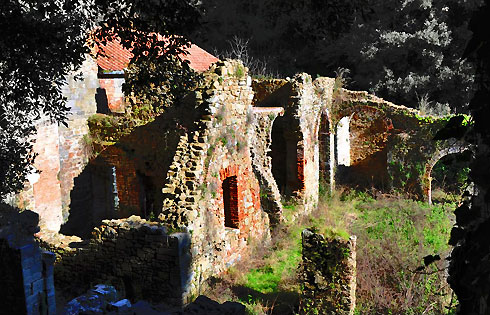
The Scorched Cherry Twig And Other Christmas Miracles Get A Science Look

Bleeding hosts and stigmatizations are the best-known medieval miracles but less known ones, like ...
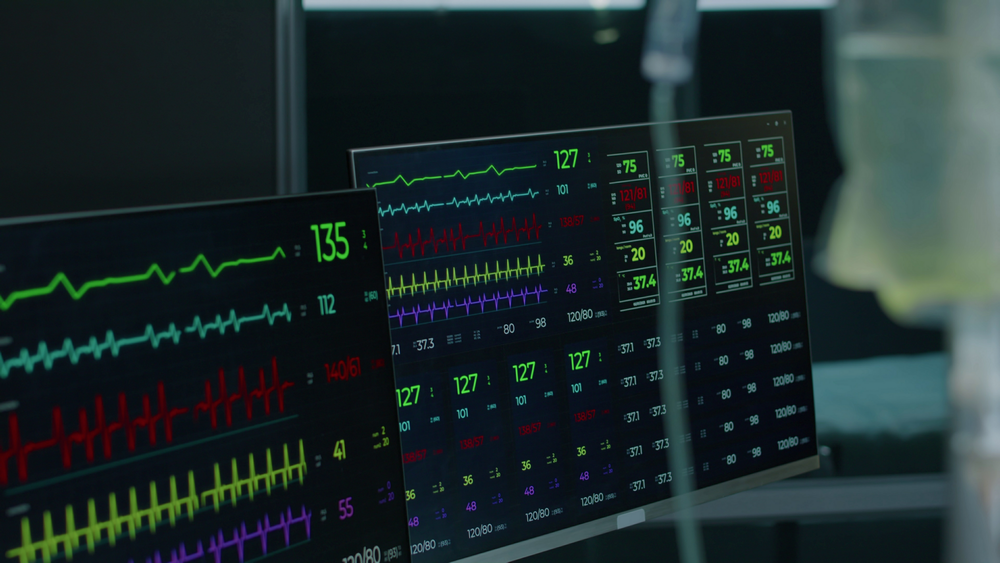
$0.50 Pantoprazole For Stomach Bleeding In ICU Patients Could Save Families Thousands Of Dollars

The inexpensive medication pantoprazole prevents potentially serious stomach bleeding in critically...

User picture.
News StaffRSS Feed of this column.

News Releases From All Over The World, Right To You... Read More »

Blogroll

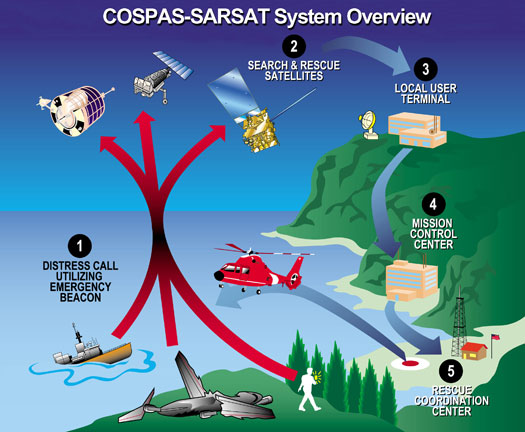
MOSCOW. (Yury Zaitsev for RIA Novosti) - Thirty years ago the Soviet government issued a resolution on setting up a space-based system to search for ships in distress (known by its initials in Russian, KOSPAS) anywhere in the world.

The quick location of such ships reduced by nearly tenfold the time of rescue operations in comparison with the usual methods and also reduced the risk of accidents involving rescue ships and aircraft themselves. For Russia, with its vast, sparsely populated areas and enormous expanses of ocean, creating an effective search-and-rescue system was of significant importance both socially and economically.

Science doesn’t always happen at a lab bench. For University of Toronto Mississauga physicist Kent Moore, it happens while strapped into a four-point harness, flying head-on into hurricane-force winds off the southern tip of Greenland.

Moore, chair of the Department of Chemical and Physical Sciences, is heading to Greenland from Feb. 18 to March 11 as part of the Greenland Flow Distortion experiment (GFDex), an International Polar Year research project involving Canadian, British, Norwegian and Icelandic scientists. Moore, a professor of atmospheric physics, is leading the Canadian contingent.


Credit: University of Toronto.

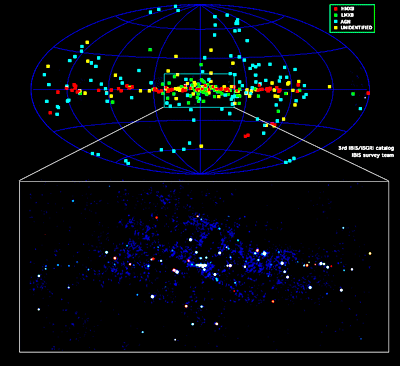
Integral's latest survey of the gamma-ray universe continues to change the way astronomers think of the high-energy cosmos. With over seventy percent of the sky now observed by Integral, astronomers have been able to construct the largest catalogue yet of individual gamma-ray-emitting celestial objects. And there is no end in sight for the discoveries.

Integral is the European Space Agency's latest orbiting gamma-ray observatory. Ever since Integral began scientific operations in 2003, the project team has been devoting a substantial proportion of its observing time to a survey of the gamma-ray universe.

In the first genome-wide search for the genetic roots of the most common form of amyotrophic lateral sclerosis (ALS), Johns Hopkins scientists have newly identified 34 unique variations in the human genetic code among 276 unrelated subjects with ALS.

The 34 so-called single nucleotide polymorphisms, or SNPs, represent good candidate genes predisposing people to the non-inherited form of the fatal neurodegenerative disease.

“Although we haven’t located the exact gene responsible for sporadic ALS, our results seriously narrow the search and bring us that much closer to finding what we need to start developing treatments for the disease,” says Bryan J. Traynor, M.D., of the Department of Neurology at The Johns Hopkins University School of Medicine.

How does life survive in the black depths of the ocean? At the surface, sunlight allows green plants to "fix" carbon from the air to build their bodies. Around hydrothermal vents deep in the ocean live communities of giant clams with no gut and no functional digestive system, depending on symbiotic bacteria to use energy locked up in hydrogen sulfide to replace sunlight.

The life cycles of many viruses include a self-assembly stage in which a powerful molecular motor must pack the DNA genome into the virus's preformed shell (the capsid). How it manages this intricate feat has been subject to debate, but we know that the DNA passes into the capsid shell through a channel formed by a structure called the connector.