Banner
The Scorched Cherry Twig And Other Christmas Miracles Get A Science Look

Bleeding hosts and stigmatizations are the best-known medieval miracles but less known ones, like ...

$0.50 Pantoprazole For Stomach Bleeding In ICU Patients Could Save Families Thousands Of Dollars

The inexpensive medication pantoprazole prevents potentially serious stomach bleeding in critically...

Metformin Diabetes Drug Used Off-Label Also Reduces Irregular Heartbeats

Adults with atrial fibrillation (AFib) who are not diabetic but are overweight and took the diabetes...

Your Predator: Badlands Future - Optical Camouflage, Now Made By Bacteria

In the various 'Predator' films, the alien hunter can see across various spectra while enabling...

User picture.
News StaffRSS Feed of this column.

News Releases From All Over The World, Right To You... Read More »

Blogroll

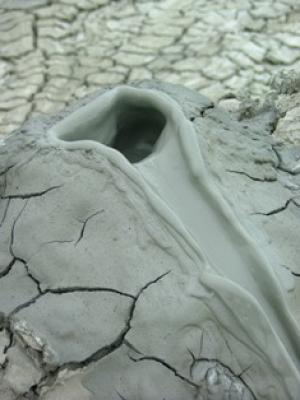
The first scientific report into the causes and impact of Lusi, the Indonesian mud volcano, reveals that the 2006 eruption will continue to erupt and spew out between 7,000 and 150,000 cubic metres of mud a day for months, if not years to come, leaving at least 10 km2 around the volcano vent uninhabitable for years and over 11,000 people permanently displaced.

The paper by a Durham University-led team and published in the February issue of GSA Today1, reveals that the eruption was almost certainly manmade and caused by the drilling of a nearby exploratory borehole2 looking for gas, reinforcing the possible explanation in a UN report3 from July last year.


Image of a gryphon, which occur around the site of a mud volcano.

Can network interference be used to expand and enhance communication for wireless devices such as cell phones, computers and personal digital assistants?

Daniela Tuninetti, assistant professor of electrical and computer engineering, explained that this seemingly illogical concept is not all that strange if you take a closer look at what is going on. She has received a five-year, $400,000 National Science Foundation CAREER Award to establish a theoretical foundation for putting this idea into use through a concept called collaborative communications.

"Interference due to other communications devices is not just noise," Tuninetti said.

Bergmann`s rule is one of the most studied and controversial “ecogeographical” patterns, and refers to the increasing body size of organisms towards higher latitudes.

Although it has been studied since the mid 19th Century, it is not until now that new statistical techniques have made it possible to disentangle the underlying influences of evolutionary history and ecology.

In a new study in the journal Ecography, an inter¬national team of researchers have analyzed Bergmann`s rule in European carnivore mammals. Their approch allows them to, for the first time, partition body mass variation into historical and ecological components.

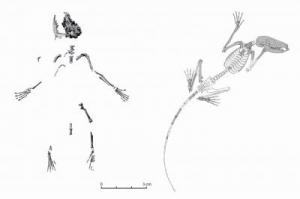
The origins and earliest branches of primate evolution are clearer and more ancient by 10 million years than previous studies estimated, according to a study featured on the cover of the Jan. 23 print edition of the Proceedings of the National Academy of Sciences.

The paper by researchers at Yale, the University of Winnipeg, Stony Brook University, and led by University of Florida paleontologist Jonathan Bloch reconstructs the base of the primate family tree by comparing skeletal and fossil specimens representing more than 85 modern and extinct species.

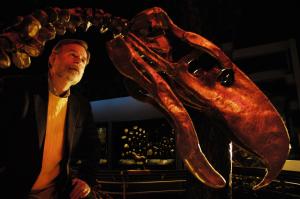
A University of Florida-led study has determined that Titanis walleri, a prehistoric 7-foot-tall flightless “terror bird,” arrived in North America from South America long before a land bridge connected the two continents.

UF paleontologist Bruce MacFadden said his team used an established geochemical technique that analyzes rare earth elements in a new application to revise the ages of terror bird fossils in Texas and Florida, the only places in North America where the species has been found.

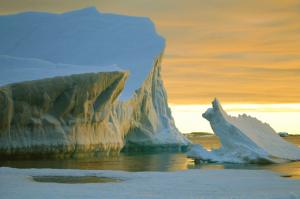
Despite the icy cold and darkness, beneath the frozen surface of the sea in Antarctica thrives a rich and complex array of plants and animals. But what will happen to all those creatures if global warming reduces the ice-cover, as is predicted for coming decades?

UNSW marine ecologists Dr Emma Johnston and Graeme Clark have been working with the Australian Antarctic Division to survey marine communities along the striking coast of Wilkes Land, east Antarctica.


The stark beauty of Antarctica's ice hides a wealth of marine life. Copyright Graeme Clark UNSW.