Groundbreaking ideas spring most from companies that stress technology, rather than customer needs or staying ahead of competitors, according to research that will appear in the Journal of Product Innovation Management.
the findings suggest that firms are best served by a balanced philosophy that includes all three cultures. While an emphasis on technology bolsters innovation, market-driven firms are more attuned to what consumers want, giving them an edge in commercializing new products.
In recent years, DNA evidence has added important new tools for scientists studying the human past, and a collection of reviews published in a recent issue of Current Biology offers a timely update on how new genetic evidence, together with archaeological and linguistic evidence, has enriched our understanding of human history.
The journey started around 60 to 70 thousand years ago in Africa, where modern humans evolved more than 150 thousand years ago, and where human diversity is still the highest among all continents in terms of genetic variation and languages. From there, humans settled Europe and South Asia and reached Oceania. The Americas (apart from the remote Oceanian islands) were settled last.
University of Pittsburgh researchers say they have taken a significant step toward unraveling the brain activity that drives adolescents to engage in impulsive, self-indulgent, or self-destructive behavior. Published in the current edition of Behavioral Neuroscience, the study demonstrates that adolescent brains are more sensitive to internal and environmental factors than adult brains and suggests that the teenage tendency to experiment with drugs and develop psychological disorders could stem from this susceptibility.
Although the exact mechanics of the adolescent brain's reaction need further investigation, the current study may be a good starting point for mapping the neural path from stimuli to behavior in the adolescent brain.
The United States Geological Survey (USGS) reports that ice shelves are retreating in the southern section of the Antarctic Peninsula due to climate change. The disappearing ice could lead to sea-level rise if warming continues, threatening coastal communities and low-lying islands worldwide.
Every ice front in the southern part of the Antarctic Peninsula has been retreating overall from 1947 to 2009, according to the USGS, with the most dramatic changes occurring since 1990. Previously documented evidence indicates that the majority of ice fronts on the entire Peninsula have also retreated during the late 20th century and into the early 21st century.
A new RNA molecule created by University of Colorado scientists can catalyze a key reaction needed to synthesize proteins. The discovery may have significant implications, researchers say, because it further substantiates the 'RNA World' hypothesis, which proposes that life on Earth evolved from early forms of RNA. The research is detailed this week in the Proceedings of the National Academy of Sciences.
People who live in areas with lower household incomes are much more likely to die because of their personal and household characteristics and their community surroundings, according to research conducted at Virginia Commonwealth University and published in the American Journal of Public Health.
Researchers analyzed census data and vital statistics from Virginia counties and cities between 1990 and 2006. They demonstrated that one out of four deaths would have been averted if the mortality rates of Virginia's five most affluent counties and cities had existed statewide. In some of the most disadvantaged areas of the state, nearly half of the deaths would have been averted.


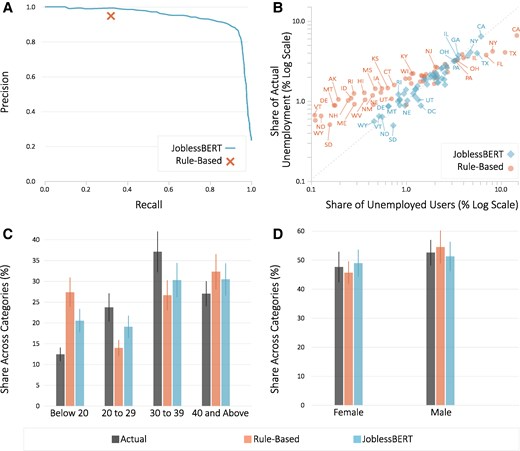 Social Media Is A Faster Source For Unemployment Data Than Government
 Gestational Diabetes Up 36% In The Last Decade - But Black Women Are Healthiest
 Object-Based Processing: Numbers Confuse How We Perceive Spaces
 Males Are Genetically Wired To Beg Females For Food