The disastrous magnitude 7.0 earthquake that triggered destruction and mounting death tolls in Haiti this week occurred in a highly complex tangle of tectonic faults near the intersection of the Caribbean and North American crustal plates, according to a geologist at the Woods Hole Oceanographic Institution (WHOI).
Jian Lin, a WHOI senior scientist in geology and geophysics, said that there were three factors that made the quake particularly devastating: First, it was centered just 10 miles southwest of the capital city, Port au Prince; second, the quake was shallow—only about 10-15 kilometers below the land's surface; third, and more importantly, many homes and buildings in the economically poor country were not built to withstand such a force and collapsed or crumbled.
While people typically blame incompetency when airport security screeners fail to keep dangerous weapons off airplanes or when doctors miss developing cancer tumors, the real culprit may be evolution, according to researchers at Harvard Medical School. Their new study published in Current Biology suggests that people simply haven't evolved superior skills for finding things that are rare.
"We know that if you don't find it often, you often don't find it," said Jeremy Wolfe of Harvard Medical School. "Rare stuff gets missed." That means that if you look for 20 guns in a stack of 40 bags, you'll find more of them than if you look for the same 20 guns in a stack of 2,000 bags.
If left unaddressed, the U.S. government's growing debt will inevitably limit America's future wealth and risk a disruptive fiscal crisis, claims a new report from the National Research Council and the National Academy of Public Administration. The report lays out several tax and spending options that would stabilize the national debt within a decade as well as a set of simple tests to determine whether any proposed federal budget would lead to long-term fiscal stability.
The rate of smoking among nursing students is twice that of the general population, indicates a survey of over 800 new nursing students published in the Journal of Advanced Nursing. Busy bodies in the health community argue the results indicate that smoking cessation programs should be incorporated into nursing studies. They say that smoking among healthcare professionals undermines the credibility of anti-smoking campaigns aimed at the general public.
The Tibetan Plateau—thought to be the primary source of heat that drives the South Asian monsoon—may have far less of an effect than moist, warm air insulated over continental India by the Himalayas and other surrounding mountains, say Harvard climate scientists writing this week in Nature.
The team says that understanding the monsoon's proper origin, especially in the context of global climate change, is crucial for the future sustainability of the region. The findings also have broad implications for how the Asian climate may have responded to mountain uplift in the past, and for how it might respond to surface changes in the coming decades, the researchers say.
Conservation efforts aimed at protecting Gorillas And Elephants in African parks and reserves are well intentioned but are often based on incorrect assumptions about the local culture, say Purdue University anthropologists. In a new Conservation Biology paper, the team says that understanding local human communities is key to protecting the wildlife they live alongside.


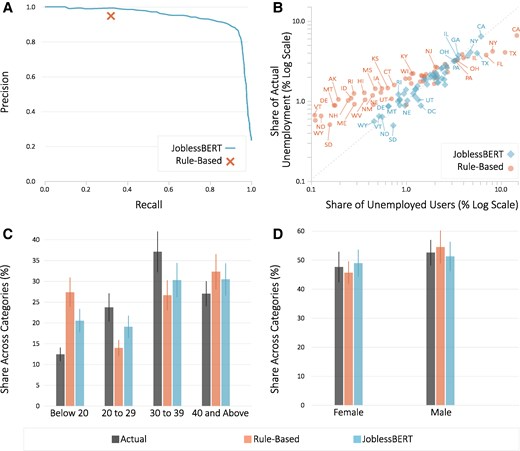 Social Media Is A Faster Source For Unemployment Data Than Government
 Gestational Diabetes Up 36% In The Last Decade - But Black Women Are Healthiest
 Object-Based Processing: Numbers Confuse How We Perceive Spaces
 Males Are Genetically Wired To Beg Females For Food