The climate is changing and the natural world has to adapt to it. But how much time do the multitudes of species and their habitats have before it's too late? A team of environmental researchers has set out to answer that very question, and they say that as the world warms through the 21st century, ecosystems will need to shift about 0.42 kilometers per year (about a quarter mile per year) to keep pace with changing temperatures across the globe.
Female ducks can thank evolution for avoiding becoming impregnated by undesirable but aggressive males endowed with large corkscrew-shaped penises: vaginas with clockwise spirals that thwart oppositely spiraled males. That's right, males are literally screwed.
The research on this evolutionary 'battle of the sexes' at the genitalia level were described in the December 23 issue of the journal Proceedings of the Royal Society B.
Stars in globular clusters tend to be 12-13 billion years old but a small fraction appear to be significantly younger than the average population. Left behind by the stars that followed the normal path of stellar evolution and became red giants, those younger ones have been dubbed blue stragglers.
Oddly, blue stragglers appear to regress from 'old age' back to a hotter and brighter 'youth', gaining a new lease on life in the process - a cosmic facelift.
Global warming may be a reality, but the debate over what causes the warming and what to do about it is nowhere near over, according to a story in the latest issue of Chemical&Engineering News (C&EN) that surveyed climate scientists on both sides of the argument.
While both global warming "believers" and "skeptics" agree on some basics of climate change, for example, that average global temperatures have risen since 1850, with most of the warming occurring since the 1970s, the cordial agreement stops there, writes author Stephen K. Ritter. "At the heart of the global warming debate is whether warming is directly the result of increasing anthropogenic CO2 levels, or if it is simply part of Earth's natural climatic variation."
Scientists have identified a strain of antibiotic-resistant tuberculosis that thrives in the presence of rifampin, a front-line drug in the treatment of tuberculosis. The bacterium was identified in a Chinese patient, and the researchers say his condition grew worse with treatment regimens containing rifampin, before being cured with rifampin-free regimens.
Their study, which will appear in the January 2010 issue of the International Journal of Tuberculosis and Lung Disease, is among the first to document the treatment of a patient with rifampin-dependent infection.
More than a hundred years after its discovery, the limbs and vertebrae of a fossil have been pulled off the shelf at the American Museum of Natural History to revise the view of early carnivore lifestyles. Carnivores—currently a diverse group of mostly meat-eating mammals like bears, cats, raccoons, seals, and hyenas—had been considered arboreal in their early evolutionary history.
But now that the skeleton of 'Miacis' uintensis has been unpacked from its matrix of sandstone, it is clear that some early carnivores were built to walk on the ground at least part of the time. The new research is published this month in the Journal of Vertebrate Paleontology


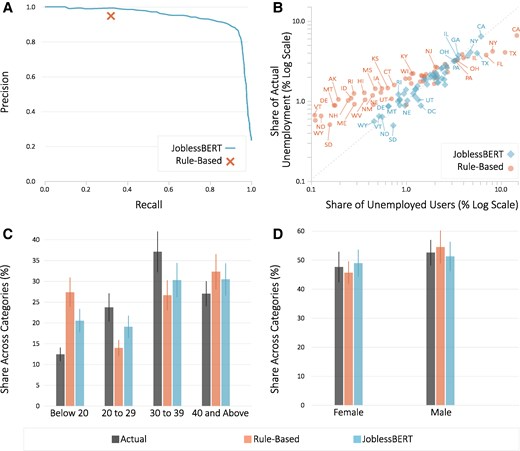 Social Media Is A Faster Source For Unemployment Data Than Government
 Gestational Diabetes Up 36% In The Last Decade - But Black Women Are Healthiest
 Object-Based Processing: Numbers Confuse How We Perceive Spaces
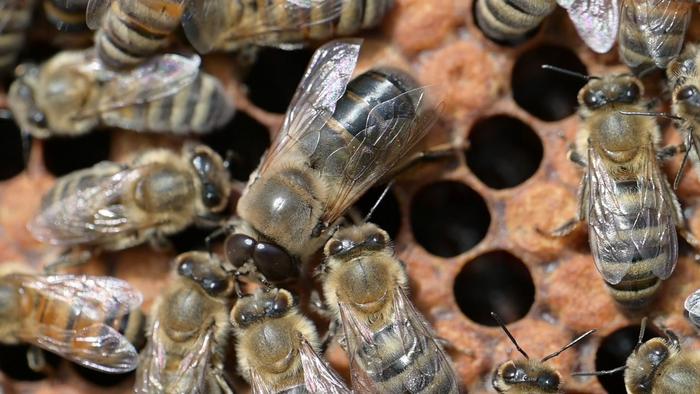 Males Are Genetically Wired To Beg Females For Food