Banner
Social Media Is A Faster Source For Unemployment Data Than Government

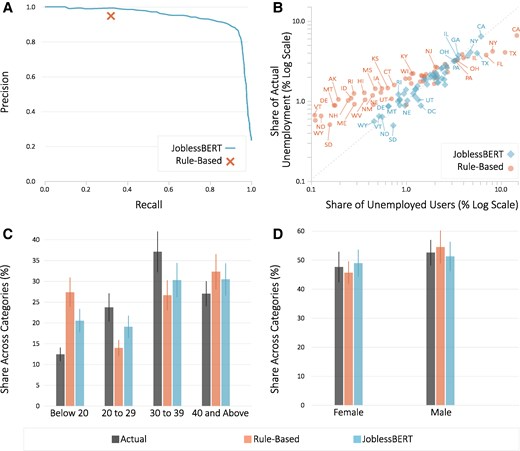
Government unemployment data today are what Nielsen TV ratings were decades ago - a flawed metric...
Gestational Diabetes Up 36% In The Last Decade - But Black Women Are Healthiest

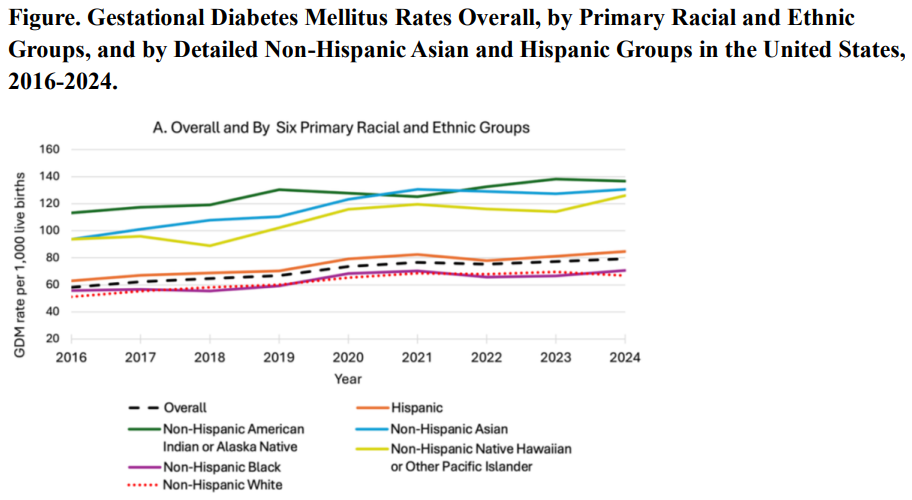
Gestational diabetes, a form of glucose intolerance during pregnancy, occurs primarily in women...
Object-Based Processing: Numbers Confuse How We Perceive Spaces

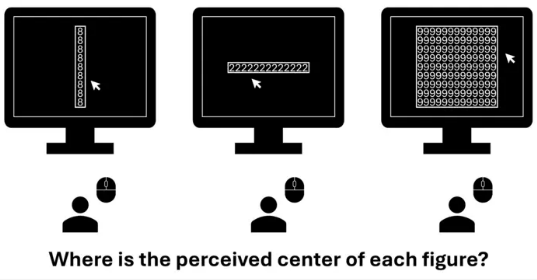
Researchers recently studied the relationship between numerical information in our vision, and...
Males Are Genetically Wired To Beg Females For Food

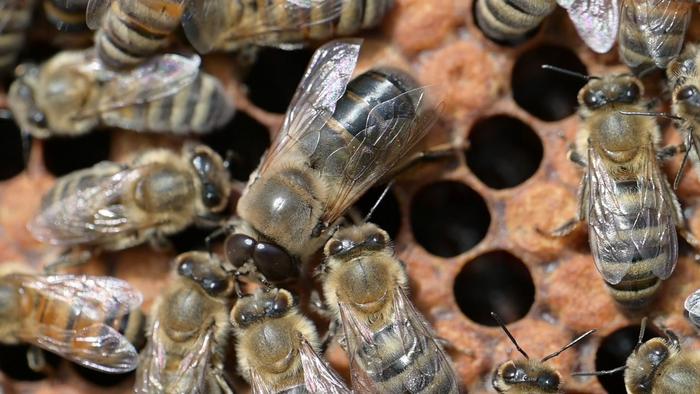
Bees have the reputation of being incredibly organized and spending their days making sure our...

User picture.
News StaffRSS Feed of this column.

News Releases From All Over The World, Right To You... Read More »

Blogroll
Researchers at Rice University and Baylor College of Medicine (BCM) have found an unexpected weakness in H1N1's method for evading detection by the immune system. They say the virus has been keeping a secret that may be the key to defeating it and other flu viruses as well.

Comparing its genetic sequences going all the way back to the virus's first known appearance in the deadly "Spanish flu" outbreak of 1918, they discovered a previously unrealized role of receptor-binding residues in host evasion, which effectively becomes a bottleneck that keeps the virus in check. The team compared the sequences of more than 300 strains of H1N1 to track its evolution; Their results appear in a recent online edition of PLoS One.
With the fall semester coming to a close, a Purdue University psychologist has some advice for all those college students who are poring over their notes in preparation for finals. Don't.

In a paper recently featured in the Journal of Experimental Psychology: General, psychologist Jeffrey D. Karpicke suggests that students spend their study sessions testing themselves repeatedly, improving their memory retrieval skills, as opposed to cramming for tests using written notes. He says this strategy will make recalling the information much easier when the pressure is on.

Karpicke found in his study that college students are more likely to invest their time in repetitive note reading, and those who do practice retrieval spend too little time on it.
Paleontologists have unearthed a previously unknown Theropod dinosaur from a fossil bone bed in northern New Mexico, settling a debate about early dinosaur evolution, and hinting at how dinosaurs spread across the supercontinent Pangaea.

 The description of the new species, named Tawa after the Hopi word for the Puebloan sun god, appears in the Dec. 10 issue of the journal Science.
“Yes, Virginia, there is a Santa Claus.”

That sentence from American journalism’s best-known Santa Claus editorial (the New York Sun’s “Is There A Santa Claus?”) is still so popular that 112 years after it first ran, Macy’s is basing its holiday advertising campaign on it for the second consecutive year. 

This year, Macy’s and the CBS television network are co-sponsoring an animated children’s program about Virginia O’Hanlon, the eight year old girl who sent her inquiry “Please tell me the truth. Is There A Santa Claus?” to the Sun in 1897.

The Big Dipper has a secret, invisible to the unaided eye, according to a new paper published in The Astrophysical Journal, which says that one of the stars that makes the bend in the ladle's handle, Alcor, has a smaller red dwarf companion.

Newly discovered Alcor B orbits its larger sibling and was caught in the act with an innovative technique called "common parallactic motion" by members of Project 1640, an international collaborative team that includes astrophysicists at the American Museum of Natural History, the University of Cambridge's Institute of Astronomy, the California Institute of Technology, and
NASA's Jet Propulsion Laboratory.

The holidays are challenging for most everyone's midsection but are they a factor in actual obesity rather than seasonal weight gain?   And are weekends just as detrimental?

Researchers at the University of Pittsburgh and Quinnipiac University say yes to both.  Even weekend eating patterns can have a significant impact.

J. Jeffrey Inman, a University of Pittsburgh professor of marketing and associate dean for research in the Joseph M. Katz Graduate School of Business, and coauthor Adwait Khare, Quinnipiac University professor of marketing, studied two years' worth of data on consumers' eating behavior and found that the quantity and quality of foods eaten during a meal and over the course of the day differs considerably on weekends and holidays.