Our ability to learn new information and retain lifelong memories appears to lie in the minute junctions where nerve cells communicate, according to a new study conducted by NYU Langone Medicine Center researchers and published online this week in the journal Nature.
The scientists, led by Wen-Biao Gan, PhD, associate professor of physiology and neuroscience at NYU School of Medicine, discovered that a delicate balancing act occurs in the brain where neuronal connections are continually being formed, eliminated, and maintained. This feat allows the brain to integrate new information without jeopardizing already established memories.
An international team of scientists has developed a new method of measuring CO2 absorption by the oceans and mapped CO2 uptake for the entire North Atlantic for the first time.
Appearing tomorrow in the journal Science, the study could greatly improve our understanding of the natural ocean 'sinks' and enable more accurate predictions about how the global climate is changing.
The new technique could also lead to the development of an 'early-warning system' to detect any weakening of the ocean sinks – seen by some scientists as the first sign of more pronounced climate change.
Thanks to compliance with the Montreal Protocol, the ozone layer is beginning to recover and that means Antarctica is about to experience more warming and an increase in snowmelt, a new study in Geophysical Research Letters predicts.
Based on space-borne microwave observations between 1979 and 2009, the study suggests that Antarctic snowmelt levels should revert to higher norms as one of the climate drivers, the SAM (Southern Hemisphere Annular Mode), subsides as the damage to the ozone layer is repaired.
Scientists from MIT say they are developing a new kind of power plant that can generate electricity without emitting any carbon dioxide into the atmosphere and can be built at prices comparable to conventional natural-gas plants, and even to coal-burning plants.
The catch, unfortunately, is that they need the government to inflate the price of coal through a cap and trade scheme or some other carbon tax to make the new power plant a viable alternative.
Researchers from the Johns Hopkins Bloomberg School of Public Health say it's time to ban smoking in private residences. Never mind those archaic ideas like choice and private property, this must be done, they argue, to protect the children. And if you don't want to protect children, well, what's wrong with you?
Their push for tighter restrictions on smoking is based on a new paper published in Cancer Epidemiology, Biomarkers&Prevention, which suggests that hair nicotine concentrations are higher in children exposed to secondhand smoke at home, and the younger the children, the higher the concentration under the same level of secondhand smoke exposure at home.
While feeding birds may seem like an ordinary and innocuous activity, scientists are reporting this week that it can have a profound effect on the evolutionary future of a certain species of bird, and those changes can be seen in the very near term.
A report published online in the December 3rd issue of Current Biology shows that what was once a single population of birds known as blackcaps has been split into two reproductively isolated groups in fewer than 30 generations, despite the fact that they continue to breed side by side in the very same forests.


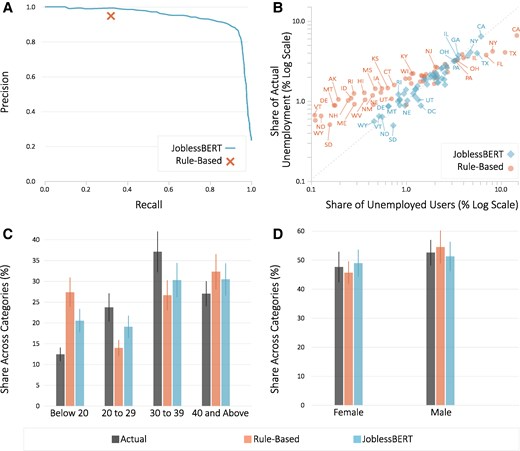 Social Media Is A Faster Source For Unemployment Data Than Government
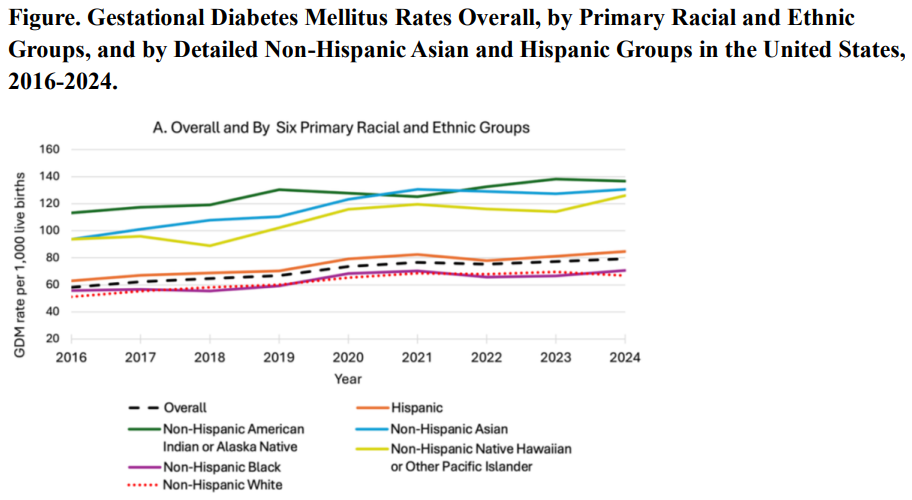 Gestational Diabetes Up 36% In The Last Decade - But Black Women Are Healthiest
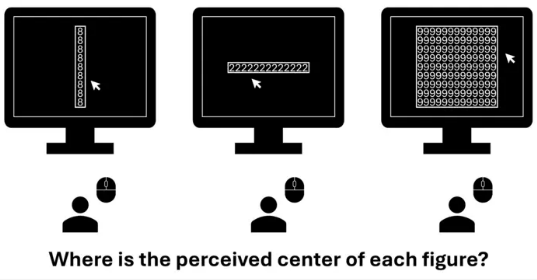 Object-Based Processing: Numbers Confuse How We Perceive Spaces
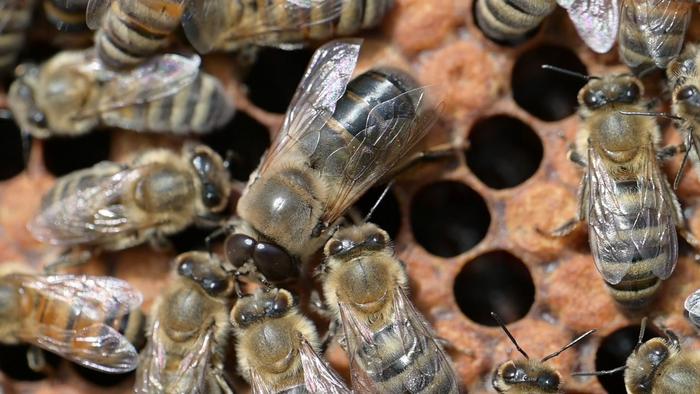 Males Are Genetically Wired To Beg Females For Food







