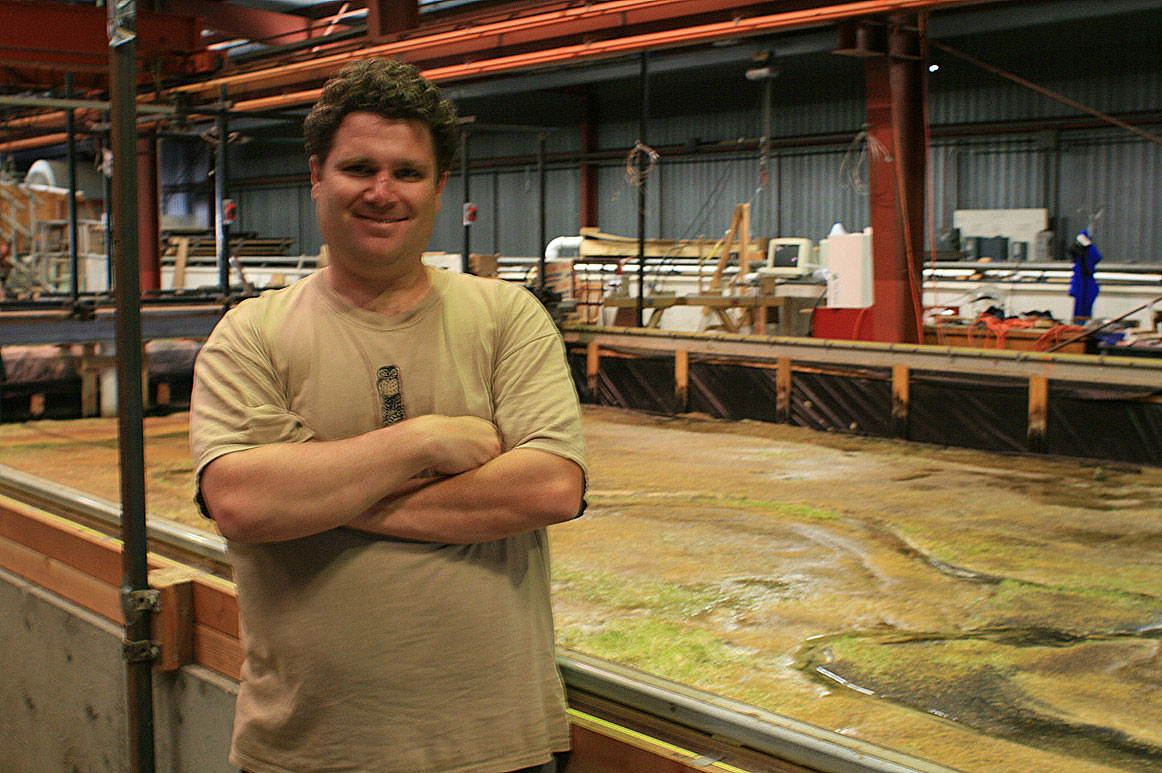
Should you use sand for stream restoration? Common wisdom said no, because it disrupts salmon spawning, researchers have successfully built and maintained a scale model of a living meandering gravel-bed river in the lab and found that sand is indispensable for helping to build point bars and to block off cut-off channels and chutes--tributaries that might start and detract from the flow and health of the stream.
The significance of vegetation for slowing erosion and reinforcing banks has been known for a long time, but this is the first time it has been scientifically demonstrated as a critical component in meandering.
Think shoes aren't important for women? You would be wrong, though perhaps not for the reasons you want to believe.
A recent Arthritis Care&Research study says that women who make poor shoe choices early in life are at greater risk for foot pain in later years. Apparently, men do not experience the same foot pain as women, though that could be because men never dance backward in heels.
If you were following actual science during the alternative energy debate of the 1990s and early 2000s, you were probably concerned about the irrational zeal of activists and politicians like Al Gore who wanted to embrace anything that meant fewer fossil fuels - specifically, ethanol.
Billions of dollars in subsidies since 2005 and mandates on its usage have shown us that ethanol was wrong all along. And it is apparently only beginning to be realized how wrong.
Even more of the fertilizers and pesticides used to grow corn would find their way into nearby water sources if ethanol demands lead to planting more acres in corn, according to a Purdue University study.
Psychiatrist Szabolcs Kéri of Semmelweis University in Hungary looked into an urban legend about the link between creativity and mental illness and says there may be something to it.
He focused his research on neuregulin 1, a gene that normally plays a role in a variety of brain processes, including development and strengthening communication between neurons. However, a variant of this gene (or genotype) is associated with a greater risk of developing mental disorders, such as schizophrenia and bipolar disorder.
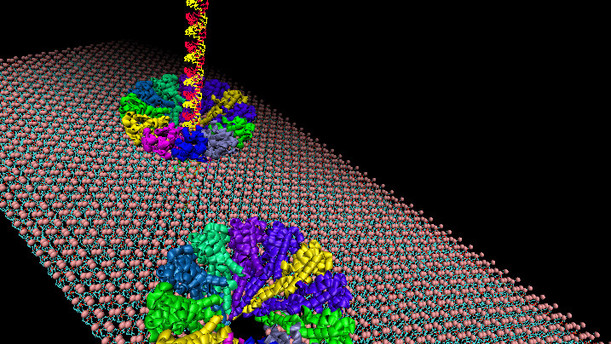
An RNA-powered nanomotor has become the engine for an artificial pore able to transmit nanoscale material through a membrane, the next step in research on using nanomotors to package and deliver therapeutic agents directly to infected cells. Eventually this could enable use of nanoscale medical devices to diagnose and treat diseases.
In a study led by University of Cincinnati (UC) biomedical engineering professor Peixuan Guo, PhD, members of the team inserted the modified core of a nanomotor, a microscopic biological machine, into a lipid membrane. The resulting channel enabled them to move both single- and double-stranded DNA through the membrane. The engineered channel could have applications in nano-sensing, gene delivery, drug loading and DNA sequencing, says Guo.
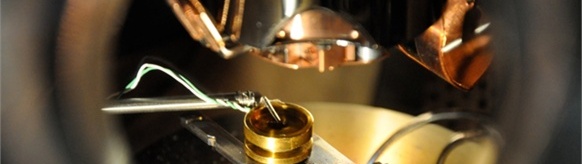
University of Nottingham scientists have overcome a significant challenge for electrochemists - a way of probing right into the heart of an electrochemical reaction, a breakthrough that will help scientists understand how catalysts work and help create even better catalysts.
They were able to study the reaction at the point where the solution touches the surface of the metal electrode bringing in the electricity using spectroscopy under ultra high vacuum.


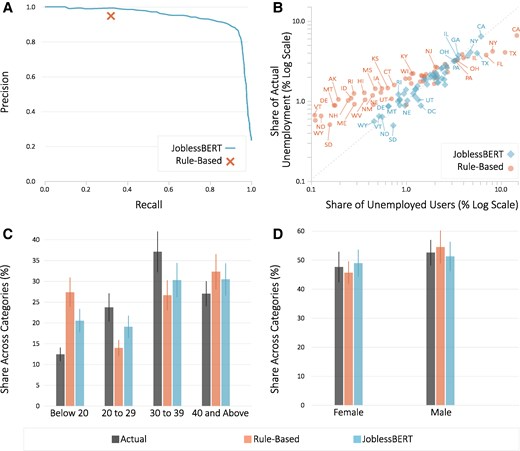 Social Media Is A Faster Source For Unemployment Data Than Government
 Gestational Diabetes Up 36% In The Last Decade - But Black Women Are Healthiest
 Object-Based Processing: Numbers Confuse How We Perceive Spaces
 Males Are Genetically Wired To Beg Females For Food