Banner
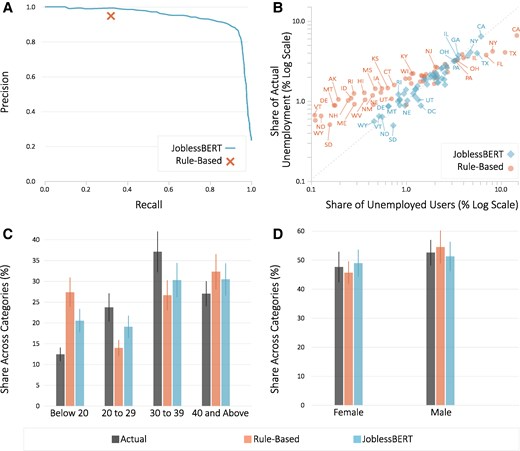
Social Media Is A Faster Source For Unemployment Data Than Government

Government unemployment data today are what Nielsen TV ratings were decades ago - a flawed metric...

Gestational Diabetes Up 36% In The Last Decade - But Black Women Are Healthiest

Gestational diabetes, a form of glucose intolerance during pregnancy, occurs primarily in women...

Object-Based Processing: Numbers Confuse How We Perceive Spaces

Researchers recently studied the relationship between numerical information in our vision, and...

Males Are Genetically Wired To Beg Females For Food

Bees have the reputation of being incredibly organized and spending their days making sure our...

User picture.
News StaffRSS Feed of this column.

News Releases From All Over The World, Right To You... Read More »

Blogroll
A new mathematical model of chronic wound healing could provide better guidance on how to tackle a major public-health problem - the estimated 6.5 million people in the USA who suffer from chronic wounds that can cause loss of limbs or even death.

Ohio State University researchers are the first to publish a mathematical model of an ischemic wound – a chronic wound that heals slowly or is in danger of never healing because it is fed by an inadequate blood supply. Ischemic wounds are a common complication of diabetes, high blood pressure, obesity and other conditions that can be characterized by poor vascular health.
Stéphane Guisard, world-renowned astrophotographer and ESO engineer, has created a  340-million-pixel, 34 by 20-degree wide image from Paranal, the site of the Very Large Telescope, as it looks through an amateur telescope.

Guisard is head of the optical engineering team at Paranal.

To create this true-color mosaic of the Galactic Centre region, Guisard assembled about 1200 individual images, totalling more than 200 hours of exposure time, collected over 29 nights, during Guisard's free time, while working during the day at Paranal. 
Cancer research needs more basic research likely to have the biggest impact on combating the disease in the next few decades but currently research funds are focused on new drug development, says professor Richard Sullivan of the King's Health Partners Integrated Cancer Centre who spoke London told Europe's largest cancer congress, ECCO 15 – ESMO 34 , in Berlin today.

The World Health Organization predicts that the number of people worldwide living with cancer will rise from about 28 million today to about 75 million in 2030.
Individuals use a variety of cues to identify their own kin and humans can also detect resemblances in families other than their own, in defiance of 'you all look alike to us' jokes.   A new study says that our success in doing so is the same even if those families are not the same race as ourselves. 
If you find it ironic that members of Congress take private jets to meetings on global warming or debate raising taxes to pay for government health care they get for free, a RAND study may warm your Republican heart.  Except it means saying Europe did something right, which could make it run cold again.

The new study says that wealthier countries use more than a third of their energy to heat, cool and illuminate buildings - but not always efficiently. Recent steps taken by the European Union (and some states in Australia) to inspect, rate and publicly disclose the energy efficiency of buildings indicate buildings that use less energy are worth more when sold or leased.

A new study from the Sahlgrenska Academy at the University of Gothenburg says middle-aged women who have large abdominal fat cells are at higher risk of developing type 2 diabetes compared to women with smaller fat cells. Waist circumference divided by body height can also be used to determine which women are at risk.

The study is based on the extensive population study of women in "Gothenburg Kvinnoundersökningen i Göteborg".